.png)

When the Festive Glow Meets the Economy's Hard Realities
Diwali's brilliance masks India's economic contradictions: soaring debt, elusive FDI, and the RBI's dance with inflation.
Phynix is a seasoned journalist who revels in playful, unconventional narration, blending quirky storytelling with measured, precise editing. Her work embodies a dual mastery of creative flair and steadfast rigor.
November 9, 2026 at 4:48 AM IST
Dear Insighter,
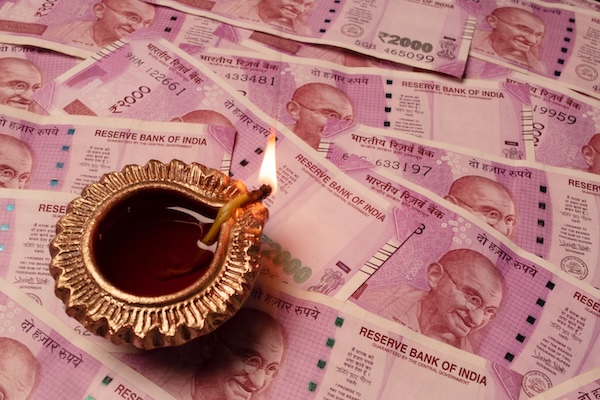
For someone who flinches at a slamming door and treats every surprise party as a personal assault, I absolutely adore Diwali, a festival of light that also detonates enough firecrackers to make a war correspondent nervous. Yet there I am every year, grinning like a child and clutching my ears, dodging rogue rockets and strings of ladi bombs, and making a beeline for the sweets before the noise reaches its crescendo. My friends long ago accepted that I would turn up for the mithai, the gossip and the laughter, and then spend the evening standing one lamp-post farther from the action than everyone else.
Srinath Sridharan, in his Sarci Sense piece on the many meanings of Diwali, notes that the festival brings India together even when Indians cannot agree on much else, whether it marks Rama’s return to Ayodhya, the worship of Lakshmi, a new financial year or simply the annual journey home. For me it was always a trinity of sweets, friends and bombs to be avoided while still taking part, which is a rather Indian paradox, a festival of light whose most memorable moments often involved things exploding. Sridharan also observes that the modern affluent home prepares like a film production, with cushions debated against curtains and the house ready long before the guests arrive, while a ten-year-old family disagreement is politely left undisturbed. Behind all of it works an invisible crew of cooks, drivers and guards who labour harder so that somebody else’s evening runs smoothly, and we have become rather good, he says, at spending beyond our comfort to prove that we are comfortable, photographing the diya before it is lit and the family before anyone has had a chance to disagree.
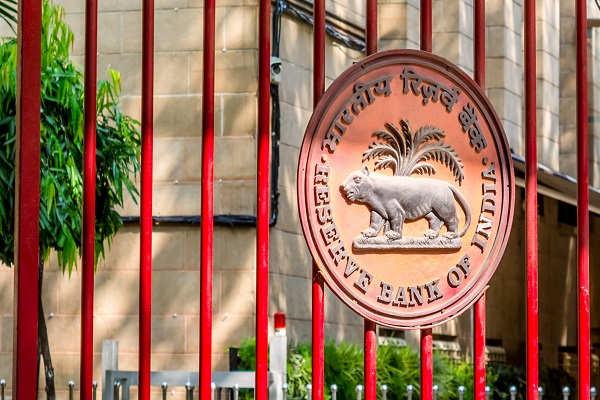
That gap between display and substance runs through the economy as well, and it shows up first in the money coming in. Sagari Gupta reports that India drew $54.9 billion of FDI between April and August but kept only $13.8 billion, which is a grand feast where three-quarters of the guests leave before the main course, and the RBI’s glossy gross figure, as Governor Sanjay Malhotra’s statement shows, measures interest rather than retention. Vivek Kaul finds households filling the gap with borrowing, as debt climbed from 36.4% to 45.9% of GDP while salaried incomes grew barely 5.5% a year, and with gold loans increasingly being used to repay older gold loans.
Dhananjay Sinha sees the same strain in consumer earnings, where resilient volumes mostly reflect big brands taking share from smaller rivals while middle-income households quietly trade down. Sharmila Kantha offers some cheer in exports, which grew 18% in April-September, though gemstones and garments lag and new markets in Asia and Africa beckon. Krishnadevan V asks whether foreign investors deserve dollar-based capital gains tax, since a rupee profit can coexist with a dollar loss, and wants the government to show why that beats a plain rate cut. In a second piece he teases earnings season, when forecasts get cut but valuation multiples stay at full price, as with Hyundai Motor India’s trimmed target.
The RBI is meanwhile trying to manage expectations, its own included. Michael Debabrata Patra notes that this year’s Nobel for Robert Hall and Michael Woodford celebrates the power of expectations, and that the October rate guidance, contingent on growth and inflation, suits Mervyn King’s creed of being boring and conditional. V Thiagarajan finds Kevin Warsh’s less talkative Fed testing the same idea, asking whether fewer promises will make markets study the data harder instead of hunting for clues. K. S. Sujit brings the lesson home, since households that expect dearer tomorrows spend today, and B Sharathbabu warns that the oil shock is already seeping from fuel into restaurant menus and freight, so waiting it out could prove costlier than acting. Anil Katia goes further and wants another hike in December to defend the external sector, with inflation projected near 5.8%.
The rupee shows how tangled this has become. Sameer Narang explains that curbs on forward contracts have cooled importers’ hedging appetite, though lasting relief needs real inflows, and Gaura Sen Gupta adds that without $150 billion from three swap windows, April-September would show an $85 billion balance of payments deficit, even as foreign portfolio money turned positive after the midterms. Thiagarajan finds the reserves flattering too, since headline reserves of $737.8 billion hide net usable reserves of $369.1 billion after forward commitments. Sanjay Mansabdar reminds us that where bond vigilantes are absent, currency vigilantes do the job, and he would separate debt management from the RBI’s remit. Yield Scribe notes that dollar borrowing has lost its edge, with hedged costs near 9.95% against 8.75% for a rupee bond at home.
Washington supplies the loudest bangs this season. Venkatakrishnan Srinivasan notes the 10-year yield sliding from 7.50% to about 7.10% after the midterms as crude fell and shorts covered, though the rally survives only if oil, the rupee and inflation cooperate, and Yield Scribe cautions in another piece that a divided Washington offers markets little relief, with the rupee struggling beyond 94.5. Anand Rajagopal and Anjana Leena Sathy note that Democrats took both chambers but fell short of a veto-proof majority, so India should court committees and caucuses on technology, defence and energy. Lt Gen Syed Ata Hasnain gives a careful maybe on whether another strike on Iran has become less likely, since accepting defeat and changing a military decision are different things. Mansabdar also finds the IDBI Bank sale to Prem Watsa’s Fairfax broadly sound, because price and value are different animals.
Rabi N. Mishra and Komal Gupta argue that from Satyam to YES Bank the controls existed on paper and what failed was the conversation among the three lines of defence. K. Srinivasa Rao wants the new banking reforms committee to align scale, competition and risk for a far larger economy, while R. Gurumurthy fears another impressive report followed by another committee to explain why nobody implemented it. Manoj Arora asks IRDAI to cut insurance commissions with nuance, lest it starve the agents who reach the uninsured, and Sridharan argues that a public asset cannot be run like a private landlord, after an airport operator’s chief told international airlines to vacate their slots or go elsewhere. Indra Chourasia wonders whether Indian IT can find its next growth engine before AI rewrites the rules, even after its best week in 18 years, and R. Sridharan sharpens the fear by noting that America’s bottom half captured just 1% of the wealth AI created. Arvind Mayaram, writing on Nepal’s floods, asks whether we should fund the decision before the project so we stop paying to rebuild what was never safe.
I used to think Diwali was about avoiding as many bombs as possible while still joining the festivities, and in my own way I still do, but age has taught me that the real challenge is listening to what the noise drowns out. The bangs fade within minutes, while the plate of sweets doing its rounds, the friend who shows up every year and the laughter at my flinch are what stay behind, and that is retention in the only sense that matters.
So this year I will do what I always do, eating too many sweets, calling too few people and then calling them anyway, with one hand near my ear and the other near the kaju katli, which is… on reflection, a perfectly respectable hedging strategy.
Until next week, still flinching, but celebrating.
Also Read
-
Telangana’s Rising Tax Revenues Must Pay a Dividend to Its Cities by Alok Kumar Mishra: A tax boom is good news—until you ask whether it fixes drains or disappears into the Budget.
-
How SP+ Beat BJP+ in UP in 2024, and What It Means for 2027 by Amitabh Tiwari: SP’s broader coalition and Dalit shift explain 2024; 2027 asks whether the tent still holds.
-
Learning To Live Sustainably: A Lesson From A Jaipur School by Lt Gen Syed Ata Hasnain: A Jaipur school turns the SDGs from poster language into local action and institutional responsibility.
-
The Importance of Being A R Rahman by Minari Shah: Rahman didn’t just change the sound of film music; he changed how a song tells its story.
-
When the Leader Can't Be the Loser by Kirti Tarang Pande: Defeat can redraw the power map without rewriting the leader’s story—unless voters’ message gets lost in image protection.
-
That Little Moti-Snan that Brings Diwali Home by Mansi Kelkar: For Maharashtrian families, a round Moti cake carries abhyanga snan, childhood, and a little luxury saved for Diwali.
-
The Art of Taking Criticism (Without Taking It to Bed) by Kalyani Srinath: Why one critical word outlasts a sea of compliments—and what that says about self-worth.
-
A Debtors’ Club for a Fragmented World by Ishac Diwan: The new Borrowers’ Platform gives debtor countries a collective voice; the question is whether it is ambitious enough.
-
The Tech Brotherhood Wants Sovereignty by Katharina Pistor: The platform fraternity is claiming a new kind of sovereignty—and it can be more intrusive than states.
-
Why Are Indian Protesters Targeting the Electoral Commission? by Shashi Tharoor: Millions excluded from electoral rolls and no accountability: the ECI’s credibility is now on the ballot.
More From BasisPoint