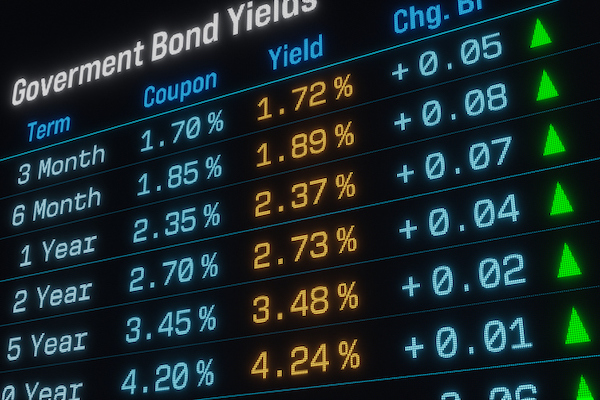
The US midterm elections triggered a significant change in global market sentiment, with immediate implications for crude oil prices, US Treasury yields and emerging market bonds.
In the November polls, the Democrats won both, the House of Representatives and the Senate, and that has increased political pressure on the Trump administration, particularly over its handling of the Iran conflict. Markets responded sharply to the win, with crude prices falling and global bond yields declining.
The impact on the Indian bond market was equally significant. Yield on the 10-year government security, which had risen to 7.50% in late October, declined to 7.1880% on November 4, and opened at 7.10% on November 5.
The rally over the last two trading sessions has been driven primarily by the outcome of the US midterm election, and its implications for the Iran conflict, crude oil prices and global interest rates. Improvement in global sentiment has been reinforced by value buying at higher yield levels, and short covering by those who had positioned themselves for further increases in yields.
After the sharp sell-off, institutional investors found value in government securities at yields around 7.40% to 7.50%. As bond prices started recovering, short covering added to the buying momentum, accelerating the rally.
The Trigger for the Global Bond Rally
The Democrats’ victory in both chambers of Congress represents a major political setback for President Trump.
For the financial markets, however, the more immediate implication is the possible change in the US approach to the Iran conflict. The war had pushed crude prices sharply higher, raising concerns over global inflation, energy supplies and economic growth.
US Vice President JD Vance has publicly questioned the cost of the Iran war, and linked the conflict to the Republican election defeat. President Trump also acknowledged that the war contributed to the election setback, although he continues to defend the military action.
These developments have strengthened expectations that the administration may face greater pressure to pursue a negotiated settlement, rather than continue military action.
Brent crude, which had climbed to $115-$117 per barrel, fell by more than 8% on November 4 and settled at $94.62. It declined further on November 5, with prices moving towards $93.65. WTI crude also recorded a significant correction.
The fall in crude prices reflects expectations of reduced geopolitical risk and the possibility of an eventual improvement in supplies. However, a peace agreement has not yet been reached, and possibility of renewed military action and further supply disruptions cannot be ruled out. Therefore, the sharp correction in crude should not yet be treated as a permanent change in the oil price outlook.
A Broad-Based Rally
The rally in the US Treasury market has been broad-based. The 10-year Treasury yield declined to around 4.89% on November 4, while the latest overnight market snapshot showed it falling further to 4.843%. Yields have also declined across the 2, 5, 20 and 30 year maturities.
The fall in US yields reflects lower inflation concerns following the sharp correction in crude, increased demand for bonds and changing expectations about the economic and policy outlook.
The movement is not restricted to the US. Japanese, UK and Australian government bond yields also declined. This movement in global bond yields provided an additional boost to Indian securities.
The Indian 10-year government bond, at 7.10%, offers a nominal yield premium of approximately 226 basis points over the US Treasury at 4.843%. However, currency depreciation and hedging costs remain important considerations for foreign investors.
Recovery From Near ₹97 for Rupee
The rupee recovered from levels close to ₹97 to around ₹94.56.
One important factor behind its earlier recovery was the RBI’s concessional swap facility, which attracted substantial foreign currency inflows, particularly through FCNR(B) deposits. These inflows supported the rupee, although the gains were partly reversed when crude prices rose again in September.
The recent recovery has also been helped by lower crude prices, a softer US dollar and RBI intervention.
A stable rupee is important for the bond market as it reduces the risk of imported inflation and improves the attractiveness of Indian debt to foreign investors. If crude remains below $95, it could provide further support to the currency.
FPI Appetite Remains a Concern
Foreign investors, who were significant buyers of Indian government securities earlier this year, turned cautious in recent months. The sales under the Fully Accessible Route reflects concerns over the rupee, elevated bond yields, crude prices and uncertainty surrounding India’s global bond index inclusion.
The sharp correction in crude and US Treasury yields could improve foreign investor sentiment, and a stable rupee would further strengthen the case for fresh investment. However, sustained return of FPI buying will require greater confidence in the currency and the global interest rate outlook.
RBI’s Inflation Concerns and the December Policy
The domestic inflation outlook remains a key concern for the RBI. Food price pressures, elevated energy costs and the possibility of crude related price increases spreading across the economy could keep inflation elevated.
In its October policy, the RBI raised the repo rate by 25 basis points to 5.50% and shifted its stance to calibrated tightening. The Monetary Policy Committee specifically highlighted the risks from food and fuel inflation, broadening price pressures and the possibility of second round effects.
In my assessment, if crude remains around $100 and inflation does not moderate, another 25 basis point rate hike in the December policy cannot be ruled out. This is a risk scenario rather than a prediction.
On the other hand, if crude prices decline further, the rupee remains stable and inflation data improve, the RBI could pause in December. If these favourable conditions continue, a pause in February would also be a possibility. These are my expectations based on the current macroeconomic environment.
RBI Steps Up VRRR Absorption
Surplus liquidity in the banking system, which had exceeded ₹13 trillion crore at its peak, has been absorbed and has now narrowed to approximately ₹1.93 trillion.
The RBI used various liquidity management tools, including forex swaps, open market operations and variable rate reverse repo operations to absorb the surplus funds. After conducting overnight VRRR operations on November 4, the RBI announced another overnight VRRR auction of ₹750 billion for November 5. This continued use of VRRR indicates that the RBI is actively managing the remaining surplus liquidity and seeking to keep overnight money market rates aligned with its policy stance.
Even if the repo rate remains unchanged, tighter liquidity can keep short term money market rates firm and influence the cost of funds across the banking system.
The RBI decided not to accept any bids in the 182 day Treasury Bill auction on November 4, despite the issue being oversubscribed. This is another development worth watching in the context of evolving money market conditions.
Changing Borrowing Patterns
The corporate bond market has seen an interesting shift in borrowing behaviour over the last few months.
Before the October monetary policy, several large private corporates had front loaded their bond issuances, taking advantage of the relatively favourable market conditions. At the same time, some PSUs withdrew or postponed their proposed bond borrowings, finding better pricing through alternative funding sources such as bank loans linked to EBLR and overseas borrowings.
The RBI’s concessional forex swap facility also improved the economics of eligible overseas funding. Under the June 2026 facility, eligible PSU external commercial borrowings and overseas foreign currency borrowings by banks received access to a dollar rupee swap at a fixed rate of 1.5% per annum, subject to the prescribed conditions and a maximum five year tenor. This provided lower cost currency hedging support and made overseas funding more attractive for eligible borrowers.
Following the October policy rate increase, however, the borrowing equation changed. Despite higher bond yields, several PSUs returned to the domestic bond market because bond funding remained comparatively cheaper than bank loans for their requirements.
Now, with government bond yields falling sharply, the situation has become more favourable. From the beginning of November, we are seeing a significant return of issuers across sectors, including PSUs, banks and financial institutions, NBFCs and private corporates. The recent fundraising activity by NABARD, SIDBI, Persistent Systems and other large issuers reflects this renewed interest.
This is an important development. The earlier moderation in corporate bond issuance was not necessarily a sign of weak borrowing demand. It was partly a shift towards alternative funding channels. With bond yields now correcting, the domestic bond market is once again becoming an attractive funding option.
Is The Rally Sustainable?
The latest global developments have significantly strengthened the case for Indian government bonds. The sharp correction in crude below $95, the decline in US Treasury yields and expectations of possible descalation in the Iran conflict have materially improved the external environment.
As anticipated, the Indian bond market rallied.
The sharp reversal demonstrates how quickly sentiment can change overnight when global risk factors ease. However, the domestic picture is not yet decisively favourable. Inflation risks persist, the RBI has adopted a calibrated tightening stance and liquidity remains tight. The possibility of another rate hike in December also remains a risk.
The next few weeks will be important. A sustained correction in crude, stability in the rupee, moderation in inflation and a pause by the RBI could provide the foundation for a more durable rally.
Conclusion
The last two days have demonstrated the influence of global political developments on Indian bond markets. The US midterm election outcome, the resulting pressure on the Trump administration over the Iran conflict, the sharp correction in crude and the fall in global bond yields have collectively triggered a major change in market sentiment.
The immediate outlook has shifted in favour of bond market bulls.
However, the sustainability of this rally will depend on crude remaining lower, the rupee staying stable and domestic inflation moderating. The December RBI policy will be an important determinant of the next direction.
For now, the relief rally has turned into a meaningful market reversal. The challenge is to see whether improving global sentiment is followed by an equally favourable shift in India’s domestic inflation and liquidity conditions.
.png)