.png)

That Little Moti-Snan that Brings Diwali Home
For many Maharashtrian families, a round cake of Moti carries the fragrance of abhyanga snan, childhood and a little luxury saved for Diwali.

Mansi Kelkar is journalist with over 20 years of experience in reporting and editing across financial and startup ecosystems. Even when she is not on the job, she is busy correcting her twins' grammar.
November 7, 2026 at 5:46 AM IST
It’s early morning, not even dawn. On Naraka Chaturdashi, the house must wake before the sun. Generations have told us that if we do not have a bath before sunrise, we are going to narak (hell), so to avoid that fate for our soul, we must get moving. Five more minutes under the pangharun, the blanket, suddenly seems a rather risky bargain.
But it is never as simple as just a bath. There is oil to apply on the body, a champi is of course mandatory, and then there is the sugandhi utane, the fragrant bathing scrub. This is abhyanga snan, the ritual bath, with its familiar sequence of oil, gentle rubbing and warm water.
Finally, when hot water touches the scalp, Diwali starts to look like a reality. But for many of us, it is only when the sandal perfume of that familiar round soap rises through the steam that the festive fervour feels tangible. A little chandan, and suddenly all that early rising seems worthwhile.
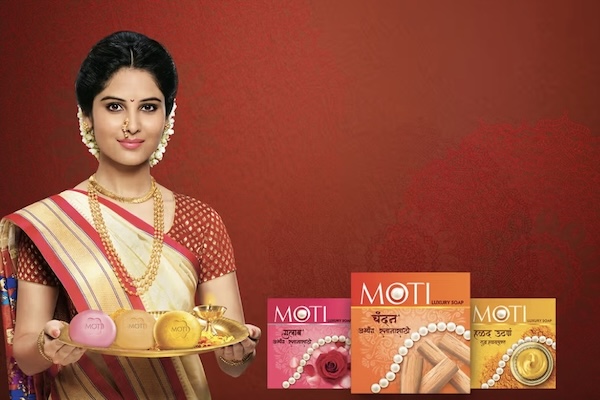
Yes, to many Maharashtrian households, Diwali means chakli, chiwda and of course Moti Sandal soap. I have seen it at my parents’ home and my in-laws’, at maher and sasar. Friends swear by the tradition and an elderly aunt once assured me it’s a centuries-old tradition! The parampara of the bath certainly goes back much further than the brand. But when a soap has occupied the same corner of the bathroom for enough Diwalis, who is keeping count?
Tradition or not, as I set out to decode this strange pairing of Diwali and Moti, the explanations arrive with all the warmth and certainty of family recipes.
-
It has a nice round shape, like a moti, a pearl, and makes me feel my skin will become pearl-like too.
-
We apply utane as part of tradition, and the sandal smell of the soap goes well with it.
-
Do you remember the ad? ‘Utha, utha, Diwali aali, Moti snanachi vel zali!’ It says, and I translate, ‘Diwali is here and it is time for a Moti bath,’ so well, we have a Moti bath.
That advertisement deserves some credit. Its familiar Marathi call sounds perfectly at home among the morning’s instructions from Aai and Aaji, mother and grandmother. A line written to sell soap has acquired the reassuring sound of someone making sure the whole family is up in time.
There are several more explanations, each offered with such affection that the original question begins to feel beside the point. Come Dussehra, the familiar round soaps are waiting on shop shelves for their annual homecoming.
In my fact-finding quest this year, the most persuasive answer came from my mother-in-law. As she remembers it, Moti was priced at a premium and to many households was affordable only once or at best, a few times a year. In her recollection, it appeared in the shops just before Diwali. Stocking up was not an option given the ‘investment’ it entailed, so it became a Diwali tradition.
There is a whole household economy in that explanation. Alongside the navin kapde, the new clothes, and the tins of faral, the festive sweets and savouries, that little cake of Moti Soap represented permission to spend a little extra on oneself. An indulgence saved for a special morning had become part of what made the morning special.
The chandan fragrance was at home beside the oil and utane. Advertising strengthened the association, but families did the rest, buying it again and again until the purchase no longer needed explaining. Somewhere along the way, ‘the soap we buy for Diwali’ became ‘the soap without which it doesn’t feel like Diwali’.
So, each year, no matter whether you think it is a tradition passed from generation to generation, or that Moti will make your skin glow like a pearl, the big soap finds its way into the shopping bag. Perhaps what we are bringing home is a little aapulki, that familiar warmth of belonging.
Indulge in chiwda and shankarpale and chakli for breakfast and when you are happy in your skin and stomach, you’ll know Diwali is truly here. The abhyanga snan is done, the faral is on the table, and for a little while, the house smells the way Diwali always did.
Jai Maharashtra and Diwalichya hardik shubhechha!
More From BasisPoint