.png)

Phynix is a seasoned journalist who revels in playful, unconventional narration, blending quirky storytelling with measured, precise editing. Her work embodies a dual mastery of creative flair and steadfast rigor.
November 23, 2026 at 3:13 AM IST
(BasisPoint Insight will be available only to paid subscribers from January 1, 2027. Our subscription plans start at ₹399 per month.)
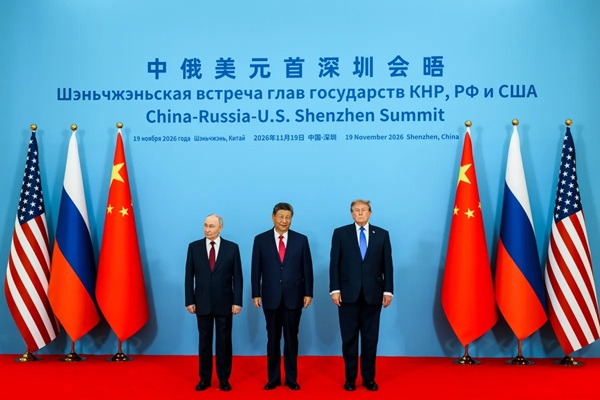
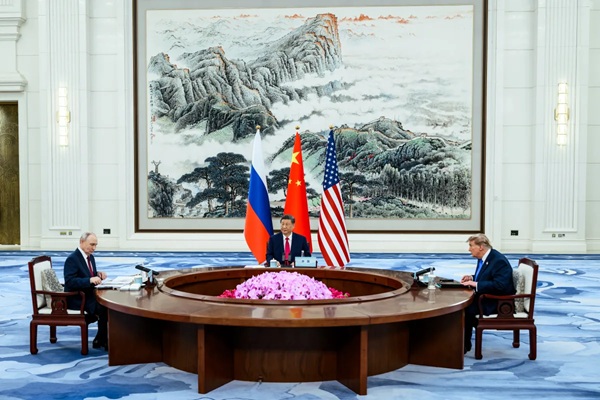
Sun Tzu wrote that the supreme art of war is to subdue the enemy without fighting. Twenty-five centuries later, the world's three most powerful leaders gathered in Shenzhen and proved him spectacularly wrong, or perhaps spectacularly right, depending on how one reads the silence.
Lt Gen Syed Ata Hasnain observes that when Trump, Xi and Putin met, they agreed to dialogue on nuclear risks but said little about the wars actually burning. It was a summit about fire extinguishers while the building smouldered. There was no verification, timetable or consequence, just three leaders testing possibilities while their proxies tested weapons. The optics were telling too: Trump met Quad leaders in Manila before flying to Shenzhen. Was Washington signalling receding interest in the Indo-Pacific or prioritising great-power theatre over alliance maintenance?
Power is one thing; survival is another. Michael Debabrata Patra reminds us that monetary policy does not stop at borders. Large economies generate spillovers, while smaller ones occasionally generate spillbacks. India, usually on the receiving end of American policy shifts, also influences neighbouring economies, some of which use the rupee as legal tender. Yet even the mighty face the Impossible Trinity: fixed exchange rates, open capital accounts and independent monetary policy. Pick two. The rest is triage.
And triage is precisely what the RBI has been practising. Basis View notes that the rupee's climb to a seven-month high of 93.24 looks like victory until one notices who is missing from the market. The RBI's special window supplies dollars directly to oil companies, taking their bids out of the interbank market. Demand has not disappeared; it has moved offstage. With its net short forward position at a record $239.17 billion, the central bank is juggling rather than celebrating.
Yield Scribe adds that reserves stood at $719.5 billion on November 6, around $66 billion below their September peak, with $45-55 billion of the decline reflecting intervention. The recovery offers an opportunity to rebuild buffers, but that window may close sooner than markets expect.
Ria Matwani adds that the rupee's recovery to the 92-handle strengthens the case for unwinding October's costly FX restrictions, particularly those affecting currency hedging. But the RBI must tread more carefully with the special dollar window for oil companies.
Sagari Gupta exposes another cost of the defence. To attract dollar deposits, the RBI made FCNR(B) deposits cheaper for banks. These surged from $32.56 billion to $60.55 billion in 55 days. The rupee steadied, but resident savers paid. Flush with cash, banks had little incentive to compete for household deposits. Fresh rupee term deposits earned 5.61% in September against retail inflation of 6.09%. That is ₹480 lost annually for every ₹100,000 deposited, before tax.
V Thiagarajan adds another complication. The $125.6 billion net increase in NRI deposits coincided with a $51.4 billion outflow under "ECB By India", suggesting some deposits may have been leveraged through foreign-currency financing. The rupee defence, in other words, may have been borrowed.
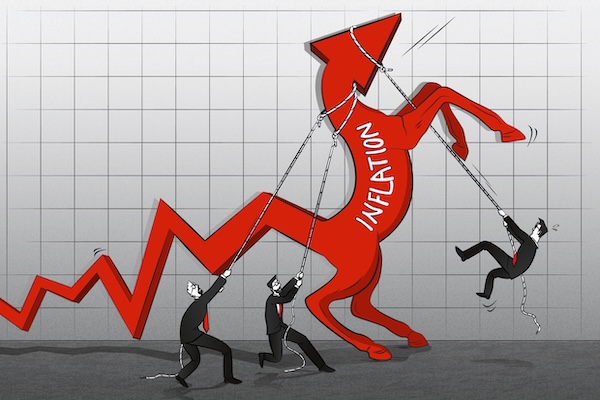
Borrowed money eventually demands repayment, often at the worst moment. Enter inflation. Vivek Kaul is characteristically blunt: retail inflation at 6.1%, wholesale inflation at 12.3%, and economists insisting the RBI cannot do much about supply shocks. He questions whose interests this argument serves, given the corporate affiliations of many making it. Michael Debabrata Patra calls this the supply-shock alibi and recalls how central banks dismissed inflation as transitory in 2022, only to spend the next two years catching up. Invoking the late S S Tarapore, he reminds us: "If you wish to go to heaven, come with me. But remember, the path lies through hell."
Anuj Agarwal offers a more measured warning. Supply shocks cannot be dismissed as temporary once they influence wage negotiations and inflation expectations. The RBI must neither panic nor dawdle. It must act.
But suppressing pressure in one place often sends it somewhere else. Thiagarajan returns with a warning about duration: a stable rupee can coexist with higher borrowing costs. When global real rates rise, India absorbs the shock through currency depreciation, domestic rates, credit spreads or the sovereign term premium. Stabilising the currency does not eliminate the adjustment; it can move it to the long end of the yield curve.
The bill for India's growth story is arriving elsewhere too. Deepa Vasudevan introduces the idea of a "vibecession": impressive GDP numbers alongside deteriorating consumer confidence. Yet RBI surveys show confidence falling steadily since January 2026, marking the longest and steepest decline since the pandemic. The gloom is universal. Vibecession is more than a fashionable expression; it is evidence that something is not adding up.
Dhananjay Sinha argues that the missing piece is investment. Prime Minister Modi's rebuke to India Inc at FICCI's centenary reflected years of frustration. Corporate tax cuts from 30% to 22% lifted margins, but companies used the windfall to deleverage and accumulate cash rather than build factories or raise wages. The private corporate sector's share of investment fell from over 40% in 2016 to around 34% in 2024. Weak consumer demand makes expansion harder to justify, particularly when wage restraint erodes purchasing power.
Finance Minister Nirmala Sitharaman compared Indian industry to Lord Hanuman, wondering why corporate leaders needed constant coaxing to unleash their animal spirits. Srinath Sridharan and Basis View make the necessary distinction: tax concessions are policy instruments, not political IOUs. Lower rates improve post-tax returns; they do not oblige companies to invest. Capital allocation remains a boardroom responsibility. Governments can create conditions, not command outcomes.
The confidence deficit extends to foreign investors. Indra Chourasia notes that net FPI equity flows have been negative every financial year since 2024-25, with cumulative outflows reaching ₹3.88 trillion by November 13. Scrapping capital gains tax may dominate the debate, but stability and predictability matter more than rates alone. Investors need unified regulation, a multi-year roadmap and risk-based classification.
Prasanna Mohanty raises the question of accountability. During a Supreme Court hearing on unpaid dearness allowance, Justice B V Nagarathna described government employees as a "privileged class" and suggested contractual recruitment. Mohanty argues that changing employment status cannot, by itself, clarify duties or improve supervision. The state has obligations as an employer too. Income transfers and subsidies cannot replace reliable earnings over a working life.
Sharmila Kantha finds a similar gap between announcement and delivery in disinvestment. India may finally meet its revenue target this year, but the wider privatisation reform announced in 2021 remains unfinished. Despite dividend income of ₹1.39 trillion, the government continues to increase equity and loans. Atmanirbhar Bharat envisaged minimal government participation in industry. That objective deserves consistency, not piecemeal offloading.
Ritesh Kumar Singh notes that merchandise exports rose 22% to $309.06 billion in the first seven months of the fiscal, with electronics up 46.9% and petroleum products 47.7%. But export industries can be heavily dependent on imported inputs. Petroleum refining relies on imported crude, albeit from diversified sources. The real measure of export success is how much value India retains.
The AI boom offers a cautionary tale about value chains. Gaurav Rastogi recalls the Quebec Bridge, which collapsed in 1907 because engineers underestimated its dead load and failed to revise their calculations. Nvidia trades at roughly 13 times next year's earnings, but those earnings are elevated partly because customers are spending borrowed money. Technology can succeed even as those financing its initial build-out lose money. Railways and the internet were real too.
Srinath Sridharan and Arjun Raghavendra M take the argument further. Nvidia's filings disclose $366 billion in supplier commitments, $56 billion to secure land and power for customers, and up to $108.5 billion in credit guarantees. The company is simultaneously investor, guarantor, exclusive supplier and customer of last resort. Money leaves as credit support and returns as chip sales. The question is not necessarily scandal but succession: what happens when an industry built around a supplier's balance sheet loses that support?
Bitcoin offers a parallel lesson in leverage. Yield Scribe traces its fall from $86,979 on September 21 to $62,100 on November 15, a 29% decline in under eight weeks. Recovery requires renewed demand and relief on interest rates. Lower leverage may reduce forced selling, but sustained buying remains essential.
Rabi N. Mishra argues that risk management frameworks developed over 25 years are no longer adequate. Cybersecurity, ranked tenth in 2023 projections, now tops the 2027 list. Technology adoption, regulation, disruptive innovation and talent have also entered the 2030 top ten. Risk awareness must become part of organisational culture, with the CRO having a strategic voice.
Srinath Sridharan's examination of the Yes Bank AT-1 dispute raises questions about regulatory preparedness. The Supreme Court's October 15 judgment held that the administrator could not exercise a power belonging to the RBI when the final scheme did not confer that authority. An express write-down provision in the draft scheme was absent from the final version. Six years after the rescue, the legal consequences remain contested.
The RBI's proposed fair-value reset of Held-to-Maturity investments would require a one-time adjustment on March 31, 2027. Banks are exploring yield-based amortisation to recognise premiums or discounts progressively. R Gurumurthy points out that Silicon Valley Bank failed because of concentrated uninsured deposits, interest-rate exposure and supervisory failures, not HTM accounting alone. Supervisors must look beyond classifications to underlying risks. The question is whether the regulator has chosen the most prudent method and timing.
Rakesh Khar examines how states are trying to protect investors from political reversals. Andhra Pradesh's proposed Investment Protection Act and Telangana's pitch as a guardian of global capital reflect a growing recognition that a Chief Minister's charisma is insufficient. Capital goes where it is respected and protected from electoral whims.
Krishnadevan V offers a perspective on India's ambitions. On a day when Anthropic's $1.5 trillion valuation dominated headlines, Mahanadi Coalfields advertised its IPO. One represented extraordinary AI valuations; the other, an investment opportunity in coal. Uday Kotak compared Anthropic's valuation with the combined market capitalisation of India's ten largest listed companies, asking whether India was undervalued or needed to catch up. But Jio Platforms, Eternal, Swiggy and Urban Company offer a reminder that India has not been sitting idle while the world went digital.
Sun Tzu closed The Art of War with a chapter on spies: the importance of intelligence and knowing the terrain before marching. In 2027, that terrain is shifting everywhere. Three powers meet while wars continue. Central banks fight inflation while defending currencies. Corporations hoard cash as governments exhort them to invest. AI companies guarantee one another's revenues while investors cheer. The rupee rallies on borrowed dollars while savers pay the interest.
Until next time, keep moving, keep talking, keep adjusting, and hope the dead load holds.
Also Read
Can Digital Tracking of B2B Payments Deliver India a Keynesian Moment? by BL Chandak: A digital portal tracking invoice due dates could expose chronic defaulters and unlock working capital trapped in MSME receivables.
India’s Foreign Policy: From Non-Alignment to Multi-Alignment by R. Gurumurthy: India's multiple partnerships reflect pragmatic strategic autonomy, but balancing interests isn't the same as shaping the world.
The Andhra Pradesh Investment Protection Act: Can Legislation Prevent Political Risk? by Sharmila Chavaly: Andhra Pradesh wants a law shielding investments from future governments—can it bind successors?
Not Just Another Founder-CEO Exit: Why Jensen Huang’s Departure Is Different by Rajesh Mahapatra: Steve Jobs, Travis Kalanick, and Sam Altman left companies that could absorb the shock; Nvidia's situation is different.
Pay for the Product, Then Pay to Advertise the Seller? by R. Gurumurthy: Retailers charge customers for bags carrying their own logos—the practice survives because enforcement is weak.
The Silver Lining of a Data-Center Slowdown by Raghuram Rajan: AI labs are racing to build ever more capable models while most businesses struggle to use today's—why a deliberate slowdown might help.
Portfolio Regime Change? by Mohamed A. El-Erian: The AI boom has reshaped markets, challenged diversification, and weakened bonds as a safety net—are investors prepared?
The Indo-Pacific Returns to Centrestage by Lt Gen Syed Ata Hasnain: The ASEAN summit in Manila brings renewed attention to maritime security, regional stability, and the Quad's future.
The Perverse Economics of Pollution by Ujval Nanavati: Air pollution has many causes—one that doesn't get due attention is tax policy.
India’s Car Boom Is Fuelled by Sales, but Comes with an Exhaust Problem by Ganga Narayan Rath: Record vehicle sales boost manufacturers, but congestion, pollution, and health costs demand a rethink.
Spoiler or Spark? What the Azad–Owaisi Alliance means for UP 2027 by Amitabh Tiwari: The new Dalit–Muslim front is unlikely to win many seats but could determine who does in a state decided by razor-thin margins.
Scotch Whisky: Customs must reconsider its stand on classification by Ajay Srivastava: Customs should tax bulk Scotch based on what arrives at the border—shipping it in large containers doesn't change what was imported.
The Republic of Headcounts: Why India's Informal Earners Have Been Left Behind by Arvind Mayaram: Nine years after demonetisation, India counts more workers than ever but has neither counted nor protected what their work pays.
What the Economics of Dating Can Teach Us About Arranged Marriages by Amitrajeet A. Batabyal: What dating economics reveals about arranged marriages, where families help choose partners and compatibility is discovered after committing.
The Great Indian Friendship Scheduling Crisis by Kalyani Srinath: Everyone wants to catch up soon; nobody can find a free Saturday. Where did our easy, drop-in friendships go?
Abundance in a Myriad Forms: The Quiet Gifts That Enrich Our Lives by Anupam Sonal: From pets' unconditional affection to unexpected kindness, abundance often lies in life's quieter gifts.
The Himalayas Had Other Plans by Anupam Sonal: Through freezing rain and unforgiving trails, a first-time ultra-runner discovers unexpected kindness and the pull of returning to the mountains.
Sarci Sense: Having the Last Word Even When Nothing to Say by Srinath Sridharan: From family WhatsApp wars to boardroom meetings, we turn every disagreement into an ego contest.
Negotiating Midterm Anxieties by Rajesh Ramachandran: Can the US midterm shift ease India's strained ties with Washington, or will state elections matter more?
The Preparedness Paradox by Kirti Tarang Pande: A leader who ignores a warning is negligent; one who acts and averts disaster is alarmist. Where is the sweet spot?
More From BasisPoint