.png)

Three Powers, No Common Ground: Reading Shenzhen and the Shape of Order in 2027
The Shenzhen summit brought Trump, Xi and Putin to the same table, but left major conflicts unresolved. Can selective cooperation shape a stable world order in 2027?
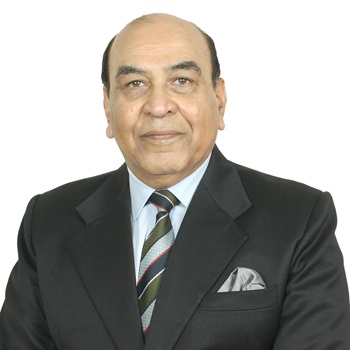
Lt Gen Syed Ata Hasnain is Governor, the State of Bihar, and Former Commander of India's Srinagar-based Chinar Corps.
November 22, 2026 at 12:17 PM IST
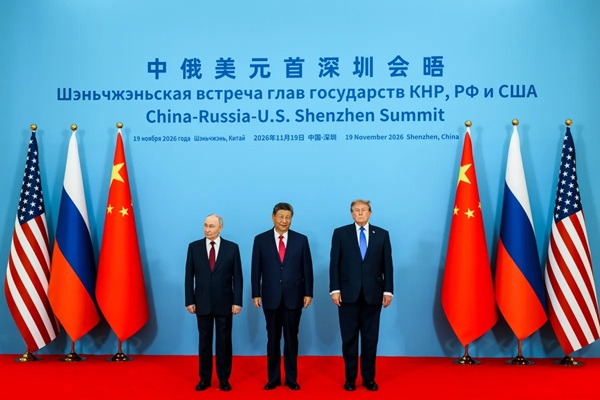
The meeting in Shenzhen between Donald Trump, Xi Jinping and Vladimir Putin appeared suddenly. Preparations reportedly began in September, before the American midterm elections of November 3. Public confirmation came later. Three leaders whose countries compete across military, economic and technological domains sat together while conflicts continue in Europe and West Asia.
The meeting produced no major breakthrough. That may be less important than the fact that it took place. The three governments agreed to pursue dialogue on reducing nuclear risks and preventing proliferation. The declaration offered little detail on commitments, verification or a timetable. The leaders appeared to be testing possibilities rather than negotiating a settled bargain. Each came with different priorities; none seemed ready to make significant concessions.
Nuclear Restraint and the Wars That Cannot Wait
Nuclear restraint is an important objective. New START's expiry removed the last treaty limiting deployed American and Russian strategic nuclear forces. China's expanding arsenal adds a difficult dimension. A conversation among the three powers therefore has value. But the danger of nuclear escalation cannot be separated from ongoing wars. Ukraine and West Asia continue to consume military resources, unsettle energy markets and deepen distrust. A nuclear dialogue that sidelines these conflicts risks addressing the temperature while leaving the fires burning.
The declaration's silence on the wars is striking. Ukraine cannot be discussed as a problem between Washington and Moscow alone. Ukrainian sovereignty and European security concerns have to be part of any durable settlement. In West Asia, the conflict involving Iran has implications for Israel, the Gulf, maritime routes and global energy supplies. China and Russia have influence, but neither can decide on behalf of regional actors. The three leaders may open doors; they cannot determine outcomes without those directly involved.
Is the Indo-Pacific Losing American Priority?
A second question concerns the Indo-Pacific. The trilateral meeting took place alongside the Asia-Pacific Economic Cooperation summit, and the sequence of President Trump's engagements was notable. He met Quad leaders in Manila before travelling to Shenzhen for discussions with Xi and Putin. The Quad meeting produced initiatives on maritime surveillance, resilient communications, cybersecurity, critical supply chains and disaster response. Yet the trilateral attracted greater attention and, according to some accounts, more presidential time. For America's partners, the optics matter.
Does this indicate receding American interest in the Indo-Pacific, or a return to an older Asia-Pacific framing? It would be premature to infer a change in policy from the venue or terminology. APEC is formally an Asia-Pacific institution, while the Indo-Pacific remains central to the Quad's stated approach. The test is sustained American engagement across the region: resources, deployments, technology partnerships and support for regional institutions. A president's preference for leader-level diplomacy with Beijing does not by itself establish a strategic withdrawal. But several allies and partners will watch whether attention to great-power bargaining comes at the expense of regional reassurance. For us in India that is significant to observe.
Taiwan: An Issue Between the Lines
Taiwan is an especially sensitive measure. It appears to have occupied limited space in the trilateral discussion. Taipei had itself assessed that the island was unlikely to be a principal subject, given the different priorities of the three participants. Xi nevertheless raised Taiwan in his separate meeting with Trump, urging Washington to take what Beijing described as the correct position. Chinese accounts also attributed to Trump the statement that the United States does not support Taiwan independence. The absence of a full public American readout leaves room for competing interpretations.
Does this point towards eventual American acceptance of Chinese integration of Taiwan? That conclusion may go too far. There is no evidence of an agreement on Taiwan's future. The proposed American arms package for Taiwan and the continuation of defence cooperation will be more concrete indicators. Yet the question is legitimate. If Washington increasingly treats Taiwan as one item in a wider bargain with Beijing, uncertainty will grow in Taipei and across the region. Any settlement imposed without the consent of Taiwan's people would also carry serious consequences for regional stability. The status quo cannot be just treated as a negotiable detail between larger powers.
The Missing Nuclear Dimension: North Korea
Another omission deserves attention: North Korea. The joint declaration referred to nuclear risk and proliferation but made no mention of Pyongyang's nuclear weapons or the Korean Peninsula. This is a significant gap. North Korea's capabilities directly affect the security calculations of South Korea and Japan, both important American partners, and complicate the wider nuclear environment. China has considerable influence in Pyongyang, although that influence should not be mistaken for control. Russia's growing relationship with North Korea adds another dimension. The omission may reflect limited time and competing priorities; it does not make the problem less urgent. Any serious discussion of nuclear risk in Asia will eventually have to include the Korean Peninsula.
What Does Shenzhen Tell Us About 2027?
The larger question is what Shenzhen tells us about the global order in 2027. The US, China and Russia possess the military weight and diplomatic reach to shape many defining questions. Their cooperation could reduce risks; their rivalry can intensify them. But the meeting did not reveal a shared vision of international order. It exposed the distance between their interests. Washington seeks a framework that addresses China's nuclear growth and preserves US influence. China wants strategic space and recognition of its priorities, especially Taiwan. Moscow seeks relief from isolation, a recognition of effective big power status and a settlement on terms it can accept. Their aims do overlap but selectively.
There is also a danger in viewing the three as a super-club entitled to decide the future of others. Europe cannot be absent from decisions on Ukraine; Taiwan cannot be treated as an object; Asian states cannot be expected to accept arrangements made over their heads. A stable order requires consultation beyond the largest powers. For India, this reinforces the importance of strategic autonomy, a multipolar balance and effective regional partnerships. The Quad remains relevant precisely because it gives like-minded countries a practical means of cooperation without requiring them to surrender independent judgement.
Shenzhen may therefore be less a blueprint for 2027 than an early indication of its diplomatic method; continuing intense competition accompanied by selective engagement. The three leaders were, in effect, groping for areas where their interests might intersect, while avoiding concessions that could constrain them later. They continue to compete and, in some theatres, confront one another through partners and proxies. Yet they judged that talking was worthwhile. That is a modest opening, not a new order. Its value will be measured by whether dialogue becomes sustained, whether wars are brought closer to settlement, and whether smaller and middle powers retain a meaningful voice in decisions that affect them.
More From BasisPoint