.png)

The Himalayas Had Other Plans
Through freezing rain and unforgiving trails, a first-time ultra-runner discovers unexpected kindness and the pull of returning to the mountains.
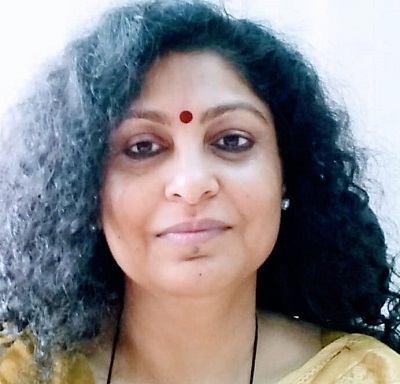
Anupam Sonal, a career central banker with 34+ years’ experience in regulation, supervision, customer protection and fintech, is currently a Senior Advisor and Independent Director to banks & NBFCs.
November 16, 2026 at 8:39 AM IST
For a short stretch of Himalayan track, my guide was a girl of about five. She took my hand and led me along, a small, spontaneous kindness that has stayed with me.
The route wound its way through villages along the Indo-Nepal border, past brightly coloured homes adorned with flowers. Residents came out to cheer us on, while children waved with infectious enthusiasm. It was a welcome imbued with a warmth and spontaneity all its own.
And then there was the landscape — a breathtaking expanse of spectacular beauty and awe-inspiring majesty, so overwhelming in its splendour that it would take an entire thesaurus to do it justice.
My target was 100 km. In the end, I completed 80 km over four days. There is still a twinge of regret about the missing 20. There is also the memory of the little girl’s hand.
The mountains had greeted us with clear skies and sunshine when Mandeep, my better half, and I arrived at Mirik, our base in Darjeeling district, on October 27, 2026. We had come for the 100-Mile Himalayan Stage Run, held from October 29 to November 2.
I had announced my participation with considerable confidence. On discovering the 100 km option, I promptly switched categories, a decision that proved rather wise in hindsight!
With more than 6,500 metres of elevation gain, demanding climbs were inevitable. My plan was to take the inclines easy and pick up the pace on the descents. But the way down brought its upsetting surprises with steep drops towards the valleys, slippery tracks and boulders strewn paths.
Cyclone Arnab caught us off guard bringing rain and freezing temperatures during the first three days. We ran ankle-deep in water, soaked to the skin, our fingers so numb with cold that we needed help even to open hydration sachets, reach for nutrition or tie our shoelaces.
On finishing the second day, I developed hypothermia and spent almost 12 hours battling uncontrollable shivering, without any heating or hot water for comfort.
By day three, I was not physically exhausted, but simply not enthused with running yet another day in dripping gear with rain pounding my body from all angles. On the steep waterlogged trails, every step demanded attention. The effort was as much mental as physical.
Days four and five were clear and sunny, but once again we were soaked, this time in perspiration under the harsh, direct sun.
There are few photographs. Near-zero visibility and frozen fingers making them a rarity during the first three days; later, one was forced to concentrate on the trail and to make up for the lost time. Avoiding a fall and injuries mattered more than stopping for a picture.
It was an ethereal, almost spiritual experience, something surreal that could only be absorbed internally, never fully described or captured in pictures.
Even with all that concentration, the event proved to be an incredible creative process for me, as several new articles ran through my mind, including this very narrative, almost fully drafted as I ran. This was a blessing, keeping my mind occupied and distracted from the sheer difficulty involved in the run.
Surprisingly, despite the punishing terrain, altitude and lingering injuries, I remained remarkably fresh throughout, navigating miles of dense, dark forests alone, without a soul in sight or rescue options, yet without fear.
There was something larger at work, a grace from the Universe, a divine hand propelling me mile after mile, beyond fatigue, exhaustion or pain.
Mandeep went on to secure podium finishes in both the 100-mile race and the 45 km Everest Challenge. We met elite runners from India and across the globe, sharing experiences and a bonhomie built on a common passion for running and adventure.
Quite weirdly, every few kilometres, at the water and aid stations, I would eagerly enquire about the remaining distance as if that would bring the finish line sooner. More often than not, we would not stop for refills, wanting to complete the day’s stage as soon as possible.
The teams staffing those unsheltered stations stayed for the last runners and accompanied slower finishers through rain, cold and mountain darkness. Without their work, none of our experiences would have been possible.
I seriously considered joining the 100-mile runners on days four and five to make up the 20 k lag. But my left ankle was already hurting and felt vulnerable to a twist at every step. I wisely decided against risking further injury.
For someone who had only recently ventured into 21 km half marathons, there is much to feel pleased about. I am a bona fide ultra-runner now. That, however, does not quite erase the regret about those missing 20 km caused by hypothermia.
Somebody asked me if I would do it again in such conditions.
My answer, without hesitation, was a yes!
More From BasisPoint