.png)


Basis View is the House View of BasisPoint’s in-house columnists.
November 19, 2026 at 1:15 PM IST
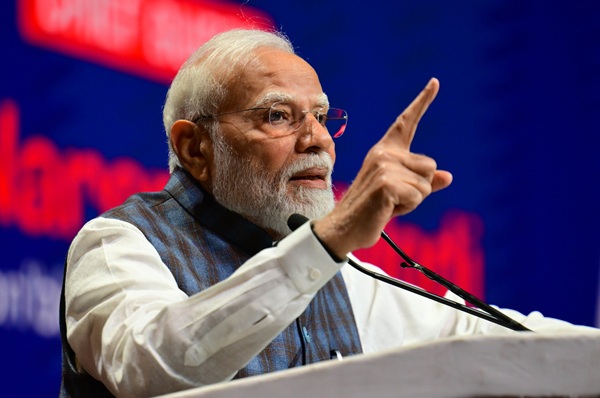
At FICCI’s annual convention, Prime Minister Narendra Modi reminded industry of the government’s corporate tax reductions, household income tax relief and other reforms. He asked whether businesses had increased salaries or hired more employees, and urged them to invest more ambitiously. His frustration raises a question for the government itself: what response did these policies reasonably promise, and what evidence shows they have delivered?
The implication was that the government had done its part and industry now owed a response. That may be an effective political appeal, but it is an incomplete account of how investment decisions are made. If the response has disappointed, the assumptions behind the policy deserve as much scrutiny as corporate behaviour.
A lower corporate tax rate can make an investment more attractive by increasing the return a company expects to retain. It can also release funds for businesses that struggle to finance expansion. These are legitimate reasons for reducing taxes. The difficulty begins when a possible improvement in investment is treated as an assured consequence.
A company can retain more of its existing profits without finding enough customers to justify another factory. It may repay debt, accumulate cash or distribute earnings to shareholders. Those decisions can disappoint a government seeking immediate expansion, yet remain commercially rational. Stronger balance sheets may support investment later, but the timing and scale cannot be settled by an appeal from a podium.
The design of the 2019 reform matters here. The optional 22% base corporate tax rate required companies to forgo specified exemptions and incentives, rather than meet general investment or employment targets. A separate concession was offered to qualifying new manufacturing companies. The government chose different instruments for different purposes; it cannot retrospectively turn the broad rate reduction into an investment commitment that businesses never made.
Household income tax relief works through a different route as it increases disposable income, some of which may become additional consumption. Whether businesses respond with new capacity depends on the strength and durability of that demand, and how much they can supply from existing facilities. Relief received by employees does not directly enlarge their employers’ wage budgets, making an automatic expectation of salary increases particularly difficult to sustain.
The first lesson for the government is therefore diagnostic.
What was holding investment back when it offered the relief: inadequate returns after tax, difficulty raising finance, insufficient orders or uncertainty about future operating conditions? These constraints require different responses. A tax cut can help a viable project cross the investment threshold, while doing much less for a company that cannot see a durable market.
The second lesson concerns evidence: How much additional investment resulted from the concession, beyond what businesses would have undertaken anyway? A rise in investment after a tax change cannot, by itself, establish success. Equally, a disappointing aggregate investment number cannot establish that the change achieved nothing. The assessment must allow for the pandemic, other shocks and the time required to plan and complete projects.
The government should publish an assessment that separates benefits to existing profits from investment induced by the lower rate. It should distinguish private corporate investment from government spending and household construction, and examine outcomes across sectors and company sizes. Taxpayers deserve to know which constraints were eased and what economic gains were secured against the estimated fiscal cost.
Investment, employment and wages also need separate tests. A new automated plant may expand production without proportionate hiring. Higher productivity may create room for better pay, but how the gains are shared also depends on labour market conditions. If the government wants several outcomes, it must explain how its policies are expected to produce each of them.
The third lesson is about the government’s own contribution to investment risk, starting with whether approvals are timely, contracts enforceable and rules predictable over the life of a project. Can firms obtain reliable infrastructure and competitively priced inputs? A business may value a lower tax rate while still deciding that uncertainty makes waiting preferable. Expressions of government friendliness cannot settle those calculations.
Examining the opportunity cost also means asking whether some of the fiscal resources committed to concessions could have generated more investment through infrastructure, skills, research or stronger household demand. That requires comparison, rather than an assumption that public spending always works better. The relevant question is which use of limited resources produces the larger and more durable economic gain.
None of this calls for an abrupt reversal of tax policy, which could itself weaken confidence. It calls for clearer objectives, credible evaluation and better diagnosis before the next concession is announced. Where targeted support is intended to secure specified investment or employment, the conditions should be transparent and agreed in advance, with review dates and consequences for non-performance.
The Prime Minister also invited industry to identify reforms still needed, an invitation that offers a constructive next step if the government uses the answers to examine its own assumptions. It is entitled to seek greater corporate ambition, but it owes taxpayers an account of its policy choices. Disappointment with the response to tax relief should lead to better policy design, rather than a larger claim on corporate gratitude.
More From BasisPoint