.png)

Lessons From India’s Inflation Targeting Decade
After a decade tested by a pandemic and war, Michael Patra distils four lessons from India’s flexible inflation-targeting framework.
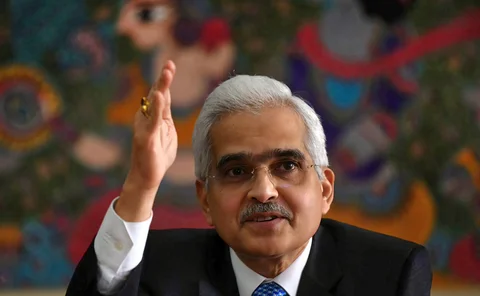

Michael Patra is an economist, a career central banker, and a former RBI Deputy Governor who led monetary policy and helped shape India’s inflation targeting framework.
August 5, 2026 at 2:53 AM IST
Flexible Inflation Targeting has become the most enduring monetary policy regime in India. It has been heralded as among the most successful reforms of the country. In the first five years of its operation, including the year of the pandemic, inflation averaged 4.5%. Some cynics ascribed this success to good luck rather than good policy as international commodity prices, especially of crude petroleum, fell to a cyclical low.
An influential view pointed out in an interview that the framework has not been tested so far.
Then came the pandemic! Faced with unprecedented loss of life and livelihood, the MPC under the stewardship of Governor Shaktikanta Das prioritised growth over inflation, although inflation breached the upper tolerance band. Eventually, inflation was brought back into the tolerance band by December 2021-January 2022. And then came the Ukraine war!
The MPC switched its focus to inflation with an off-cycle meeting in May 2022, raising the policy rate by an unprecedented 250 basis points up to February 2023. An anti-inflation stance was maintained right up to January 2024.
As a consequence, inflation was brought back to target in 2025-26 and, aided by deflation in food prices, fell below the lower tolerance band in some months.
As Governor Das pointed out, “the period since the onset of the pandemic is an example of how the Reserve Bank of India could effectively maintain balance between price stability and growth within the space provided by the flexible inflation targeting framework.” He likened the inflation battle to a game of chess: "In cricket, you play one shot very badly, but you can play the next shot very well. But chess is one game where if you make one wrong move, you can lose the game. It is like that in the battle against inflation. We cannot afford to make any wrong move.”
With his celebrated metaphor of Arjuna’s eye in the unwavering fight against inflation, flexible inflation targeting won a new champion. In his understated manner, he brought in, and also engendered an environment in which we were encouraged to fashion, several innovations in conducting monetary policy, like rate changes that were not the standard 25 basis points or multiples thereof; a panoply of unconventional measures that pulled India out of the pandemic; a dogged, successful fight against the inflation surge that the Ukraine war unleashed worldwide; stabilisation of the exchange rate symmetrically across periods of trying downward pressures as in 2022-23 and in the later half of 2024-25 as well as intense upward pressures in 2021-22, 2023-24 and the first half of 2024-25. As a result, India enjoyed a remarkable period of macroeconomic and financial stability, with real GDP growth averaging 7.8% during 2021-22 to 2025-26.
Today, India continues to record moderate inflation, although in the wake of the conflict in West Asia, the RBI is bracing up for an intensification of price pressures. Despite the fallout of the war in Ukraine and the worldwide inflation it triggered, inflation in India averaged 4.9% during 2021-22 to 2025-26. Following a second review in March 2026, the government has retained the inflation target at 4% as well as the +/- 2% tolerance band around it.
What are the lessons that can be drawn from this tumultuous decade of flexible inflation targeting?
A wealth of assessment is available from the RBI’s Report on Currency and Finance, 2021, which was published co-terminus with the first review of flexible inflation targeting, and from the RBI’s Discussion Paper on Review of Monetary Policy Framework that was timed with the second review.
In the interest of time, I chose just four.
Voting Pattern
First, how does the committee's approach to decision-making fare? There is general acceptance that it ushered in diversity of opinion, collective wisdom and transparency. This is reflected in the voting pattern on the policy rate and stance across members over time. Split decisions outnumbered unanimous ones, and even when members agreed, their arguments and rationale often differed, suggesting independence in thinking and in assigning weights to inflation and growth.
The MPC has shown maximum dissent with regard to keeping the repo rate unchanged (pause), followed by occasions when the rate was cut by 25 basis points – clearly a hawkish MPC! This is also borne out by a text mining exercise which shows that the MPC has placed greater emphasis on inflation than growth.
Accountability
This is followed up by a more elaborate explanation in the Governor’s statement that also provides the macroeconomic context as well as other developmental and regulatory measures taken by the RBI.
Immediately following is an open and publicly aired press conference to take any questions or comments that the press may have in reporting the decision. In 14 days from the decision, the minutes of the MPC are made public, giving individual statements by each MPC member providing arguments for his or her vote.
Every six months, the RBI issues a monetary policy report giving a detailed account of macroeconomic conditions, the operating procedure, transmission dynamics, and a roundup of global developments.
The monetary policy decision is preceded by wide consultations with economists, trade bodies, market participants, analysts and researchers. This communication and interaction is like an instrument of monetary policy because it helps to shape public expectations and provides clues about the thinking process of the MPC.
In the event of inflation breaching the upper or lower tolerance band consecutively for three quarters, the RBI is required to write a letter to the government indicating why it failed, what steps it plans to take to return inflation to target, and over what time horizon. In the aftermath of the Ukraine war, the RBI wrote such a letter.
The key issue is the F in flexible inflation targeting: failure over a period of time, not every point in time; inflation measured in averages, not points; failure in terms of the tolerance band, not the inflation target itself; remedial action over a period of time, not cold turkey; and a dual mandate, requiring cognisance of growth consequences of anti-inflation monetary policy.
Setting the Target and the Tolerance Bands
A target that is above trend will cause depressionary monetary policy. A target below trend will be unduly expansionary. Therefore, the key is to measure trend inflation as accurately as possible. A battery of methods is employed to separate out cyclical and irregular factors from the deseasonalised consumer price index (CPI) while watching out for regime shifts that can distort trend measurement unless taken care of.
Above all, the measurement of trend inflation must be time varying, not fixed over time. Another way to set the target is to take inflation of advanced economies and add the positive productivity differential that accrues to India.
An important point to bear in mind is the behaviour of headline and core inflation. When headline converges to core, it shows that food and fuel shocks have transitory effects. On the other hand, when core converges to headline, it shows demand pull and second-order effects at work.
The next issue is to fix the upper tolerance band. For this, it is necessary to estimate the threshold inflation rate above which inflation inimically harms growth. For India, various methodological approaches show that the threshold is 6%.
How to fix the band? A good approximation is to measure volatility of inflation. Estimates show that the volatility of headline inflation and of its components is about +/- 2%. This is also borne out by the amplitude of cyclical fluctuations around trend, which is also roughly +/- 2%.
The Policy Rate
Although 0.5 was suggested as a simple rule of thumb, it is usually estimated from the data in a country-specific manner, as is the neutral interest rate that is unobservable in real life. The Taylor rule must be augmented by a smoothing parameter. Central banks are heavily influenced by their own past behaviour and try to avoid surprises and shocks by taking baby steps.
In India, the weight assigned to inflation is significantly larger than the weight assigned to growth. This indicates that the RBI reacts more than proportionately to any rise in inflation, which perhaps accounts for its largely successful record under the flexible inflation targeting regime.
To sum up, India’s formative experience with flexible inflation targeting could well be regarded as a laboratory in which initial conditions called for a change in the policy framework. This step into the unknown was conditioned by the setting of pre-conditions or guideposts for ushering in a new monetary policy regime which has evidently stood the test of time.
In this journey, existential questions emerged like rites of passage, and more will continue to shape FIT, pun intended, in India so that it successfully evolves along the Darwinian principle of the survival of the fittest. End
This is Part 8 of the Masterclass with Michael Patra.
Masterclass with Michael Patra: Previous Sessions
Part 1
Origins, Ideas and Institutions
Michael Patra begins the masterclass by tracing how central banks evolved from fragile monetary experiments into institutions entrusted with preserving trust, stability and confidence.
Part 2
RBI and the Safeguarding of Confidence
The series then turns to the RBI’s evolution, its expanding institutional role, and the balance between autonomy, growth and price stability.
Part 3
The Rise and Fall of Monetary Policy Regimes
From Bretton Woods to monetary targeting, the masterclass examines how central banks repeatedly reinvented monetary policy frameworks when old anchors collapsed.
Part 4
When Monetary Anchors Collapse
As monetary targeting broke down globally, central banks were pushed again into uncertainty, instability and regime change.
Part 5
Central Banking and Monetary Policy Regimes: The Indian Experience
How India’s trysts with crises, policy responses and changing gears in the development strategy imposed monetary policy regime shifts upon the RBI.
Part 6
Inflation Targeting and the Contract of Trust
From time inconsistency to flexible mandates, Michael Patra explains how inflation targeting became the world’s most durable monetary policy regime.
Part 7
From the Urjit Patel committee to the first MPC, Michael Patra traces how India designed, legislated and launched flexible inflation targeting.
More From BasisPoint