.png)


Gurumurthy, ex-central banker and a Wharton alum, managed the rupee and forex reserves, government debt and played a key role in drafting India's Financial Stability Reports.
November 23, 2026 at 4:35 AM IST
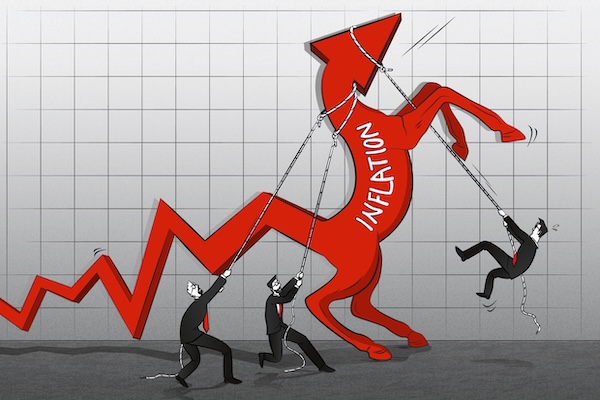
There was a time when monetary policy seemed straightforward to explain, if not always easy to implement. Inflation rose, rates were raised; growth weakened, rates were lowered.
In universities and other academic institutions, shadow MPCs can help students examine evidence, weigh competing objectives and develop informed policy judgements. Television discussions can similarly make monetary policy more accessible to a wider audience. Both can provide a useful starting point for exploring how interest-rate decisions interact with the broader forces shaping economic and financial stability.
Yet the wider policy conversation can become so absorbed in the next rate decision that the instrument begins to define the debate. The MPC announces its decision; commentators examine what it might have done differently. That scrutiny is useful, but it also needs to illuminate the forces shaping the economy beyond the policy rate.
This raises a broader question: are we attaching disproportionate importance to an instrument whose effectiveness increasingly depends on forces beyond its control?
The post-global financial crisis world focused on repairing bank balance sheets, strengthening capital and liquidity, and refining monetary transmission. Inflation targeting, central-bank independence and forward guidance became defining features of the policy architecture.
The global economy now faces sovereign-debt pressures, fragmented trade, energy insecurity, climate shocks, technological disruption and financialisation. Climate change adds another layer: extreme weather can damage supply, infrastructure and insurance markets, while monetary tightening cannot manufacture food, energy or semiconductors. It can restrain second-round inflation, but at the cost of weakening demand. That distinction deserves more attention than another ritual debate over the timing of a rate change.
Consider artificial intelligence, where huge investments in data centres, semiconductors and computing infrastructure are intertwined with corporate valuations, private credit and leverage. A reassessment of expected AI profitability could trigger asset-price corrections and contagion. Lower rates might cushion the consequences; they cannot correct excessive leverage, concentrated exposures or unrealistic valuations.
Digital finance poses another challenge as stablecoins and tokenised assets are testing conventional assumptions about money and settlement. Cyberattacks can disrupt critical financial infrastructure without waiting for an MPC meeting.
The changing structure of finance compounds the problem. The global financial system is no longer predominantly a banking system. Asset managers, hedge funds and private-credit funds have become consequential intermediaries. Liquidity can migrate across borders and institutions rapidly. Financial conditions may tighten without a rate increase; a rate cut need not translate into cheaper credit or productive investment.
The conventional transmission story assumes a reasonably identifiable chain from the central bank to banks, borrowers, investment and aggregate demand. That chain is becoming more circuitous as financial activity moves beyond the traditional banking perimeter. Monetary policy still matters, but its reach is less predictable.
Fiscal pressures make the landscape more complicated as elevated sovereign debt means higher rates raise government borrowing costs, affect bond valuations and can weaken institutions holding government securities.
The boundary between monetary and fiscal policy becomes harder to manage, even as central-bank independence remains essential. Central banks cannot reconcile debt sustainability, inflation control and financial stability indefinitely through the policy rate.
India cannot treat these developments as distant curiosities. UPI, fintech lending, digital credit, algorithmic trading and links between banks and non-banks have transformed our financial landscape. But so are questions about operational resilience, cyber security, concentration, consumer protection and liquidity.
A disruption to a major technology provider or payment channel is not something a repo-rate adjustment can remedy.
The policy conversation must widen, and regulators must look across silos and test how shocks travel between them before crises expose blind spots. India needs stronger macroprudential surveillance, better mapping of interconnected exposures, credible stress tests of non-bank institutions, robust cyber resilience and closer scrutiny of the sovereign-financial nexus. Monetary policy must be considered alongside fiscal sustainability, supervision, financial stability and structural reform and not as a mere substitute for them.
This is not an argument for diminishing the MPC or diluting its statutory mandate. Price stability remains a public good; central-bank credibility and independence are indispensable. But the MPC is one component of a larger economic-policy architecture, not the intellectual centrepiece of every macroeconomic discussion.
Governments speak of a whole-of-government approach, yet financial commentary continues to revolve around one committee and one instrument. We have shadow MPCs, but where are the equally influential debates on cyber vulnerabilities, non-bank leverage, digital concentration and sovereign-financial interconnections? Perhaps these subjects do not lend themselves to television graphics as neatly as a repo-rate forecast. A 25-basis-point cut makes a headline; the accumulation of systemic vulnerabilities is less photogenic.
Intellectual diversity and scrutiny should be encouraged. The problem arises when rate forecasts overshadow the wider risks and monetary-policy commentary becomes an end in itself.
Perhaps existing policy forums could be complemented by a more sustained debate on the risks confronting the financial system and the economy. The challenge is no longer simply to determine the appropriate price of money. It is to understand what money, finance and economic stability are becoming.
The world is moving towards artificial intelligence, programmable finance, geopolitical fragmentation and complex systemic risks.
Debates about the price of money remain necessary, but they should be accompanied by an equally searching examination of the changing nature of money and the risks accumulating around it.
Perhaps the next institutional innovation should not be another shadow MPC, but a serious forum for debating risks confronting the financial system and the economy. The challenge is no longer simply to determine the appropriate price of money. It is to understand what money, finance and economic stability are becoming… to optimise the resources and time committed to one subject.
The world is moving towards artificial intelligence, programmable finance, geopolitical fragmentation and complex systemic risks.
We have enough committees debating the price of money. We need a wider debate about the changing nature of money and the risks accumulating around it.
More From BasisPoint