.png)


Dr. Mishra is former Executive Director of RBI. He is currently RBI Chair Professor at Gokhale Institute of Politics and Economics and author of Systemic Risk and Macroprudential Regulations: The Global Financial Crisis and Thereafter.
November 25, 2026 at 4:31 AM IST
The 3-6-3 era of banking, when banks took deposits at 3%, lent at 6% and reached the golf course by 3 pm, sounds utopian today. Banking has evolved into a business inseparable from risk and uncertainty. Banks are inherently leveraged, operate with significant maturity mismatches, are sensitive to interest and exchange rate movements, and depend on borrowers' ability to repay. These characteristics make them perpetually vulnerable to distress.
Traditionally, risk management focused on balance sheet exposures. Credit, liquidity and market risks were classified as financial risks and monitored for their impact on profitability. But as banking grew more complex, institutions pursued scale, speed and lower costs through technology. While technology helped manage traditional risks, it also created new vulnerabilities.
Cyber breaches, regulatory failures, third-party disruptions and climate events were classified as non-financial risks, often treated as secondary operational concerns. That distinction is now increasingly meaningless.
In a hyper-connected financial ecosystem, an operational failure can quickly become a financial crisis. A software outage can trigger liquidity pressures, a compliance lapse can destroy market value, and reputational damage can erode customer confidence faster than a bad loan portfolio.
Simply put, when every operational, technological, and governance failure carries an immediate price tag, no risk is truly non-financial.
The 2023 banking turmoil in the West demonstrated this interconnectedness. The rapid spread of information through social media accelerated depositor anxiety and withdrawals at Silicon Valley Bank (SVB), while Credit Suisse was forced into an emergency takeover. In SVB’s case, weaknesses in asset-liability management and interest rate risk management were compounded by inadequate preparedness for a rapid loss of confidence. Its liquidity position and the speed of withdrawals exposed the consequences of treating risks in isolation.
Governance and Reputation
Board Oversight: The Underestimated Risk
The Board is the institution's governing mind. It sets policies, establishes standards and oversees management. Independent directors are expected to bring objective judgement, challenge assumptions and ensure that decisions serve the institution's long-term interests.
Their presence, however, does not guarantee effective oversight. Unless they can exercise genuine independence and question management, Board supervision risks becoming a compliance formality. Appointing independent directors must therefore be seen not merely as a regulatory requirement but as an essential part of a bank's risk management framework. In India, governance and Board oversight also feed into the supervisory assessment of banks.
Reputation Risk: A Test of Integrity
Reputational damage can trigger market value erosion, regulatory penalties, leadership exits and earnings shocks.
In early 2025, accounting discrepancies involving foreign exchange derivatives and microfinance portfolios at IndusInd Bank shook investor confidence. Its shares fell approximately 25% to 26% in a single session on 11 March 2025, erasing an estimated ₹190.5 billion in shareholder wealth. 2024-25 accounting adjustments amounted to ₹32.29 billion. The bank also exhausted its ₹13.25 billion contingency provision, reported a net loss of ₹23.28 billion in the fourth quarter and suffered net worth erosion of up to 3.95%.
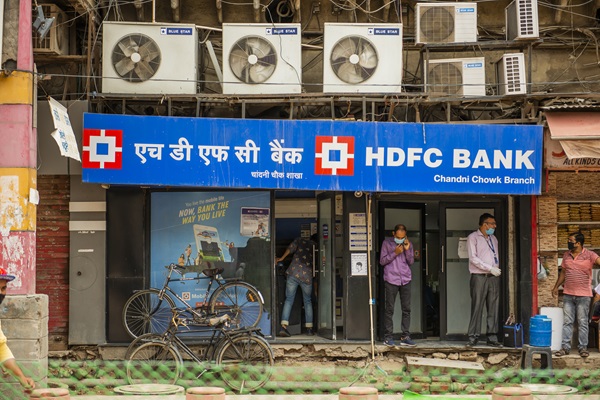
HDFC Bank faced regulatory and governance scrutiny too. The RBI imposed penalties of ₹7.5 million in March 2025 for KYC lapses, ₹488,000 in July 2025 under FEMA and ₹9.1 million in November 2025 for lending rate, KYC and outsourcing violations. A bribery allegation involving its CEO, subsequently dismissed by the court, added to public scrutiny. In July 2026, following an internal review of historical MSRDC deposit arrangements, the Board issued warnings and imposed a symbolic ₹100,000 penalty each on its CEO, CFO and retail assets head.
Paytm Payments Bank offers another example. RBI restrictions in 2024, followed by the reported cancellation of its banking licence in April 2026, affected confidence in the wider Paytm ecosystem. The crisis was accompanied by a sharp share-price fall, declining revenue and user losses. Its UPI market share also contracted, while non-core asset sales formed part of efforts to stabilise operations.
These episodes show that reputation is not an intangible concern to be addressed after a crisis. It is built through governance, transparency, compliance and consistent conduct.
Technology Risk
Technology is advancing faster than the skills of those expected to manage it. Meanwhile, increasingly sophisticated methods of manipulation and fraud are raising the incidence and intensity of cyber risk. Remote working has further expanded exposure by placing sensitive data in environments outside traditional corporate security systems.
As technology becomes central to banking operations, institutions must balance data protection with accessibility for employees and business partners. Remote working also makes monitoring more difficult, particularly in sensitive functions such as trading, where inadequate oversight can expose banks to market conduct risks.
Business continuity plans must account for prolonged disruptions, not just short-term emergencies. Banks need to sustain critical services despite extended remote working, supported by stronger endpoint and network security, robust authentication and continuous monitoring.
Disaster recovery arrangements must also evolve. Home-based working may need to form part of recovery planning alongside dedicated disaster recovery sites, without creating new vulnerabilities or single points of failure. This will require substantial investment in technology, skills and preparedness.
Third-party Vendor Risk
Banks increasingly depend on external providers for technology, payments and other critical services. Yet vendors face many of the same cyber and operational resilience challenges. A failure at one provider can disrupt a bank's operations and expose it to financial and reputational damage.
Assessing third-party resilience is difficult, particularly when remote working and access restrictions limit on-site inspections and the exercise of contractual rights to audit and obtain information. These constraints do not reduce a bank's responsibility. Stronger due diligence, continuous monitoring and credible contingency arrangements are essential. A bank cannot outsource the consequences of a vendor's failure.
Moral Hazard
Government support for distressed companies and financial institutions can create expectations of future bail-outs, encouraging excessive risk-taking. This is the classic moral hazard problem.
The growing role of governments and central banks through fiscal expansion, asset purchases and bail-outs can also distort market signals and weaken discipline. Dependence on public support, lobbying and short-term political pressures may undermine capital allocation, economic growth and stability. These wider developments must also be recognised as part of the banking risk environment.
Equal Rigour
Time to Treat NFRs with the Same Rigour as FRs
Non-financial risk management must be integrated into banks' enterprise risk management frameworks. The Board-approved risk inventory and Risk Appetite Statement must cover both financial risks (FRs) and non-financial risks (NFRs).
NFRs should not be excluded because they are difficult to quantify or the necessary data are unavailable. Where precise measurement is not possible, qualitative assessments and scenario analysis can help identify and monitor exposures.
The risks are interconnected. A cyber incident can cause operational disruption, reputational damage and regulatory action before translating into liquidity or capital pressures. Weak governance can similarly allow seemingly unrelated vulnerabilities to accumulate.
Banks must move beyond the traditional distinction between financial and non-financial risks. Both require equal rigour in identification, assessment and monitoring. In today's financial ecosystem, the label attached to a risk matters far less than its potential impact on the balance sheet.
This is Part III of a series on the changing nature of banking risks and the need to strengthen risk management frameworks.
Part I : Banks Must Rethink Risk Management as the Nature of Risk Changes
Part II: Banks Must Know Their Risks, Not Just Measure Them
More From BasisPoint