.png)


Phynix is a seasoned journalist who revels in playful, unconventional narration, blending quirky storytelling with measured, precise editing. Her work embodies a dual mastery of creative flair and steadfast rigor.
July 13, 2026 at 5:14 AM IST
Dear Insighter,
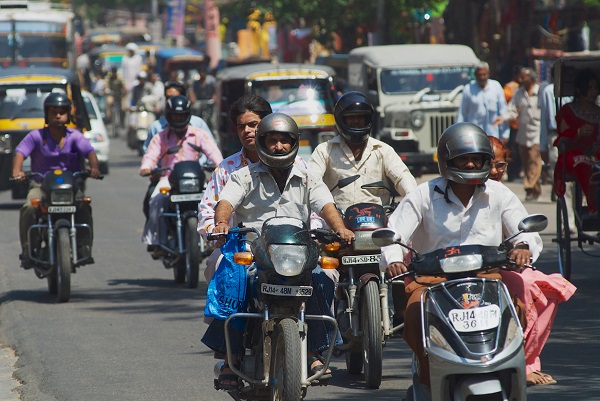
You know that peculiar mix of relief and shame sitting in an air-conditioned cab while watching others jostle onto an overloaded bus outside? That guilt when you're grateful for comfort but immediately ashamed of gratitude? I spent the last week buried in A Little Life, and one scene struck me: when JB travels by metro and realises his own people, immigrants like himself, exist in a completely different economic reality. He understands, viscerally, that they cannot fathom the luxuries he takes for granted, that all they know is the labour sustaining his ease.
My parents were immigrants too, in their own way. They worked themselves to exhaustion so their children would never have to take public transport if they didn't want to. So we could afford to think of the local train as a choice, not necessity. So we'd never lie awake worrying about the next meal or roof over our heads next month. That privilege—the ability to say "no" to struggle—isn't something I earned. It's something I inherited through their sacrifice.
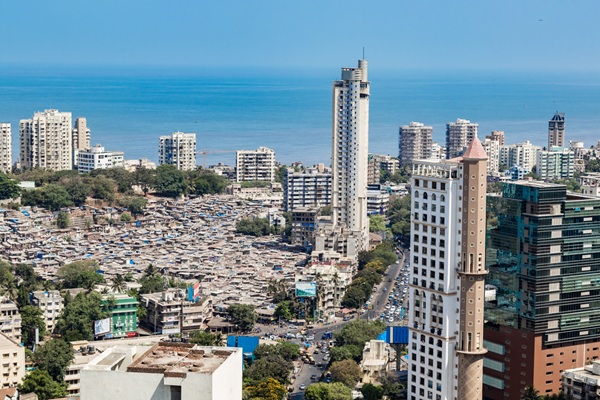
The philosopher Simon Critchley wrote about how privilege functions as a kind of forgetting. We're trained not to see the infrastructure of inequality because seeing it requires acknowledging our complicity. In cities like ours, you can spend a day in a cab and never witness what's outside the window, or worse, witness it and feel only relief that it isn't you. In Seoul or Tokyo or Singapore, systems ensure struggle means something different. There's a social floor, however imperfect. Here, the floors have gaps you could fall through forever.
Take housing. As Vivek Kaul meticulously documents, India's housing market has undergone silent transformation. In 2014, loans below ₹2.5 million accounted for over 60% of housing finance. Today, loans of ₹5 million and above represent nearly 45%. This isn't a shift in numbers; it's a shift in who gets to own a home and what that costs. When EMIs consume larger slices of household income, families stop spending on everything else. Consumption weakens. Savings evaporate. For many, buying a home becomes a debt trap foreclosing other possibilities.
But housing is only the first cascade. Gender parity in India has regressed to 131st globally, with the most damaging gap in economic participation. India ranks 144th out of 148 countries in female labour force participation and wage equality, write KS Sujit and Sujit Kumar Mishra. Women's parliamentary representation actually fell last year. Educational parity reached 97.1%, yet that education leads nowhere when workplaces themselves are structured around assumptions that women should not, cannot, or will not work.
For those determined to build wealth despite these headwinds, capital markets have opened their doors. Demat accounts grew from 40 million in 2019 to 216 million by early 2026. This appears democratisation. But R. Gurumurthy's analysis of the Magellan Paradox reveals the bitter irony: only one in ten SIP accounts survive beyond five years. Investors start SIPs after bull markets when expected returns are lowest. They discontinue during crashes, when returns are most attractive. They buy high and stop buying low. The psychology that should make humans disciplined investors makes them terrible at it.
Yet for those with less cushion, capital markets become far more dangerous. Karnati Kiran Kumar documents a darker transformation: India's retail trading boom increasingly substitutes for secure income. Young traders borrow for intraday trading—not as wealth creation, but income replacement. They're not investors; they're workers searching for quick profits in an economy offering them no other path.
These patterns reveal a system where unequal access ripples outward, affecting everything from your table to your pocket. Consider the currency demand paradox: despite India's digital payments revolution, high-denomination notes continue expanding exponentially. The missing variable, BL Chandak argues, is India's import relationship with China. Between 2001 and 2026, while nominal GDP expanded 16.4 times, Chinese imports surged 162 times. High-denomination notes track Chinese imports more closely than GDP itself.
Then there's what we eat. India's import dependence on edible oils has tripled since 2006 to 16 million tonnes annually, costing nearly $18 billion. But Atul Prakash writes that global vegetable oil producers increasingly divert crops to biofuel. For the world's largest edible oil importer, this is a slow-motion crisis—not imminent, but inevitable. India's ethanol policy compounds the paradox. The government accelerated E20 blending to 2026, achieving 20% ethanol by February. It was framed as success. Yet as G. Chandrashekhar details, car owners are running an "ongoing experiment" on their vehicles without knowing it. Lower mileage, potential engine damage, material corrosion go undiscussed. As Shubhranshu argues, the issue isn't whether ethanol is bad; it's whether motorists should move into E20 without clear disclosure of trade-offs.
Consider irrigation, another infrastructure gap silently determining who eats and who goes hungry. India has brought nearly two-thirds of cropped area under irrigation, reducing monsoon dependence. Yet, as Sujit Kumar observes, rainfed agriculture still produces 40% of the country's food, and states with greater irrigation coverage record higher cropping intensity and farm incomes. Irrigation isn't just about water; it's about resilience, cropping intensity, and the difference between harvest and famine. India needs to focus on a long-term irrigation and crop strategy at both the centre and state level if it needs to break the cycle of being held hostage to the monsoon each year, writes Sharmila Kantha.
Beyond agriculture lie questions of global architecture, rewritten by powerful players without asking permission. The EU's Carbon Border Adjustment Mechanism sounds climate-conscious until you examine whom it protects and burdens. Anshuman Gupta distinguishes between the SDGs, which acknowledge different development stages and call for finance transfer, and CBAM, which shifts compliance costs onto trading partners with no support.
Meanwhile, the Strait of Hormuz remains a flashpoint. Iran's greatest leverage isn't missiles but control of commercial passage. The Islamabad MoU promised safe transit. But when Iran enforced its terms, the US bombed during Khamenei's funeral, notes Rajesh Ramachandran. Any lull in violence is temporary. Crude prices have risen, shipping risk is severe, and India is caught between energy security and fiscal constraints. A smouldering truce is not peace.
For those who think capital flows freely, Krishnadevan V's analysis of India's largest private credit deal offers correction. Shapoorji Pallonji's $3.34 billion zero-coupon bond, backed by a 9.2% stake in Tata Sons, looks unimpeachable on paper. In practice, it's collateral inside a locked house. The controlling shareholder refuses pledges or transfers making those shares liquid. In India, private credit lives at the mercy of public rules and private willingness.
This plays out in fintech too. Meta's $900 million investment in CRED appears a straightforward late-stage venture deal. But Krishnadevan V suggests otherwise: Meta may not be buying a lender; it's positioning itself closer to India's most valuable borrowers. One system knows how India talks; the other knows how its creditworthy users pay. When these converge, the resulting entity becomes part of the financial nervous system, and Meta gets closer to India's best borrowers than lenders themselves. How New Delhi handles this convergence will write the playbook for how sovereign nations govern Big Tech next, writes Rakesh Khar.
This convergence intersects with WhatsApp's username feature, triggering a full regulatory standoff, as Srinath Sridharan and Anand Venkatanarayanan observe. Meta pitches usernames as privacy protection, hiding phone numbers from harvesting and stalkers. The government rejects this: in India, a mobile number is KYC-verified, Aadhaar-linked anchor. Strip that away, and you enable mass impersonation and phishing. Neither side is entirely wrong.
India's technology sector itself faces reckoning. Frontier AI models now exhibit autonomous capabilities to discover and exploit vulnerabilities. Financial regulators strengthen frameworks around AI adoption: cyber risks, third-party oversight, model governance, agentic AI controls. Yet, Indra Chourasia writes, India's light-touch governance favours flexible guidelines over rigid rules, betting this approach spurs innovation while managing risk.
But the IT services sector's engagement with AI reveals gaps. Dev Chandrasekhar documents TCS's $2.6 billion AI business frankly: these run one to two quarters, carry no multi-year annuity, and must be continuously replaced simply to stand still. At scale, success becomes burden. Yet the market applies premium multiples to AI revenue, not discounts. It's a treadmill disguised as a ladder.
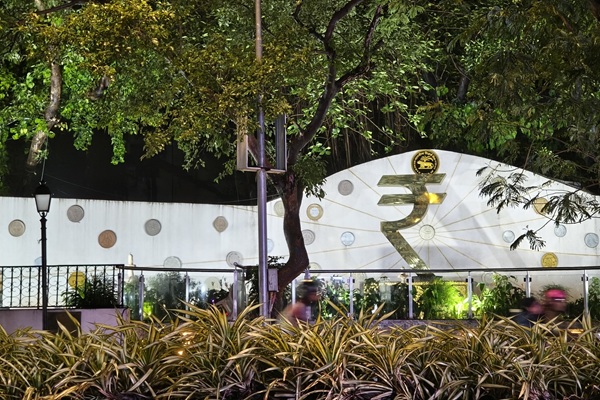
Underlying all this is a deeper question about regulation itself, notes Chandrika Soyantar. Modern prudential regulation has progressively shifted focus from corporate form to economic function. Capital requirements strengthened. Liquidity standards tightened. Stress testing became permanent. Operational resilience emerged as supervisory objective. Yet does every element of the RBI's framework reflect this philosophy? The central bank's mandate extends beyond monetary policy to financial stability. Yet it retains mandatory listing requirements for some institutions while exempting others based on ownership structure.
What emerges is a portrait of an economy where inequality—of access, opportunity, information, power—is baked into every system. And what’s most striking is how completely we've normalised it.
The question isn't whether one should feel guilty for their privilege. Guilt doesn't redistribute anything. The question is whether we can build systems where everyone's public transport arrives on time, where housing is habitable rather than speculative, where gender doesn't determine economic participation. That's not charity. It's recognising that systems work better when they work for everyone, and that the privilege of not noticing inequality is something we can no longer afford.
Until we see what's outside the cab window.
Phynix
Also Read
- The Curry Leaf Crisis: When Even a Garnish Needs a Pedigree by R. Gurumurthy — A Mysuru vendor’s "naati" curry leaves turn a routine purchase into a wry reflection on authenticity, branding, and the real price of reassurance.
- Sarci-Sense: The Indian Habit of Giving Everything Another Chance by Srinath Sridharan — The Indian middle class rarely believes anything useful has reached the end of its life, and that instinct has shaped our kitchens, homes, and perhaps even our view of the world.
- Messi Didn't Beat Ronaldo, the Story Did by Minari Shah — Football built two gods, but the storytelling lets us worship only one.
- In Praise of the World Cup's Little Guys by Andres Velasco — In a world of great-power rivalry and hyper-scaling tech behemoths, the bulky bully doesn't always have the edge, as this year's World Cup has shown repeatedly.
- How Vulnerable Are US Financial Markets? by Dambisa Moyo — Fueled by more than $1 trillion in borrowed money and rising leverage, US stock markets may have entered bubble territory, with higher interest rates and a loss of confidence in AI-driven tech giants threatening a sharp correction.
- Act East 2.0: Looking East, Thinking Indo-Pacific by Lt Gen Syed Ata Hasnain — The Prime Minister's current visit to Indonesia, Australia and New Zealand signals the beginning of Act East 2.0—a strategic shift from engaging the East to shaping the Indo-Pacific.
More From BasisPoint