.png)


Shubhranshu, former Chief Administrative Officer at Rail Wheel Plant in Bela, has managed many engineering and manufacturing projects, including the Train-18, or the Vande Bharat Express.
July 7, 2026 at 5:40 AM IST
India’s E20 debate should not be reduced to a shouting match between believers and doubters. Ethanol is not a bad fuel by itself; in an engine designed for it, its higher octane rating and ability to support higher compression can be useful. The problem begins when that fact is used to justify a universal fuel shift for vehicles that were not designed around E20.
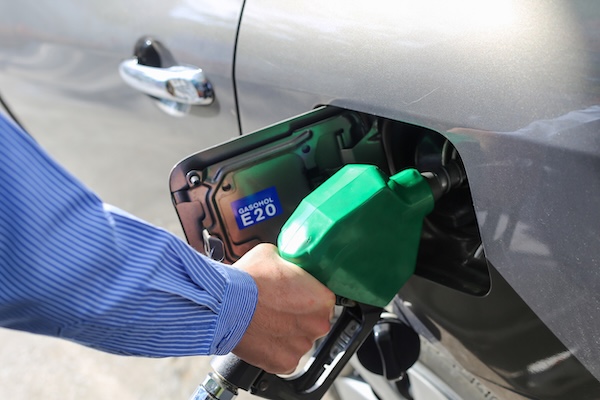
A petrol engine is designed around a specific fuel environment. When the fuel changes, that environment changes too. E20 is not just petrol with a different label; it is petrol with 20% ethanol, and that changes both the fuel’s energy content and its material behaviour.
E20 may be acceptable, even beneficial, for engines built and tuned for it. For older cars, motorcycles and scooters, the question is different. These vehicles were bought, used and maintained under an earlier fuel assumption. Their owners did not choose E20 when buying them; they encountered it later as a change in the fuel supply.
So the issue is not whether India should reject ethanol. It is whether motorists should be moved into E20 without clear choice, disclosure and acknowledgement of trade-offs. A fuel transition that affects daily use and running costs cannot be handled by reassurance alone.
The debate is also weakened when every vehicle is treated as though it were the same. A new engine tuned for E20 and an older engine merely expected to tolerate it are different cases. One may use ethanol’s strengths; the other may absorb its compromises. If motorists are expected to change fuel, they should be told what changes in return: mileage, maintenance sensitivity, material exposure and daily running cost.
The burden also falls unevenly. A new buyer can look for E20 readiness, while an existing owner has already paid for a machine built around an earlier fuel assumption. A fair policy should recognise that difference before making one blend the norm.
Energy Loss
The first trade-off is energy. Ethanol has a lower heat value than petrol. At a 20% ethanol blend, the heat-value loss works out to about 7.9%. Motorists do not buy heat value on paper; they buy litres and measure the result in kilometres on the road.
If a fuel contains less usable energy per litre, an engine that is not optimised for that fuel will generally need more fuel to produce the same work. Mileage loss is therefore a legitimate concern, even though the exact figure varies from vehicle to vehicle. Some users have reported mileage losses of up to 15%, but the more important point is the pressure on cost per kilometre.
This changes the economics of E20. If the vehicle travels fewer kilometres on the same quantity of fuel, the real cost to the motorist rises. The pump price may look unchanged, but the cost per kilometre can go up. A lower-energy fuel sold without an energy-adjusted price is not automatically cheaper for the person using it.
The issue is not only whether the vehicle starts and runs. A rider or driver who covers the same route every day will experience the change through consumption, range and repeat spending. That makes fuel economy a practical concern, not merely a laboratory number.
The debate often mixes mileage, power and engine safety, though each raises a different question. A vehicle may tolerate E20 without delivering the same mileage, and it may run on the blend without extracting the advantage of ethanol’s octane. Compatibility is not the same as optimisation.
A purpose-built E20 engine can be calibrated differently and can use the fuel’s properties to recover performance. An older engine cannot become E20-optimised simply because the fuel has changed. For that owner, the likely experience is more fuel for the same distance, and therefore more money spent over time.
Corrosion Risk
The second trade-off is material compatibility. Ethanol is hygroscopic, which means it attracts water, and it can also act as a solvent. In fuel systems not designed for higher ethanol exposure, this can create risks for rubber, plastic and metallic components such as seals, hoses, gaskets, fuel pumps, injectors and metal surfaces.
Water in the fuel system can raise the risk of corrosion, affecting reliability and repair costs over time. The concern is not only whether the vehicle runs today, but what repeated exposure does over months and years.
Blanket statements are unhelpful. If E20 works in modern, compliant vehicles, that does not automatically help the owner of an older vehicle. If no immediate failure has occurred, that does not settle the long-term corrosion question. If ethanol has benefits, that does not answer the consumer who is seeing lower mileage.
A better transition would make those differences visible. E20 can serve vehicles designed for it, while motorists who own older vehicles should have access to a lower-ethanol option. Fuel labels should be clear, and the trade-offs should be visible before the consumer pays.
The public also deserves a transparent explanation of official claims. Heat-value loss, possible mileage reduction, material vulnerability and the limits of any safety assurance should be stated plainly, rather than presented as a blanket answer.
India can move toward ethanol without treating existing vehicle owners as an inconvenience. E20 can be part of the future, but it should not be imposed as if every engine on the road already belongs to that future. The fairest path is neither panic nor denial; it is choice, disclosure and pricing that reflect what the fuel actually delivers.
Ethanol and E20 both have a place in policy, but that is not the same as universal readiness on the road. Until vehicles, fuel supply and consumers are aligned, the E20 rollout will remain a test of whether technical change can be made fair.
More From BasisPoint