.png)


Dr K. S Sujit, Professor at the School of Business and Management, Christ University, Bangalore
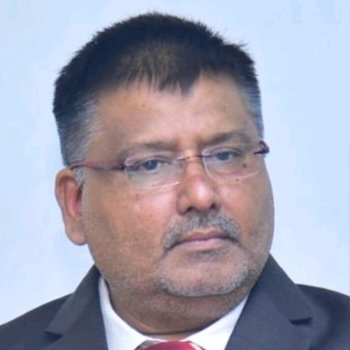
Dr Sujit Kumar Mishra, Professor & Regional Director at Council for Social Development, Hyderabad.
July 8, 2026 at 4:22 AM IST
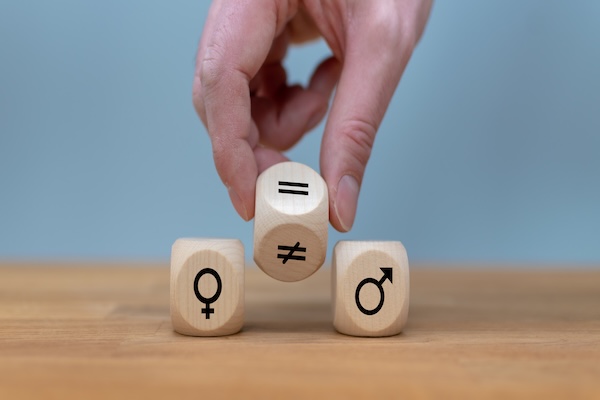
India remains one of the world's fastest growing major economies, yet continues to lag on gender parity despite years of policy attention and investment.
The World Economic Forum's Global Gender Gap Report 2025 offers a sobering assessment. It measures gender parity across four dimensions: economic participation and opportunity, educational attainment, health and survival, and political empowerment. Each country receives a score between 0 and 1, reflecting the extent to which its gender gap has been closed. So the closer to 1, the closer to parity.
However, globally, this number barely moves. In 2025, across 148 economies, 68.8% of the gender gap has closed, only a touch above last year's 68.4%. Keep improving at that rate and full parity is still about 123 years away. Iceland, unsurprisingly by now, tops the list at 92.6%. Pakistan sits at the bottom on 56.7%. What’s concerning is that India’s rank fell to 131st this year, a drop of three places, at the same time that Bangladesh rose 75 places to land at 24th. India's overall score comes out to 0.644.
Weakest Link
The biggest concern is economic participation, where India ranks 144th out of 148 countries. Low female labour force participation, persistent wage gaps and limited access to quality employment continue to hold back progress.
Political representation is messier but no better. Women's share of Parliament fell from 14.7% to 13.8% in 2025, the second year running. Women in ministerial posts dropped from 6.5% to 5.6%, nowhere near the 30% India hit in 2019. The country ranks 69th on this measure.
Education is the exception. India scores 97.1%, the payoff from years of gains in female literacy and higher education enrolment. Health and survival numbers look strong too, helped by improved sex ratios at birth. But part of that improvement comes from falling life expectancy across the board, for men and women both, so the parity isn't quite the good news it first appears.
India's own numbers back this up. NITI Aayog's SDG India Index 2023-24 puts SDG 5, gender equality, near the bottom of all sixteen goals. The index draws on eight indicators: sex ratio at birth, wage parity, women's labour force participation, managerial representation, family planning access, mobile phone ownership, land ownership, and decision-making power within the household. India scores 49 out of 100 on it, the lowest of any goal.
State performance varies widely: Nagaland leads on 74, Odisha trails on 39. Since 2018, when India's national score was 36 and only a handful of states qualified as performers, the picture has improved: four states and one union territory now count as front-runners, twelve states and five union territories as performers, and twelve states and two union territories remain aspirants. Gender equality is still India's most stubborn deficit, and it drags down the country's overall SDG standing.
The two reports measure things differently, but they agree on where India's weak point is: economic participation. The Union Budget2026-27 doesn't ignore this. It raises gender-responsive allocations, backs women entrepreneurs, and funds targeted skilling programmes. All of it points the right direction, but good intentions run straight into a wall of custom and structure that a budget line can't touch. Property passes down the male line in most of the country. Authority within the household usually does too. None of that is fixed by law or biology, but it's proven remarkably resistant to both.
The assumption that economic growth automatically translates into greater gender equality has not been borne out by India's experience. While gender considerations have become more visible in public policy, improvements in education and health have not translated into comparable gains in employment or political representation.
What is needed is structural reform aimed at social identity itself, alongside a sustained effort to dismantle the assumptions that keep women out of work and out of politics. Getting more women into the labour force and into elected office is not a matter of social preference. It is an economic and democratic necessity, and a precondition for the inclusive growth India says it wants.
Gender parity cannot remain peripheral to India's development strategy. A country aspiring to become a leading global economy must also ensure that women participate fully in creating that growth. Without that shift, India's economic success will remain substantial, but incomplete.
More From BasisPoint