.png)

The Curry Leaf Crisis: When Even a Garnish Needs a Pedigree
A Mysuru vendor’s “naati” curry leaves turn a routine purchase into a wry reflection on authenticity, branding, and the real price of reassurance.
Gurumurthy, ex-central banker and a Wharton alum, managed the rupee and forex reserves, government debt and played a key role in drafting India's Financial Stability Reports.
July 11, 2026 at 6:57 AM IST
My education in the new sociology of curry leaves began recently at a roadside vegetable stall in Mysuru.
I casually asked for a bunch of curry leaves. The vendor quoted a price that seemed better suited to saffron than to something growing in thousands of Indian homes. Seeing my bewilderment, he smiled patiently.
“Sir, this is naati.”
Local. Traditional. Native.
The implication was obvious. Had I preferred the ordinary version, presumably there existed another species somewhere—a cosmopolitan, MBA-qualified curry leaf with foreign exposure and a LinkedIn profile.
Until that moment, it had never occurred to me that even the curry leaf had entered the great identity debate.
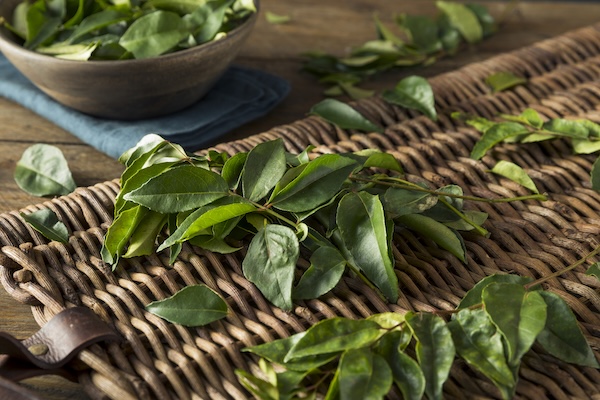
The curry leaf enjoys a peculiar status in Indian cuisine. It is indispensable and invisible at the same time.
We throw it into hot oil with mustard seeds, let it perfume sambhar, rasam, chutney, upma and countless vegetable dishes, and then carefully push it aside on the plate as though it had overstayed its welcome.
Known variously as karuveppilai, karibevu, karivepaku, kariveppu and kadi patta, the curry leaf has perfumed Indian kitchens for centuries. Even its English name carries a small colonial misunderstanding: “curry” is believed to derive from the Tamil kari, referring to a spiced preparation.
For generations, the tree stood quietly in backyard gardens, asking for very little and giving away fragrance for free. Now, apparently, it requires a pedigree.
There are “organic” curry leaves, “country” curry leaves, hybrid curry leaves, nursery-grown curry leaves and high-yield curry leaves. The humble garnish, it seems, now needs both a provenance and a positioning statement.
I came home wondering whether the humble garnish had become the latest victim of modern marketing.
We live in an age that has converted adjectives into business models. After all, once upon a time, food was simply food.
Today, every tomato carries a biography, every grain a moral philosophy, and every banana appears anxious to explain that it had an emotionally fulfilling childhood. Rice must declare whether it is heritage, indigenous, heirloom, stone-polished or hand-pounded before it is admitted into polite company. Rice, in particular, seems to obey a new law of economics: its price rises in inverse proportion to its glycaemic index.
Its position in the glycaemic index is inversely proportional to the price.
Our grandparents cultivated vegetables without announcing them as organic. Today, a cucumber is barely allowed to exist without a certificate, a backstory and a photograph of the farmer.
The modern consumer does not merely buy vegetables; we buy reassurance. Somewhere along the way, authenticity became a luxury product.
None of this is to dismiss the genuine value of organic farming, biodiversity or indigenous varieties. Traditional cultivars can offer flavour, resilience and ecological value worth protecting. Biodiversity is not a marketing invention.
But every good idea eventually meets an entrepreneur—and, shortly afterwards, a premium label.
Once authenticity acquires a price tag, someone begins manufacturing it. Before long, we are paying not only for food, but for the comforting sense that virtue has been included in the packaging.
The philosopher Diogenes famously searched for an honest man with a lamp in broad daylight. Were he alive today, he might instead roam through farmers’ markets searching for an honest organic label.
Meanwhile, the curry leaf itself remains blissfully indifferent to its upgraded social status. It crackles in hot oil, perfumes the dish and accepts its eventual eviction to the edge of the plate.
It asks for no recognition, appears in no glossy advertisements and has never claimed to be “premium.” Its contribution lies precisely in its invisibility.
Perhaps that is the final irony. After acquiring an identity, a pedigree and possibly a future QR code, the curry leaf still ends up exactly where it always did—at the edge of the plate.
More From BasisPoint