.png)

Week in Numbers: Tracking India’s Economic Pulse
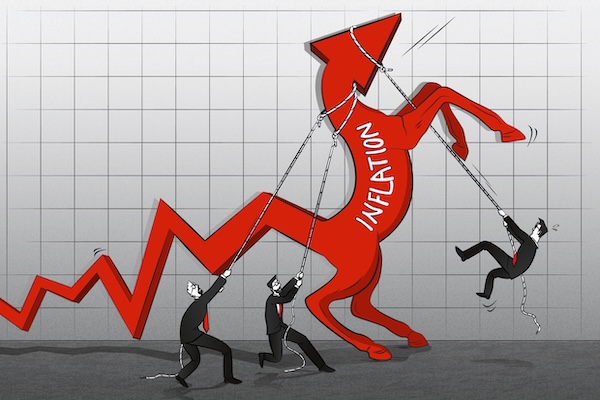
High-frequency indicators continued to signal an economic upturn, with core industry output growth hitting a record high and coal production posting its strongest growth in more than four years. However, inflationary pressures persisted, driven by rising crude oil prices.

Datametricx is a veteran journalist tallying the macro game, keeping score of the numbers that shape India’s economy and policy.
November 21, 2026 at 11:07 AM IST
India’s annual inflation rate, based on the Wholesale Price Index, rose to a record 12.29% in October from 11.39% a month earlier, largely reflecting higher prices of crude oil, aviation turbine fuel, and electricity as the conflict in West Asia escalated during the month. This is only the second instance of inflation reaching double digits in the current WPI series, for which data are available only from April 2024.
Among the three broad groups, annual inflation stood at 9.24% in primary articles, 32.84% in fuel and power, and 9.54% in manufactured products. Food price inflation eased marginally to 8.58% in October from 8.66% a month earlier, while WPI core inflation eased to 9.6% from 9.8%, suggesting that underlying price pressures may be easing.
Crude oil prices rose 6.2% month-on-month in October, while prices of ATF and electricity rose 11.9% and 4.9%, respectively.
WPI inflation remains significantly higher than CPI inflation, partly because increases in petroleum product prices have not been fully passed on to consumers. The gap also reflects manufacturers’ inability to fully pass on higher commodity costs to consumers.
India’s annual inflation rate, based on the newly introduced Output Producer Price Index, rose to a record 12.07% in October from 11.39% a month earlier. Output PPI inflation has closely tracked WPI inflation in recent months.
With crude oil prices falling sharply, WPI inflation is likely to ease from November. The average Indian crude oil basket has fallen 21% month-on-month so far in November.
Growth in India’s core industries accelerated to a record 10.9% in October from 8.2% in September, led by strong growth in coal, cement, electricity, and iron ore output. This was the highest growth in the new series of the Index of Core Industries, introduced in July, for which historical growth data are available only from April 2024.
Coal output growth accelerated to 23.1% in October from 10.7% a month earlier. Iron ore output growth accelerated to 26.4% from 18.4%, while electricity generation growth rose to 21.6% from 12.6%. Growth in steel output accelerated to 15.4% from 10.1% a month earlier.
Output of crude oil, natural gas, and fertilisers continued to contract year-on-year. Crude oil output contracted for the 22nd consecutive month, natural gas output for the 28th consecutive month, and fertiliser output for the eighth consecutive month in October. The Index of Core Industries, comprising coal, crude oil, natural gas, refinery products, fertilisers, steel, cement, electricity, and iron ore, accounts for 32.88% of the weight of the Index of Industrial Production.
India’s unemployment rate fell to an eight-month low of 4.9% in October from 5.0% a month earlier, driven by a decline in urban youth unemployment, especially among women. The rural unemployment rate remained unchanged at 4.2% in October, while the urban rate fell to 6.7% from 6.9%.
The youth unemployment rate fell to 14.7% in October from 15.2% in September, driven by a decline in urban youth unemployment to 18.3% from 19.0%. The unemployment rate among young urban women fell to 25.1% from 26.6%, while that among young urban men declined to 15.9% from 16.4%.
The overall labour force participation rate — the share of the working-age population that is employed or actively seeking work — increased to an eight-month high of 55.7% in October from 55.5% a month earlier.
Domestic tractor sales contracted year-on-year for the second straight month in October amid an extremely unfavourable base effect. Domestic tractor sales declined 16.4% year-on-year to 138,931 units in October. Tractor sales had risen sharply last year following the goods and services tax rate cuts. The industry was among the biggest beneficiaries of the GST rate cuts introduced in September 2025 and had recorded double-digit growth in domestic sales from August 2025 to July 2026. Total tractor sales, including exports, declined 14.6% to 148,284 units. However, the decline in tractor sales in October was not entirely due to the base effect because total sales were 2.3% lower than in October 2024. Meanwhile, tractor production in October grew 5.7% to 113,161 units.
Growth in India’s coal production accelerated to a 52-month high of 23.0% year-on-year in October from 10.6% a month earlier. Coal production in October was 95.35 million tonnes. Coal dispatches during the month rose 21.3% year-on-year to 97.47 million tonnes. Sequentially, production rose 26.5% and dispatches increased 16.2% in October. The power sector, which accounts for about 80% of total coal dispatches, received 19.5% more coal than a year earlier, at 79.14 million tonnes during the month. Coal dispatches to non-regulated sectors increased 29.5% to 18.33 million tonnes in October.
Coal output during April-October rose only 2.4% to 539.89 million tonnes, as production remained lacklustre with output picking up only in the last two months.
After a brief break, India’s foreign exchange reserves continued to decline. The fall was primarily due to a sharp decline in foreign currency assets, likely reflecting dollar sales by the Reserve Bank of India to three state-owned oil marketing companies through a special window, and lower gold prices.
Foreign exchange reserves fell by $14.21 billion to $705.34 billion as of November 13. Foreign currency assets fell by $7.90 billion to $583.45 billion, while gold reserves declined by $6.18 billion to $98.61 billion during the week. Over the past 10 weeks, foreign exchange reserves have declined by $80.36 billion.
Water levels in key reservoirs continued to fall, further widening the gap with historical levels. As of November 19, live storage in the country’s 178 reservoirs stood at 113.75 billion cubic metres, or 62% of their total capacity. Storage was 31% lower than a year earlier and 21% below the 10-year average. Deficient rainfall and low reservoir levels are likely to adversely affect kharif and rabi crop production, raising the risk of higher food prices.
After a deficient southwest monsoon, the northeast monsoon also appears headed for a significant shortfall. Rainfall under the northeast monsoon has so far been deficient across the country and in the core region, which comprises five subdivisions of the southern peninsula: Coastal Andhra Pradesh, Rayalaseema, Tamil Nadu and Puducherry, South Interior Karnataka, and Kerala. As of November 20, cumulative rainfall in the core region was 212.5 millimetres, 81% of the long-period average. For the country as a whole, rainfall was even lower at 65.7 millimetres, or 67% of the long-period average.
Food grain output may decline in 2026-27 because of deficient rainfall and lower reservoir levels, but record food grains stocks held by the government are helping ease concerns about food inflation. Food grain stocks stood at 81.76 million tonnes as of November 1, although down from 84.08 million tonnes a month earlier, they were still the highest on record for November 1. Rice stocks stood at 37.00 million tonnes, the highest on record for November 1, while wheat stocks were at 44.76 million tonnes, the highest on record for November 1. The government also held 27.20 million tonnes of unmilled paddy, equivalent to about 18.22 million tonnes of rice. Record stocks will provide a cushion against a possible decline in production following deficient southwest monsoon rainfall this year.
Coming up
- November 23: HSBC India Flash PMI for November
- November 30: Index of Industrial Production for October
- November 30: GDP Estimates for July-September
Tailpiece
Total receipts of gram panchayats fell to ₹435 billion in 2024-25 from ₹520 billion in the previous year. Intergovernmental transfers accounted for about 90% of total receipts, while own-source revenues accounted for the remaining 10%. Average receipts per gram panchayat fell to ₹1.93 million in 2024-25 from ₹2.31 million a year earlier.
More From BasisPoint