.png)

The Un(Ubiquitous) Indian Dining Table
The Indian dining table once brought families together. Today, it holds laptops, deliveries and leftovers—while conversations increasingly happen somewhere else.
Kalyani Srinath, a food curator at www.sizzlingtastebuds.com, is a curious learner and a keen observer of life.
August 8, 2026 at 5:55 AM IST
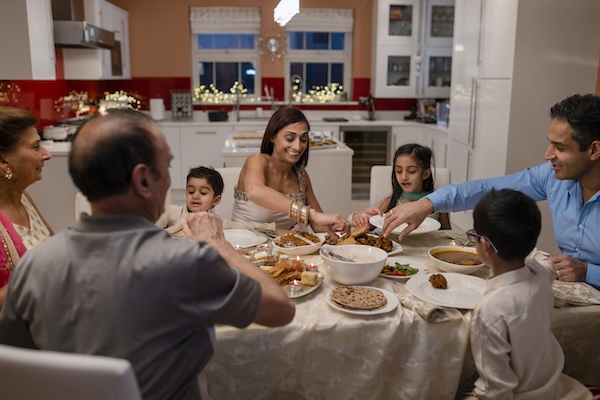
There was a time when the Indian dining table was less a piece of furniture and more a compulsory attendance register. Everyone eventually turned up. Some came hungry. Some came sulking. Someone always arrived late after "just one more phone call". Someone complained that the dal needed more salt before tasting it. Somebody else insisted that the lemon pickle was hiding behind the curd bowl in the fridge . Between passing rotis, discussing school marks, arguing about electricity bills and pretending to listen to grandparents narrate the same story for the fourteenth time, dinner happened.
Not efficiently, perhaps. But together. Today, the dining table is having an identity crisis.
In many homes, it still exists. It is polished every Diwali, dusted every weekend and proudly shown to guests. It also doubles up as a workstation, courier collection centre, charging station, grocery sorting area and, on ambitious days, a place where somebody intends to "finally organise all these papers". Eating on it has become an occasional bonus.
The Indian family has not stopped eating. It has simply perfected the art of eating separately, silently and simultaneously. Modern parenting deserves particular recognition for this Olympic event.
Every parent who has successfully persuaded a toddler to eat spinach by distracting them with dancing cartoon vegetables on a tablet probably deserves a medal. One eye on Peppa Pig, another on the spoon, and before the child realises it, three disguised vegetables have disappeared inside strategically rolled chapatis, rainbow pasta or suspiciously healthy cutlets. It is less dinner and more a military operation.
Teenagers require an entirely different strategy. They are rarely hungry when food is ready and mysteriously starving at midnight. They reject homemade food with theatrical disappointment before asking whether there is "anything nice" to eat. Mothers, refusing to surrender, produce stuffed sattu parathas, protein-packed dosas and carefully planned meals that would impress a nutritionist. The teenager reluctantly consumes half a paratha while simultaneously consuming two hours of reels explaining how processed food is destroying civilisation.
Senior citizens have adapted rather well : They now consume dinner while watching news channels where everything is "breaking". Breaking news accompanies breaking papad, breaking patience and occasionally breaking blood pressure. Every mouthful of thepla arrives with a panel discussion involving six people shouting over one another. Nobody at the table speaks because everyone is listening to strangers arguing about matters they cannot influence before bedtime.
The adults are hardly innocent either.
After surviving office politics, impossible deadlines, impossible traffic and even more impossible parking, conversation sometimes feels like an unnecessary extension of work. Why discuss everyone's day when a crime thriller is available in Dolby sound? One quietly settles down with roti, dal and bharwa karela while another catches up on the latest Scandinavian murder mystery. Thanks to streaming platforms, many households now enjoy what can only be described as companionable silence. Some marriages have probably been saved by people choosing subtitles over small talk.
Then there is the young adult who technically lives at home but is mostly a paying guest with emotional benefits. Dinner for them begins at approximately 9.45 pm. By then the parents have eaten, the kitchen has been cleaned, the pressure cooker has been washed and the family WhatsApp group has already discussing tomorrow's breakfast. The late arrival opens the microwave, lines up three Correlle (make no mistake - Correlle, not melamine) katoris like laboratory samples and reheats dinner while watching a sitcom on the television. The food is hot enough. The house is quiet enough. Enough to melt the stress of the Metro ride back home and the endless meetings at work. The conversation can wait until Sunday.
Perhaps.
None of this is particularly shocking because it has happened gradually. Nobody consciously declared that family meals were obsolete. Life simply became busier than everybody expected. Longer commutes stole evenings. Hybrid work quietly stretched office hours into dinner time. Mobile phones colonised every spare minute. Notifications developed impeccable timing. The Work From home worker has meals standing and typing and taking Zoom Meet calls with a bored colleague and an overseas client whose accent needs Google Transliteration with AI.
Everybody became available to everyone except the people sitting ten feet away. The dining table lost the competition.
Of course, there are still homes where dinner happens together every evening at precisely eight o’clock in the evening. Hot phulkas appear with astonishing speed the moment the first person (usually the eldest / head of family) sits down. A slightly cold one is instantly rejected and replaced as though it has violated an unspoken family constitution. Somewhere between the mother, mother-in-law, daughter-in-law and the household cook, an invisible production line ensures nobody waits more than thirty seconds for the next roti.
These homes still exist. They are becoming fascinating anthropological exhibits.
Weekend brunches promise redemption. Families announce grand plans to eat together at a favourite restaurant. Reservations are made. Photos of pancakes are discussed. Then somebody has a client meeting, somebody else has tuition, rain appears unexpectedly, grandparents are tired, teenagers wake up at noon and the entire outing dissolves into ordering food online.
Convenience has quietly defeated commitment. The arrival of food delivery apps has only accelerated the transformation.
Once upon a time, ordering food was reserved for birthdays, exam results, unexpected guests or the annual declaration that "nobody is cooking today". Now the familiar Zomato paper bag outside the front door has become as common as the morning milk packet. Different members of the same household often order entirely separate meals because synchronising preferences appears more difficult than coordinating an international summit.
One wants sushi. Another wants butter chicken.Someone is on a high-protein diet.Someone has declared gluten to be the enemy.Grandmother quietly eats yesterday's upma. Everybody is satisfied.
Nobody is together. Ironically, the food itself has never been better.
Indian homes today have access to ingredients our parents could not even pronounce. Air fryers sit next to traditional kadais. Imported sauces occupy shelves beside homemade pickle jars. Recipes arrive through Instagram before relatives can recommend them. Kitchens are smarter. Menus are wider. Yet appreciation seems to have become scarcer.
Food gets photographed before it gets tasted.Sometimes it gets criticised before it gets noticed.The effort behind it disappears somewhere between emails and episode seven.
Perhaps the saddest casualty is not the dining table but conversation itself.
Meals once carried the day's gossip without anybody scheduling it. Parents discovered playground politics over dal. Grandparents narrated family history over rasam. Siblings fought over the last gulab jamun before making peace over curd rice. Nobody announced, "Let's have quality family time." It simply happened because everyone happened to be hungry at the same moment.
Today quality time requires calendar invitations. The cook, meanwhile, watches this entire social experiment with quiet amusement.
Eleven months into the job, she has mastered everybody's impossible preferences. Less oil for one. No onions for another. Extra chillies for the father. Soft rotis for grandmother. Protein-rich lunches for the gym enthusiast. Separate breakfast because someone has become vegan until Thursday.
She has adapted to intermittent fasting, keto, low carb, high protein and whatever the latest podcast recommends. Quite understandably, she expects her annual salary increase. And, without fail, comes the gentle reminder. "Diwali bonus, didi.” Nobody argues.
After all, she is probably the only person ensuring that something resembling dinner still reaches everybody. Whether anybody sits together to eat it has become somebody else's problem.
Perhaps the Indian dining table has not disappeared entirely. It has merely become aspirational, much like inbox zero, eight hours of sleep and reading physical books. We continue buying larger tables for smaller gatherings, convinced that one day everyone will sit down at the same time, phones face down, television switched off and conversations flowing as freely as the ghee over hot rice.
Until then, the dining table will continue performing its many modern duties. Holding unopened courier boxes. Supporting office laptops. Displaying fruit bowls nobody eats from. Collecting school circulars. Charging forgotten devices.
And, every now and then, reminding us that a family can live under one roof, eat excellent food and still miss the simple pleasure of asking across the table, "How was your day?"
More From BasisPoint