.png)

The Grime Behind the Dine
The meal may be sealed, spotless and trackable. The reusable bag carrying it home remains food delivery’s least visible hygiene blind spot.
Gurumurthy, ex-central banker and a Wharton alum, managed the rupee and forex reserves, government debt and played a key role in drafting India's Financial Stability Reports.
August 8, 2026 at 5:31 AM IST
We have become remarkably sophisticated about food hygiene. Restaurants display cleanliness ratings, kitchens are inspected, and meals are sealed in tamper-evident containers. They proudly advertise “hygienic packaging”, while delivery apps tell us when an order has left the restaurant, when the rider has picked it up and, with impressive technological precision, when it is 217 metres from our front door.
And then there is the delivery bag.
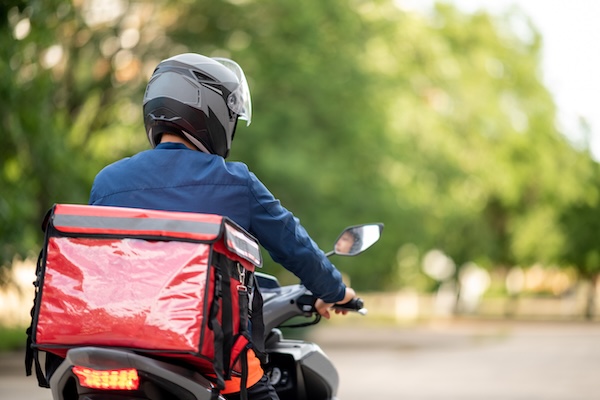
That large, insulated box is where our carefully prepared meal begins the final leg of its journey. It is also perhaps the least scrutinised part of the food-delivery ecosystem.
Take a close look at one sometime. Not the pristine bag featured in an advertisement, but one that has been in service for several months.
It has probably seen more of the city’s food economy than most food inspectors. It has carried biryani, pizza, noodles, burgers, curries, coffee and desserts, as well as the occasional dish whose gravy escaped its container at an unfortunate turn.
It has travelled through traffic, rain and dust. It has stopped at petrol stations and rested on motorbikes, car seats, pavements and restaurant floors. It has been opened and closed hundreds of times.
And yet, when was the last time anybody washed it?
That is the slightly absurd part of modern food delivery. We have developed elaborate systems to ensure that food is hygienically prepared and securely sealed. But the bag carrying it is often treated as though it were merely a suitcase.
The irony is particularly striking with hot food. We worry about whether the restaurant cooked the chicken properly, whether the container is sealed and whether the food has remained at the right temperature. Then we place it inside an insulated bag that may have absorbed the aromas and, occasionally, the liquids of several hundred previous meals.
It is rather like sending a carefully plated dinner home in a garbage truck.
Hygiene Gap
To be fair, a delivery bag is not necessarily a serious health hazard simply because it looks shabby. The food is usually enclosed in a sealed container, and a dirty-looking bag does not automatically mean that the food is contaminated. Many delivery workers probably clean their bags, particularly after a spill.
But the system has an obvious hygiene blind spot.
The bag repeatedly encloses food containers without itself being treated as food-handling equipment. It therefore occupies a curious no-man’s-land between the restaurant and the customer.
Nobody eats from it. Therefore, nobody thinks very much about cleaning it.
Japan offers an interesting cultural counterpoint, not because every Japanese delivery bag is miraculously sterilised, but because the country’s service culture generally places a high premium on cleanliness, presentation and visible signs of care. Even the routine act of delivering something tends to involve a certain ritual of orderliness. The comparison is revealing because it shows what our own system measures and what it ignores.
Modern food delivery has perfected the digital choreography of a meal. We can track the rider on a map, see the restaurant’s rating, read reviews about the cleanliness of its kitchen and receive notifications telling us that our order is on the way.
But there is no notification saying: “The bag carrying your food was cleaned today.”
Perhaps there should be.
Shared Responsibility
The solution need not be dramatic. Delivery platforms could prescribe a simple cleaning protocol, provide bags with washable or easily disinfected interiors, require periodic inspection and replacement, and introduce a visible cleanliness certification for delivery equipment.
Restaurants could provide small cleaning stations for delivery bags. Riders could be given cleaning materials and, importantly, paid for the time required to clean their bags.
There is another uncomfortable truth here: we often demand hygiene from people whose working conditions make hygiene difficult.
A delivery worker racing through 20 orders in the rain and trying to maximise earnings is unlikely to regard cleaning a bag as the highest priority, particularly when nobody pays for the time it takes.
The platform, therefore, cannot outsource the entire responsibility to the rider.
Perhaps the most amusing thing about the food-delivery revolution is that we have made ordering a meal extraordinarily sophisticated while leaving one of its most basic objects almost completely invisible.
The app knows where the food is.
The restaurant knows what is in it.
The customer knows when it will arrive.
Nobody quite knows what is living in the bag.
The next great innovation in food delivery may not be artificial intelligence, drone deliveries or 30-minute optimisation.
It may simply be soap.
After all, the future of food delivery should ideally arrive hot, fast and in a bag that does not look as though it has already eaten dinner.
More From BasisPoint