.png)


October 7, 2026 at 4:53 AM IST
The Reserve Bank of India raised its policy repo rate by 25 basis points to 5.50% on Wednesday, its first rate increase in four years, and shifted its monetary policy stance to calibrated tightening as inflation risks rose and showed signs of generalisation even as economic growth remained resilient.
The Monetary Policy Committee voted unanimously to increase the repo rate under the liquidity adjustment facility. Consequently, the standing deposit facility rate was adjusted to 5.25%, while the marginal standing facility rate and the bank rate were raised to 5.75%.
The MPC changed its stance to calibrated tightening by a 4-2 majority.
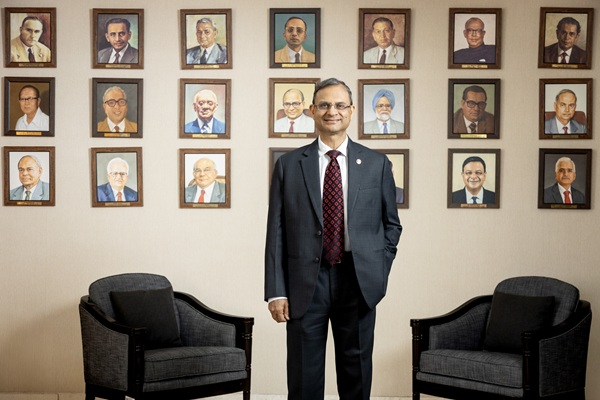
Governor Sanjay Malhotra said the global backdrop remained challenging because of geopolitical developments, but the Indian economy remained strong, with broad-based momentum and expected resilience.
Inflation was the main reason for the policy recalibration, he said.
The MPC observed that inflation and its outlook were no longer as benign as they were last year. Headline consumer inflation is expected to average almost 5.8% over the next three quarters, including the current quarter, while core inflation is projected at 4.4% for the financial year, the Governor said.
“In this milieu, the MPC opined that recalibrating the policy rate is an imperative,” he said.
Inflation Generalisation
Malhotra said monetary policy responds to supply-side inflation mainly by containing second-round effects, including inflation expectations and firm-level pricing behaviour. Such effects take time to show up and are difficult to extract clearly from available data, he said.
The MPC looked at inflation expectations, firm-level pricing behaviour, core inflation and diffusion indices to assess whether supply-side pressures were becoming more generalised. The Governor said there was some evidence of elevated inflation expectations and inflation generalisation, but only limited evidence that supply-side pressures had become embedded in pricing behaviour.
He also said there was limited evidence of demand-side pressures, though risks remained because of strong growth in monetary and credit aggregates.
The MPC said future policy action would depend on incoming growth and inflation data, the outlook for underlying inflation, the extent of broadening in price pressures, second-round effects from the supply shock and the impact of demand impulses.
Malhotra said rate cuts were off the table in the near term, and that policy action ahead could only be a rate increase or a pause, depending on evolving conditions and the outlook.
More From BasisPoint