.png)


Sharmila Kantha is an industrial policy specialist and author. Formerly a consultant at the CII*, she has worked extensively on economic policy and India’s international engagement.
November 2, 2026 at 7:20 AM IST
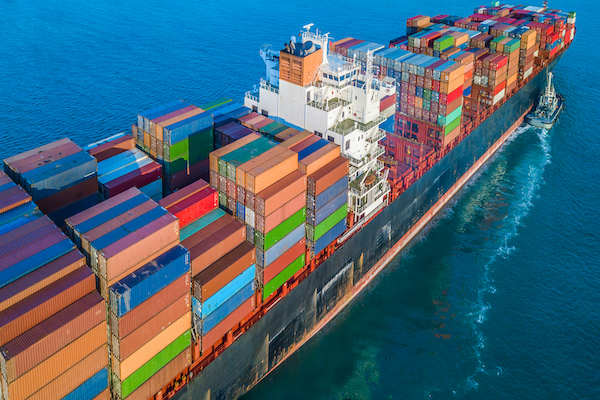
Barely had world trade begun pulling out of the pandemic-related tumble, that the Russia-Ukraine war that started in February 2022, and the West Asia conflict this year, dealt heavy blows. India’s export experience in the first half of these two years displays notable resilience in terms of overall growth rate, yet a deeper examination reveals underlying issues that need to be strategically addressed.
Export Composition
In tandem with world exports, India’s robust export growth of 17% in the first half of 2022-23 – driven by higher oil prices arising from the Ukraine conflict – contracted the next year, and remained subdued in 2024-25 and 2025-26. The first half of 2026-27, however, marks a return to a high 18% growth rate.
Concerns
On the negative side, petroleum exports led the overall rise, growing by about $10 billion over the first half of the previous fiscal. However, this owes primarily to a surge in crude oil prices since the West Asia conflict commenced at the end of February, while exports in volume terms contracted 9% in April-August 2026. For the April-September 2026 period, petroleum exports at $41 billion are still well below the $51 billion level in the first half of 2022-23.
The fact that India’s overall export performance relies heavily on fuel sales is of concern, since these are largely determined by global prices and geopolitical factors. The country must also import crude oil to meet its domestic and export requirements; the oil bill for April-August 2026 crossed $110 billion, almost $20 billion more than the same period last year.
Value addition is also a worry for India’s second highest export commodity, i.e. electronics, now dominated by smartphone exports. Exports of telecom instruments moved up by 42% to over $21 billion, but the value addition in mobiles stands at just about 22-23%, with imports of mobile components also rising rapidly.
Taking a longer-term view and comparing exports between April-September 2022 and 2026 – both conflict-ridden periods - uncovers further concerns. Among the top 25 export commodities for this year, as many as 7 categories display lower export levels than the period four years ago. Apart from petroleum products, there has been sharp decline in exports of gemstones, iron and steel, aluminium and its products, organic chemicals, and cotton garments and made-ups. In several other products, exports over this period have been stagnant.
The sequential fall in ready-made garments and made-ups exports, including both cotton and man-made fibres, is of particular note, since this sector is labour intensive and offers livelihood to millions of workers.
Export Direction
Looking at India’s export destinations, the US and the UAE remain the top buyers of Indian products. While exports to the US expanded by 11% despite the tariff travails, the UAE purchased 11% less from India in April-September this year. The decline in the UAE’s sourcing extends to many products, despite the free trade agreement in place.
On the other hand, India’s imports from China continued to grow rapidly, crossing $80 billion in April-September 2026. At this pace, India’s trade deficit with China is expected to rise to a record $140 billion for the full year.
Exports to Malaysia and South Africa saw fast growth at 83% and 52%, respectively, while exports to the Netherlands fell due to lower fuel outgo, and exports to the UK and Germany did not rise as fast as India’s overall exports.
Conclusion
The World Trade Organisation’s October ‘Global Trade Outlook and Statistics’ is ebullient about 2026 prospects – raising its forecast to 3.9% for the year from 1.7% made in March. India must ensure that it is able to fully capitalise on this surge.
Importantly, special efforts must be introduced to regain strength in sectors that have not yet recovered to April-September 2022-23 levels, including employment-intensive sectors. A deep examination of hurdles to trade, both domestic and global, would help draft policies to promote exports for these sectors.
It is also evident that global trade direction is shifting. India cannot rely on its traditional trade partners for export growth and must tap new markets. While the free trade agreements will support export growth, addressing destinations in Asia and Africa becomes more critical for the country.
Clearly, India cannot afford to be complacent about its rapid export growth in the first half of the year given the continued volatility in the geopolitical space. Exports must remain high on the policy agenda, going beyond FTA negotiations to address wider trade barriers.
More From BasisPoint