.png)

Climbing the BRICS Summit Via Kashmir and Arunachal
Sergio Gor’s endorsement of India’s position on J&K and reports from Arunachal of a Chinese incursion should be seen in the context of a possible Russia-India-China huddle.
Rajesh Ramachandran is a former Editor-in-Chief of The Tribune group of newspapers and Outlook magazine.
August 21, 2026 at 9:46 AM IST
For a government that loves a song and dance around international events and plastered the whole city with posters for the G20 Leaders’ Summit exactly three years ago, the BRICS summit next month seems like a low-key affair. Not a single hoarding has gone up in New Delhi yet, and there has been no publicity for pre-summit meetings like the BRICS environment ministers’ meeting held early this week.
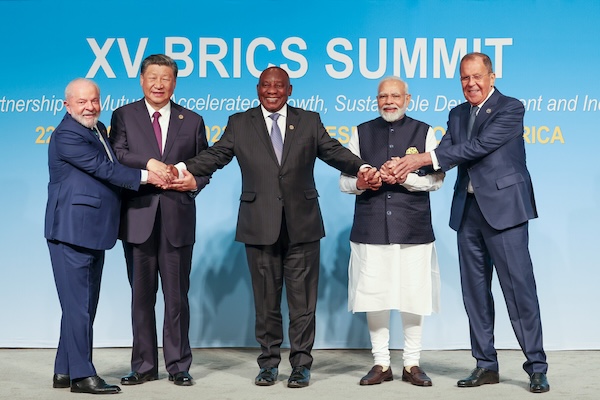
By all indications, New Delhi does not want to ruffle feathers in Washington. The 11-member BRICS grouping — the original five of Brazil, Russia, India, China, and South Africa, and the six later entrants, Egypt, Ethiopia, Iran, Saudi Arabia, the UAE, and Indonesia — is perceived as an anti-Western grouping waiting in the wings for a grand entry onto the world stage. New Delhi does not yet seem ready to play the lead role in such a global spectacle. India’s relations with the US are at their nadir, comparable to the Indira-Nixon era, but the world is no longer split into two neat blocs, as it was in the 1970s and 1980s, leaving India to choose between them.
While India dithers, the US is finally trying to repair the damage the Trump administration caused, particularly after Operation Sindoor last year. The latest bipartisan attack on India by Democratic Senator Richard Blumenthal, who has called for sanctions against India over its purchase of Russian crude, has largely been ignored by the Indian media but has clearly hit where it hurts. India is in a perpetual state of readiness to absorb the next round of hostile statements or legislation from the US.
Yet India has stood its ground on the purchase of Russian crude, refused to accept US intervention in the Indo-Pak conflict, retained its neutrality in the US-Israel war against Iran after PM Narendra Modi’s ill-timed visit to Israel, and is testing the waters for peace with China. Against this geopolitical backdrop, India is hosting the BRICS summit on September 12 and 13.
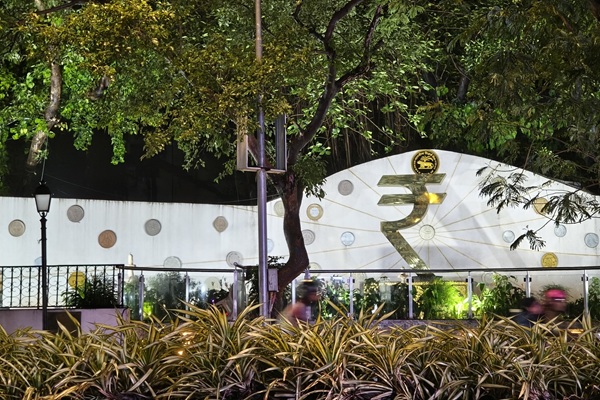
Though a BRICS currency or de-dollarisation is not on the agenda, the US knows that trade liberalisation could be just one step away for leaders of the aggrieved Global South. If mutual suspicion, particularly between India and China, gives way to trust, bilateral trade can be settled in rupees and yuan, just as India and Russia trade in their respective currencies. This could even make a BRICS currency redundant — which, in any case, is more of a grand statement and a red rag to the Western bull than a real sovereign necessity.
In this context, one should read the reports emerging from Itanagar in Arunachal Pradesh and Srinagar in Jammu and Kashmir. One is familiar and expected; the other is surprising. This week, US ambassador Sergio Gor’s visit to Srinagar and his statements were pleasantly surprising, as he categorically described J&K as an important part of India. When the US ambassador to India and the US president’s envoy to Central and South Asia says J&K is an “important part of India,” Washington appears to be ruling out third-party intervention and rejecting Pakistan’s claims. However temporary or transactional this positioning may be, the statement deserves analysis in the context of the BRICS summit.
This is the first stand-alone visit by a US ambassador to the Valley after the abrogation of Article 370. Kenneth Juster’s trip was part of a group visit by envoys in January 2020 and does not carry the same significance as Gor’s visit and statements. Gor has even promised to downgrade the travel warnings, effectively encouraging Americans to visit the insurgency-hit state, which saw targeted killing of tourists, many of them honeymooners, in Pahalgam in 2025.
Gor was making a brave attempt to repair a relationship damaged by US President Donald Trump’s eccentric pursuit of a Nobel Peace Prize nomination and by bipartisan resistance in the US to India’s strategic autonomy in sourcing energy or seeking peace with China. Gor’s statement does not change much in India-US relations, but it does suggest that India has options. A Russia-India-China platform could be immensely important to the rest of the world. And finally, Western capitals are realising that the more they push, the closer India gets into a huddle with Russia and China.
Union Minister for Parliamentary Affairs Kiren Rijiju was in Arunachal Pradesh on Wednesday, primarily to deny rumours of a Chinese incursion. “The China border issue is a serious subject. Do not make false claims on such a sensitive matter,” he said. Since late June, there has been a campaign aimed at creating ill will and engineering a conflict between India and China over undemarcated and undelineated territory in the upper reaches of the Taksing area in Subansiri district.
Nah Welfare Society, a local indigenous group, wrote to the district deputy commissioner, alleging that Chinese PLA troops were encroaching on their traditional grazing and hunting lands. Local media reported the letter. In no time, it acquired a life of its own, with an extra-governmental People’s Party of Arunachal Pradesh fact-finding mission endorsing the claims of encroachment. The Arunachal Pradesh assembly has only one Opposition MLA, and the fact-finding mission comprised a party that has repeatedly shifted its allegiance.
Rijiju said that the government considers the allegations mischievous. What he has left unsaid, however, is that the campaign from Arunachal, now being amplified in Delhi, may be timed to derail the BRICS summit. Chinese foreign ministry spokesperson Guo Jiakun also sought to clear the air on August 12, saying that “the China-India border situation is generally stable at the moment.”
The stage is set for a BRICS summit and a possible India-China tango; hence, all the pressure points are being pushed simultaneously from Arunachal to Kashmir. India has also taken its customary precaution by hosting the Japanese defence minister before the summit. Now, it is left to the governments of India and China to find ways to achieve peace and prosperity.
More From BasisPoint