.png)

Gurumurthy, ex-central banker and a Wharton alum, managed the rupee and forex reserves, government debt and played a key role in drafting India's Financial Stability Reports.
August 6, 2026 at 8:44 AM IST
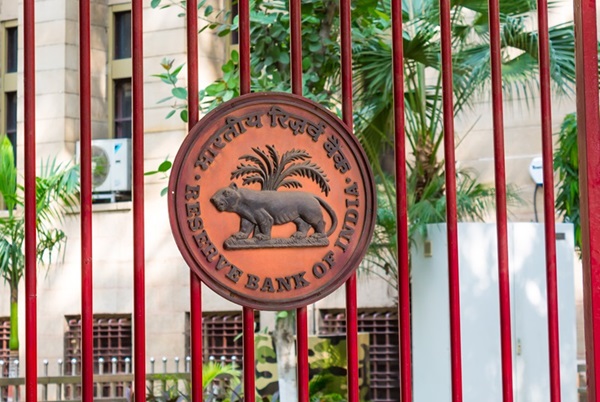
The Reserve Bank of India's draft guidelines for on-tap licensing of Urban Co-operative Banks mark a significant policy shift. For the first time in more than two decades, the central bank is proposing to allow the establishment of new UCBs, signalling that it sees a continuing role for this institutional form in India's banking landscape.
The proposal merits debate, not merely on the licensing norms or capital requirements, but on a more fundamental question. Should India be encouraging the creation of more Urban Co-operative Banks at all?
This question arises because the RBI itself has spent much of the past two decades attempting to strengthen, consolidate and more closely supervise the sector following repeated episodes of governance failures. The Banking Regulation (Amendment) Act, 2020 significantly enhanced the RBI's supervisory powers, yet the central bank has continued to emphasise better governance, consolidation and professional management within the sector.
The latest Financial Stability Report offers little reason for complacency. Its stress test results continue to suggest that UCBs remain less resilient than commercial banks under adverse scenarios. Asset quality and profitability remain uneven across the sector, even as some institutions have demonstrated commendable performance.
To be sure, there are notable success stories, and proponents might offer good reasons for their continuation, albeit with improved governance structures. But public policy should be guided by the characteristics of the sector as a whole rather than by its best-performing outliers.
The more important issue is whether the structural limitations of the UCB model have materially changed.
The failures of institutions such as PMC Bank exposed far more than poor lending decisions. They highlighted vulnerabilities associated with the co-operative ownership structure: concentrated decision-making, weak governance, inadequate disclosures and delayed detection of emerging problems. Regulation can mitigate some of these risks, but it cannot entirely alter the incentives created by the ownership model.
Although the 2020 amendments strengthened the RBI's oversight, UCBs continue to operate within a governance framework that is more complex than that of commercial banks, with co-operative management remaining subject to state co-operative laws. This division of responsibilities has historically complicated accountability.
Unlike listed commercial banks, most UCBs also lack the discipline imposed by capital markets. They are generally unlisted, face limited analyst scrutiny, attract little institutional investor oversight and have fewer external mechanisms that continuously assess governance standards.
Perhaps their biggest structural limitation, however, is capital itself.
Modern banking requires institutions to raise fresh capital to absorb losses, support growth and continually invest in technology, cybersecurity and regulatory compliance. Commercial banks and Small Finance Banks can tap capital markets or attract institutional investors. UCBs have far more limited avenues for augmenting capital, relying largely on retained earnings and member contributions. In an industry where resilience increasingly depends on the ability to replenish capital, this is not a trivial constraint.
The proposal also appears at odds with another important trend in Indian banking. Small Finance Banks, many of which began as geographically focused institutions serving niche customer segments, are seeking universal bank licences. Their aspiration reflects an economic reality; scale has become increasingly important.
Technology investments, cybersecurity, digital infrastructure, compliance systems and fraud prevention involve substantial fixed costs. Larger institutions can spread these costs over broader balance sheets while benefiting from greater geographical diversification and more diversified funding sources.
Against this backdrop, encouraging the creation of banks whose operations are intentionally localised appears difficult to reconcile with the direction in which the banking industry itself is evolving. After all, Regional Rural Banks did not do well.
The financial inclusion argument also deserves closer scrutiny.
When the RBI last licensed UCBs, access to formal finance was significantly more limited. Today, Jan Dhan accounts, Aadhaar, UPI, Business Correspondents, Payments Banks, Small Finance Banks and expanding digital banking have transformed the inclusion landscape. This has reduced, though not eliminated, the unique role once played by UCBs. The case for creating an entirely new generation of co-operative banks therefore requires stronger justification than it did two decades ago.
Every new banking licence also represents a long-term supervisory commitment. Each additional institution adds to the RBI's supervisory responsibilities, particularly where governance risks have historically been more pronounced.
None of this suggests that co-operative banking has no place in India's financial system. Many existing UCBs continue to serve local communities with distinction and enjoy deep customer trust built over decades. Preserving and strengthening such institutions is unquestionably worthwhile.
But encouraging the creation of new ones is a different proposition altogether.
Bank licensing is ultimately about allocating public trust. It should encourage institutional forms that are best equipped to meet the demands of the next twenty years, not simply recreate those of the previous twenty.
The RBI's consultation therefore presents an opportunity to ask a broader question than whether the proposed licensing framework is robust. It is whether India, having spent years strengthening governance, encouraging consolidation and recognising the importance of scale, should now expand a category of banks whose structural constraints remain largely unchanged.
That is a question that deserves as much attention as the draft guidelines themselves.
More From BasisPoint