The government has introduced a legislation in Parliament that could allow merchant charges on selected Unified Payments Interface transactions, marking a possible shift from India’s zero-charge digital-payment regime.
On August 4, Finance Minister Nirmala Sitharaman introduced the legislation in the Lok Sabha that would amend Section 10A of the Payment and Settlement Systems Act, 2007, and could change how digital transactions are priced.
At present, banks and payment-system providers cannot directly or indirectly charge users for prescribed payment methods, including UPI and RuPay debit cards. The Bill proposes allowing the Central Government to decide, through notification, which electronic payment modes or transactions must remain free.
The Bill itself neither introduces a merchant discount rate nor specifies a fee. However, it creates the legal authority required for the government to modify the zero-MDR framework later.
Two Charging Models Under Consideration
Policymakers are reportedly considering two possible charging models. Under the first, UPI merchant payments above ₹2,000 could attract an MDR of around 0.25–0.5%, while smaller transactions and person-to-person transfers would remain free. Under the second, charges could apply only to payments received by merchants with annual turnover exceeding ₹1.5 crore.
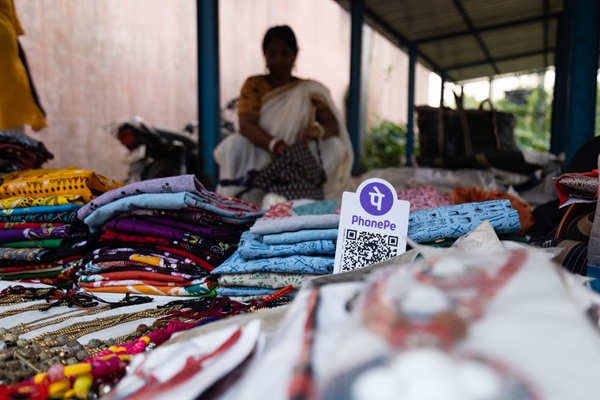
The merchant would formally bear the fee, but businesses could recover the cost by raising prices, imposing convenience charges or encouraging customers to pay in cash.
UPI Is Critical Public Infrastructure
UPI has become essential national digital infrastructure. In July 2026, it processed 23.6 billion transactions worth ₹29.9 trillion, making it one of the world’s largest real-time payment systems.
Zero MDR contributed significantly to this growth by allowing consumers, small shops and roadside vendors to make and receive payments without transaction charges. However, banks, the National Payments Corporation of India and payment companies must invest in cybersecurity, fraud prevention, servers, dispute resolution and system expansion. A sustainable funding model may therefore be necessary. But financing the system does not automatically require a general merchant charge. Alternatives include targeted budgetary support, government incentives, charges on large commercial transactions, cross-subsidisation from financial services and narrowly designed fees applicable only to high-turnover merchants.
USTR Criticises Pix, UPI and RuPay
The legislative change also comes against the backdrop of US criticism of domestic digital-payment systems. The US Trade Representative’s 2026 National Trade Estimate Report on Foreign Trade Barriers criticised both Brazil’s Pix and India’s UPI and RuPay framework.
The report argued that Brazil’s central bank created, owns, operates and regulates Pix, giving the system preferential treatment over American payment providers. Following a Section 301 investigation, the United States imposed an additional 25% tariff on most Brazilian goods in July 2026. Electronic payments were among several reasons cited, alongside digital trade, intellectual property, ethanol market access, anti-corruption enforcement and deforestation.
Brazil refused to change Pix. Its government defended free individual transactions, low merchant costs, central-bank operation and compulsory participation by large financial institutions. President Luiz Inácio Lula da Silva publicly supported the system, while Brazilian officials said US objections were intended to protect the fees and market share of American card companies.
Visa and Mastercard Lose Business
In India’s case, USTR argues that payment policies favour domestic providers, particularly RuPay. Since UPI’s launch, Visa and Mastercard have lost potential business as consumers increasingly use free UPI payments instead of cards. They also object to zero transaction charges for UPI and RuPay, government promotion of RuPay, and RuPay’s early access to credit-card payments through UPI. This has strengthened RuPay and reduced the fee income of US card companies.
The deeper issue is whether India’s payment architecture generates enough fee-based revenue for foreign card and payment companies. Visa and Mastercard operate on a model under which banks, payment processors and card networks earn fees from merchant transactions. A widely available, interoperable and zero-MDR platform such as UPI limits this revenue pool. RuPay further challenges their position by providing an Indian card network that can be integrated closely with domestic policy objectives.
US Firms
The US has also objected to NPCI’s proposed 30% transaction-volume cap for each third-party payment application. Google Pay and Walmart-controlled PhonePe together process more than 80% of UPI transactions. NPCI says the restriction is intended to reduce market concentration and systemic risk. Its implementation has been deferred until December 2026.
American companies have additionally opposed India’s data-localisation rules requiring payment-system data to be stored in the country.
However, UPI is clearly not closed to US companies. Google Pay and PhonePe dominate its consumer-facing application market. The disagreement is about market-share limits, data control, RuPay’s position and the lack of fee income.
Do Not Change UPI
India should not introduce MDR simply to address US trade complaints or protect the profits of Visa, Mastercard and other foreign payment companies. Any decision on charges should be based on the cost of running UPI and ensuring its long-term sustainability.
American companies already have wide access to India’s payment market. Google Pay and PhonePe process more than four-fifths of all UPI transactions, even though UPI was created using Indian public infrastructure and is regulated by Indian institutions. Few countries would allow foreign-controlled applications to hold such a dominant position in critical financial infrastructure.
NPCI’s proposed 30% market-share cap for each payment app should be seen as a measure to promote competition and reduce risk, not as discrimination. Heavy dependence on Google Pay and PhonePe limits opportunities for Indian competitors and could disrupt the system if either provider faces technical or business problems.
India should also retain its payment-data localisation rules. Payment data are sensitive and commercially valuable. Keeping these data in India helps regulators investigate fraud, improve cybersecurity and protect national security.
RuPay should continue to receive government support. Many countries promote domestic payment systems to reduce dependence on foreign companies. US objections should not prevent India from supporting RuPay and maintaining competition with Visa, Mastercard and other international card networks.
American-owned Google Pay and Walmart-backed PhonePe already control nearly 80% of UPI transactions, while India has repeatedly deferred the 30% market-share cap designed to curb such concentration as the US desires. This has given the US platforms a near-free run over one of India’s most valuable digital public assets.
The warning from Brazil is clear: the United States has imposed 25% tariffs on Brazilian imports under a Section 301 action that, among other complaints, targets Brazil’s public instant-payment system, Pix, for allegedly disadvantaging American payment companies.
Washington’s demands have no finishing line—each concession only invites another. India must not rewrite its UPI policies under US pressure. It must defend competition, policy autonomy and the long-term sustainability of its payments ecosystem.
.png)