.png)


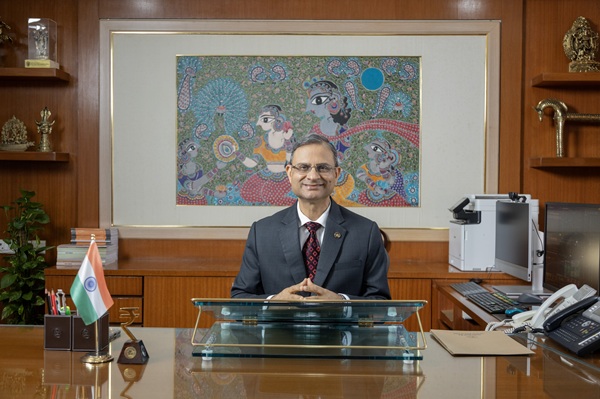
Gurumurthy, ex-central banker and a Wharton alum, managed the rupee and forex reserves, government debt and played a key role in drafting India's Financial Stability Reports.
August 27, 2026 at 6:34 AM IST
With barely two months left for Sashidhar Jagdishan's current term as MD and CEO of HDFC Bank to end on October 26, the question of succession has acquired unusual urgency. Reports suggest that the bank's board has yet to formally recommend either his reappointment or a successor, while the new chairman, Rajiv Kumar, has reportedly met RBI Governor Sanjay Malhotra to discuss the matter.
That makes HDFC Bank a useful starting point for a larger question: why is finding the right CEO for a large Indian private bank becoming such a difficult exercise?
It would be tempting to blame a shortage of talent. But that would be too simple. The difficulty arises from the changing nature of banking, the regulatory architecture and, importantly, the failure of banks themselves to build adequate succession benches.
The bank CEO's job has become enormously more demanding. A couple of decades ago, a successful banker could be primarily judged on growth, profitability and asset quality. Today the CEO must simultaneously manage technology, cyber risk, capital, liquidity, conduct, compliance, fraud, data and increasingly complex regulatory expectations. Banking remains a leveraged business in which a management mistake can have consequences far beyond shareholders.
The cost structure has also changed. Technology is no longer merely a competitive advantage; it is a continuing cost of staying in business. Core banking systems, cybersecurity, digital infrastructure, cloud computing, fraud prevention and regulatory technology require recurring expenditure. Add compliance, audit and risk-management costs, and the CEO has to produce attractive returns from an increasingly expensive business.
Then comes regulation. Strong regulation is indispensable in banking, given its history of financial crises. But regulation can also become a source of business uncertainty. Changes in risk weights, liquidity requirements, capital rules or net open-position limits can alter the economics of businesses after strategic decisions have been taken.
Macroprudential regulation has an additional dilemma. A regulator must necessarily think about the system as a whole, but system-wide rules can sometimes be blunt when applied to institutions with very different risk profiles. A well-capitalised bank with strong underwriting and risk controls may nevertheless face broadly similar constraints as a weaker institution. The CEO is then accountable for outcomes while some of the parameters affecting those outcomes are beyond his control.
The fit-and-proper requirement creates another constraint. There is a compelling case for regulatory scrutiny of bank CEOs. But the board is no longer asking simply, Who is the best person to run this bank? It is asking, Who is the best person who is also likely to satisfy the regulator?
That naturally favours the familiar.
A career banker with an established regulatory record is easier to present to RBI than an accomplished executive from technology, consumer businesses, payments or another financial-services sector. This does not mean that RBI prevents outsiders from becoming bank CEOs. It means that the approval process changes the board's risk calculus and can make the effective CEO pool narrower than the universe of managerial talent.
There is also a question that bank boards must ask themselves. Have the banks themselves failed to create successors?
A highly successful CEO can become indispensable. The organisation develops excellent heads of retail, corporate banking, technology or risk, but not necessarily people who have been given the breadth of experience needed to run the whole institution. Boards, meanwhile, naturally spend more time discussing quarterly performance, capital, asset quality and compliance than succession.
The paradox is obvious: the better the incumbent performs, the less urgent succession appears.
Until suddenly it is urgent.
This may also explain the logic behind regulatory limits on CEO tenure. RBI's framework limits continuous tenure for a private-bank MD or CEO to 15 years. Such limits can prevent excessive concentration of power and force boards to confront succession before the incumbent becomes irreplaceable.
But there is an irony: a regulatory clock can force succession planning; it cannot manufacture a successor.
And tenure restrictions create their own tension. Bank franchises are built over economic cycles, and CEOs need time to make investments whose returns may take years. Yet the CEO knows that there is a regulatory clock ticking. Long-term institutional continuity must therefore be balanced against the dangers of excessive dependence on one individual.
The opportunity cost of the job is another emerging consideration. A capable executive can choose an NBFC, asset manager, insurer, fintech, private-equity portfolio company or technology business, often with greater strategic freedom and fewer regulatory constraints.
The question, therefore, is not simply whether India has enough people capable of becoming bank CEOs.
It is whether enough capable people still want to become bank CEOs.
Compensation adds another dimension. Deferred compensation, malus and clawback provisions are intended to ensure that executives remain accountable for risks whose consequences emerge later. That is sound governance. But it also changes the risk-reward equation. Financial and reputational consequences can extend beyond the CEO's tenure.
None of this is an argument for weaker regulation. A bank CEO should face greater scrutiny than the CEO of an ordinary corporation.
But we should distinguish between a smaller CEO pool because governance standards have eliminated unsuitable candidates and a smaller pool because the cumulative constraints have made the job unattractive to otherwise capable executives.
The answer lies partly with the banks themselves.
A simple test should suffice: if the CEO had to leave tomorrow, could the board name two people who could credibly run the bank on Monday morning?
If the answer is no, the problem is not merely that India's CEO pool is narrow. The institution has failed to manufacture optionality.
The real challenge, therefore, is not simply finding the right CEO.
It is building a bank in which the CEO is important, but never indispensable.
Perhaps that is the best test of a successful CEO and, equally, of a successful board.
More From BasisPoint