India has joined 14 other economies to sign a Joint Ministerial Statement to address structural excess capacity and production, the United States Trade Representative (USTR) announced. The declaration seeks coordinated action against government-supported overproduction that distorts markets and threatens domestic industries.
The initiative follows the G20 Trade Ministers’ meeting on September 30–October 1 and a USTR-convened meeting alongside the OECD Trade Committee. The signatories are Argentina, Australia, Canada, the European Union, France, Germany, India, Italy, Japan, South Korea, Mexico, Poland, Türkiye, the United Kingdom and the United States.
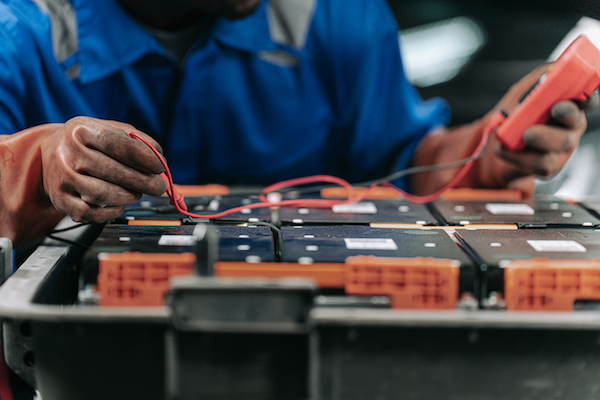
The declaration will initially cover automobiles and electric vehicles, batteries, chemicals, foundational semiconductors and solar panels. Signatories will establish dedicated sectoral platforms to exchange information and explore coordinated defensive measures.
A technical meeting, to be held before December 2026, will develop the terms of reference, assess damage and mitigation efforts, and identify information gaps. Other countries are invited to join, the USTR said.
No target country is named and the declaration itself announces no tariffs, quotas or sanctions. Any US remedies arising from the Section 301 investigations will follow a separate process.
Ironically, New Delhi is joining Washington in tackling the very issue for which its own manufacturing is under American investigation. On March 11, 2026, the USTR had launched a Section 301 investigation into structural excess capacity across 16 economies. India, the European Union, Japan, Mexico and South Korea are all subjects of that investigation and signatories to the new declaration. They will help shape a collective response while their own industrial policies remain under US scrutiny.
For India, the USTR cited expanding capacity and potential export-driven oversupply in solar modules, steel and petrochemicals. It noted that solar-module capacity was nearly three times annual domestic demand. The deadline for the final Section 301 findings on excess capacity is March 11, 2027.
The latest initiative by the USTR exposes a question of consistency: participating economies are coordinating against market distortions without confronting the US over its own trade-rule violations during the last two years.
For India, the test is whether this cooperation protects domestic manufacturing or gives Washington greater legitimacy to challenge India’s industrial expansion.
.png)