.png)


Krishnadevan is Editorial Director at BasisPoint Insight. He has worked in the equity markets, and been a journalist at ET, AFX News, Reuters TV and Cogencis.
August 14, 2026 at 4:25 AM IST
For years, Trent, the retailer from the Tata Group, had a star and a supporting actor.
Zudio, Trent’s value-fashion chain, was the star. It opened stores at a pace that made other fashion chains look as if they were awaiting regulatory permission. It sold fashionable shirts, dresses and sandals at prices that made the customer feel clever rather than cheap.
Investors saw a vast country full of consumers who wanted the same bargain. They saw an empty map waiting for red pins.
Westside, meanwhile, remained the older sibling. It occupied the grown-up part of Trent’s experience, while Zudio ran away with the applause.
When Trent announced its April-June numbers, it was obvious that Zudio’s great sprint had slowed. Standalone sales grew 19% year-on-year, which would delight most retailers but now looks pedestrian beside Trent’s recent record. Sales at existing fashion stores grew only in the low single digits. Retail space grew about 33%, while revenue per square foot fell by roughly 11–12%.
Ordinarily, that is how a retail disappointment begins. A chain opens stores faster than customers fill them. The new shops look impressive on an investor presentation. The old ones quietly sell fewer shirts. Margins get squeezed by rent, staff and discounting. And eventually, the store count becomes a monument to optimism.
Trent’s numbers took a different turn. Its gross margin rose to 46.6% from 45.1% a year earlier. EBITDA margin rose to 19.6% from 17.5%, while EBITDA itself grew 33%.
But this is where Trent’s story gets interesting. Zudio is not merely opening more stores. It is running out of easy stores.
The early locations were in large cities and prime catchments: places with fuller wallets, quicker footfalls and shoppers who already understood the offer. A retailer always finds those sites first. The next locations are in smaller towns, on newer high streets and in markets where the consumer takes longer to decide that a ₹699 dress is not an extravagance.
More than 80% of Zudio’s June-quarter additions were in tier-2 and tier-3 cities or peripheral markets. Trent says these stores can take two to three years to mature, against nine to 12 months for earlier metro and tier-1 outlets.
While that explains the falling sales per square foot, it does not settle the argument.
Investors have treated sales density as a verdict on Zudio’s health. A store in a smaller town may sell less, but it may also pay a smaller rent, hire staff at lower cost and face fewer of the expensive frictions of a big city. The queue may be shorter, but so is the rent.
That is the bet Trent, which is a constituent of the benchmark Nifty 50 index, is making. The company is exchanging higher sales density for lower operating cost and a much larger market.
It may work, but investors should not take it on faith. The company needs to show whether a smaller-town Zudio store earns its keep after two or three years. How much does it cost to open? How long before it pays back that investment? Does it leave as much cash behind as an older urban store, even if it sells less?
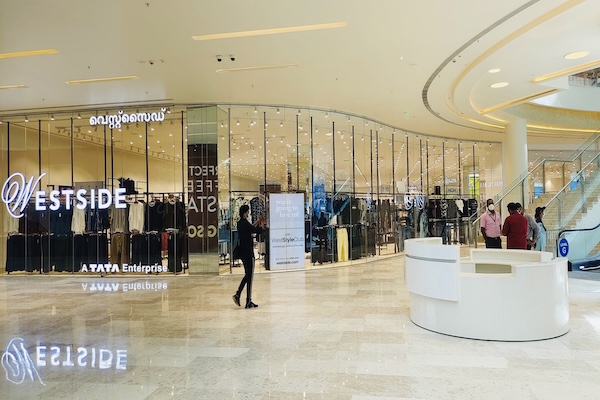
The more surprising part is that Westside added 52 stores in 2025-26, more than it had added in the preceding three years combined. The management has indicated that it plans to add about 50 stores a year. That is not a modest refresh of an old brand. It is a decision to put serious capital behind it.
Margin Advantage
Westside accounts for roughly 40% of Trent’s retail area. Unlike Zudio, it is not spreading across the country in search of first-time customers. It is going deeper into large cities where it already has a following, a supply chain and, crucially, some knowledge of which landlord to avoid.
About 78% of Westside’s network sits in metro and tier-1 cities. This is a different kind of expansion. Zudio is a hunt for fresh territory. Westside is an attempt to collect more rent from territory Trent already understands.
And Westside brings better economics to the table. Analysts estimate its gross margin at more than 55%, against about 40% for Zudio. Put simply, a Westside sale leaves a larger slice of money behind before the retailer pays for staff, rent and lights.
This is the financial mechanism the market may be underestimating. Westside is adding higher-margin stores in richer urban catchments. One format widens Trent’s reach. The other fattens the till.
The margin beat, then, may not be only about tighter sourcing or lower rent. It may be telling investors that Trent is changing the mix of its business. While Zudio built the narrative, Westside may now provide the cushion.
There is power in that combination. A retailer that can open more stores in a city where it already attracts footfalls gains leverage with mall owners and high-street landlords. It can negotiate harder, choose better sites and walk away when the rent becomes silly. Trent’s preference for company-operated stores suggests it wants to retain that control, rather than leave the best economics with franchisees.
But power has its limits. Westside can open too many stores in the same city and begin stealing customers from itself. Zudio can enter too many smaller towns before demand has caught up. A long store-maturation period is tolerable when demand improves. It is less charming when consumers tighten their belts or rivals start cutting prices.
Trent must now show that Zudio’s smaller-town stores can earn a proper return, and that Westside’s urban expansion can add customers rather than merely rearrange them.
More From BasisPoint