.png)

When Everyone Protests, Even Bonds are Voting with Their Feet
We are stepping outside our weekly schedule ahead of the policy decision because agreement on a likely rate hike is concealing some consequential disagreements about what should accompany it.

Phynix is a seasoned journalist who revels in playful, unconventional narration, blending quirky storytelling with measured, precise editing. Her work embodies a dual mastery of creative flair and steadfast rigor.
October 6, 2026 at 2:59 PM IST
Dear Insighter,
Somewhere along the way, the world turned into a group chat where everyone has muted the admin and started typing in capital letters.
I noticed it first on my own screen. My feed used to be a mix of holiday photos and bad puns. Now it reads like a complaints register: unhappy citizens, unhappy students, unhappy commuters, unhappy investors. Dissent has become the default ringtone. And before anyone accuses me of cynicism, I'll admit I find it oddly reassuring. A shouting society is at least a society that still believes someone is listening. The truly worrying silence is the one in which people have stopped bothering to complain.
Consider the week's headlines. In Delhi, opposition leaders were bundled into a police bus while marching against the Election Commission. They were released, walked right back, and sat down near the Commission's headquarters. The spark is the Special Intensive Revision of the electoral rolls, a routine administrative exercise that, according to reports, has led to the deletion of nearly 133 million names. Investigative reports in The Indian Express lit the fuse. The New York Times has since observed that the world's largest democracy is asking nearly a billion people to produce papers to prove they deserve their vote, while the poorest must choose between a trip to the polling officer and a day's wage. It is hard to think of a more brutal trade-off. Imagine being told to prove you exist, but only after you've lost the income you needed to find the proof.
Meanwhile, in France, the classroom has become the battlefield. High-school students and trade unions are blockading schools, demanding that a cash-strapped government fix buildings that are crumbling and staffrooms that are understaffed. Here is the part that should make every finance person sit up: French borrowing costs have surged to levels not seen since the early 2000s, and Marine Le Pen is already auditioning her spending cuts to look fiscally credible. A teenager's placard and a sovereign's bond yield are, it turns out, in the same conversation.
What strikes me is how similar the two stories are beneath the different languages. Both are really about trust. In one, people doubt the list that decides who counts. In the other, they doubt the budget that decides what counts. Trust is an odd asset. It takes decades to accumulate, a single headline to dent, and no central bank can print any more of it.
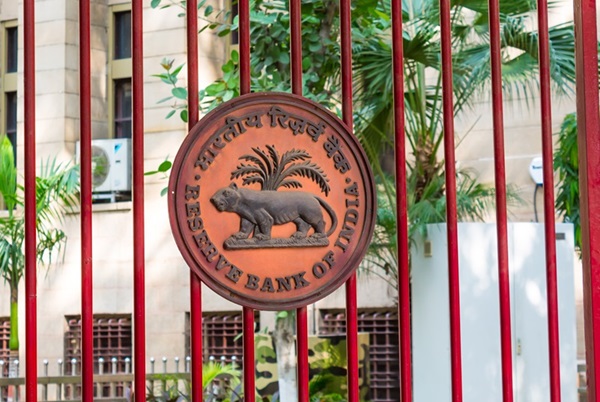
Which brings me, rather neatly, to the RBI's Monetary Policy Committee meets on October 7, and the one thing nearly everyone agrees on is a 25-basis-point hike. Consider what this means for a bond market. Even the markets are in a mood to dissent, and they do it the way markets always do: not with banners but with prices. As Nishat Anjum reports, India's gilt traders have already priced in the hike. They are now staring at what comes after it. A hawkish signal that leaves the door open for December could push the 10-year, currently around 7.20%, higher still.
This is where BasisPoint Groupthink asks the sharpest question of the week: what is the RBI actually hiking for? With the repo at 5.25% and the 10-year at roughly 7.2%, the central bank is arguably late, and a 25-basis-point move could be merely an acknowledgement that the world has already changed. Or it could be the first instalment of a sustained campaign to bring inflation back to 4%. The first hike looks identical in both cases; only the intent differs.
Abhishek Upadhyay answers firmly: go hawkish. His case is that being behind the curve is expensive, since it can force a higher terminal rate later. Crude has broken out, the Fed has restarted hikes, and CPI is heading towards 6% in a couple of months. A dovish first hike, he argues, will only confuse markets, and he even floats pairing the repo move with a 50-basis-point CRR hike. Indranil Pan reads the same tea leaves from a different cup. With oil above $100 and the share of CPI items showing inflation of 4% or more rising from 31% in June to 36.7% in August, he expects a short cycle of 50-75 basis points. His worry is liquidity: with banks swimming in surplus funds, the hike may land softly on deposit rates, though lending rates will respond faster given how many loans are now linked to external benchmarks.
Kanika Pasricha agrees that liquidity is the real plot. She wants a calibrated 25-basis-point hike alongside active liquidity absorption, flexible tools first and CRR only as a temporary last resort, perhaps for two or three months with a clear exit. Her baseline is 75 basis points in total, taking the repo to 6% by March 2027. Shubhada Rao, Vivek Kumar and Yuvika Singhal remind us how fast sentiment can flip: after the December 2025 cut, forecasters expected a long pause, then 50 basis points of hikes, then just one, and now the chorus for hikes is back. With Brent going from $84 in July to $114 in September and one of the worst monsoons in over a decade drying up five states, their call is three 25-basis-point hikes by February, then a pause.
Even the economists who agree on the number can't agree on the sentence that goes with it. In their economist-to-economist exchange for BasisPoint Insight, Gaura Sen Gupta wants a neutral stance that keeps the options open, while Dhiraj Nim prefers a tightening bias that signals direction without a fixed path. Nim says he would hike even if crude fell to $70, while Sen Gupta warns that the RBI leaning too hard on one liquidity instrument will distort that market.
And that, I think, is the thread connecting Delhi, Paris and the Mint Road. Whether you're a citizen asking to be counted, a student asking for a roof that doesn't leak, or a bond trader asking for clear guidance, the demand is the same: tell us the rules, tell us the direction, and then keep your word.
Until next week, may your yields be steady.
Phynix
More From BasisPoint