.png)

Week in Numbers: Tracking India’s Economic Pulse
Services activity improved in September, but weaker readings in July and August dragged average growth during the quarter to its lowest since the quarter ended March 2022.

Datametricx is a veteran journalist tallying the macro game, keeping score of the numbers that shape India’s economy and policy.
October 10, 2026 at 11:29 AM IST
India’s service economy ended the second quarter on a stronger note, with improving sales helping lift business activity growth to a three-month high in September. The seasonally adjusted HSBC India Services PMI rose to 55.2 in September from 54.1 in August, signalling the strongest expansion since June. However, the quarterly average remained below that of the previous quarter, with services activity growth at its weakest since the quarter ended March 2022. New orders rose sharply in September, recording their fastest growth in three months.
The HSBC India Composite PMI climbed to 55.9 in September from 54.3 in August, indicating the strongest expansion in private sector output since June. Despite the monthly improvement, the average Composite PMI for the second quarter was the lowest since the quarter ended March 2022.
Growth in new orders underpinned the acceleration in private sector activity and sustained job creation during the month. Meanwhile, cost pressures eased to their lowest level of the calendar year to date, offering some respite to businesses. Despite the pickup in September, aggregate sales growth over the second quarter was the weakest since the end of 2021-22.
Automobile retail sales grew strongly in September, aided by a low base. Total retail automobile sales rose 31.8% year-on-year to 2.54 million units, marking the fastest growth in 11 months. The increase partly reflected deferred purchases ahead of the reduction in goods and services tax last year. Although the government announced the GST rate cuts in August last year, the lower rates came into force only on September 22, 2025, prompting some buyers to postpone purchases until then.
Sales of two-wheelers, passenger vehicles and commercial vehicles each grew by more than 30% year-on-year in September. Two-wheeler sales rose 33.1% to 1.79 million units, while passenger vehicle sales increased 32.1% to 427,213 units. Commercial vehicle sales grew 37.6% to 103,557 units.
Despite the deficient southwest monsoon, automobile retail sales grew faster in rural areas, rising 32.7% year-on-year, compared with 30.9% growth in urban areas. Rural areas accounted for 51.1% of total automobile sales, while urban areas accounted for 48.9%. Electric vehicle sales across categories reached a record high of about 334,000 units, taking their share of total automobile sales to roughly 13%.
The sustainability of automobile sales growth will be tested in October, when a high base is likely to weigh on year-on-year growth. Retail automobile sales rose 40.5% year-on-year to a record 4.02 million units in October last year.
The Reserve Bank of India has raised its GDP growth forecast for 2026-27 by 40 basis points to 7.1%, after the economy grew faster than expected in the April-June quarter. GDP growth came in at 7.8%, well above the RBI’s projection of 7.0% for the quarter. The upward revision underscores the resilience of economic activity despite significant headwinds, the RBI said.
High-frequency indicators suggest that economic activity is maintaining momentum in July-September, albeit with some moderation from the preceding quarter. The central bank expects GDP growth to ease to 7.2% in the July-September quarter, before slowing to 6.9% in October-December and 6.8% in January-March. Growth is projected to recover to 7.1% in April-June 2027. The RBI’s baseline projections put GDP growth at 7.0% in 2027-28.
With retail inflation running higher than projections, the RBI has raised its CPI inflation forecast for 2026-27 to 5.2% from 5.0% earlier. CPI inflation rose to a 20-month high of 4.82% in August. The near-term inflation outlook points to continued supply-side pressures owing to the deficient southwest monsoon, El Nino conditions and high volatility in international oil prices, the RBI said.
There are early signs that inflationary pressures are becoming generalised, reflecting in rising core inflation and price increases across a larger segment of the CPI basket, the RBI said. The central bank has projected CPI inflation at 4.9% in July-September, rising to 6.0% in October-December. Inflation is then expected to ease to 5.7% in January-March and 5.6% in April-June 2027.
This is the second time the RBI has raised its CPI inflation forecast for 2026-27. In February, the central bank had projected CPI inflation at 4.6% for the fiscal year.
Electricity generation from conventional sources rose 10.5% year-on-year to 143.53 billion kWh in September, marking the fastest growth in 28 months. The increase was driven by strong thermal and nuclear power generation. Thermal power generation rose 15.6% to 117.91 billion kWh, while nuclear power generation climbed 35.4% to 5.48 billion kWh. Hydropower generation, however, declined by 16.3% to 18.67 billion kWh in September.
Electricity generation from conventional sources grew by an average 7.2% year-on-year over the past six months, compared with a contraction of 2.6% in the corresponding period of last year.
Growth in e-way bill generation slowed marginally to 7.2% year-on-year in September from 7.7% a month earlier. Although growth was the second lowest in 47 months, the absolute number of e-way bills generated was the highest ever. The record number is not surprising, as traders are likely to be stocking up ahead of the festival season. An e-way bill, a document under the GST system required for transporting goods worth more than ₹50,000, is a leading indicator of economic activity.
New business premiums of life insurers rose 23.1% year-on-year to ₹488 billion in September. The state-owned Life Insurance Corporation of India recorded a 19.9% increase in premiums to ₹275 billion, while private life insurers’ premiums rose 23.2% to ₹213 billion. New business premiums in the first half of 2026-27 rose 20.6% to ₹2.456 trillion. Private insurers’ premiums rose 22.5%, while LIC's increased 19.3%. LIC sold 7.11 million policies in April-September, compared with 4.58 million sold by private insurers.
Gross direct premiums underwritten by non-life insurers rose 6.2% year-on-year to ₹330 billion in September. The lacklustre growth was primarily due to a 51.6% decline in premiums underwritten by Agriculture Insurance Co. of India to ₹20 billion during the month. Gross direct premiums underwritten by state-owned general insurance companies rose 10.0% to ₹91 billion, while those underwritten by private general insurers increased 15.0% to ₹173 billion. Standalone health insurers recorded a 27.1% increase in premiums to ₹44 billion in September.
India’s foreign exchange reserves continued to decline amid pressure on the from higher crude oil prices and US Treasury yields, prompting the Reserve Bank of India to intervene in the foreign exchange market to support the currency. Reserves fell by $12.95 billion over the week to $734.61 billion as of October 2, marking the fourth consecutive weekly decline. They have fallen by a cumulative $43.42 billion over this period. Foreign currency assets declined by $10.66 billion to $604.75 billion, while gold reserves fell by $2.29 billion to $106.41 billion.
Water storage in key reservoirs was well below normal levels. As of October 8, live storage in the country’s 178 reservoirs stood at 130.98 billion cubic metres, or 71% of their total capacity. Storage was 21% below the year-earlier level and 13% below the 10-year average. Reservoirs are typically replenished during the southwest monsoon.
Following a deficient southwest monsoon, northeast monsoon rainfall has also been below normal so far. Cumulative northeast monsoon rainfall across the country stood at 10.1 millimetres as on October 9, equivalent to 32% of the long-period average. Rainfall in the core region where the northeast monsoon is most active was 41% of the long period average. The region comprises Coastal Andhra Pradesh, Rayalseema, Tamil Nadu and Puducherry, South Interior Karnataka and Kerala.
Coming up
- October 12: Consumer Price Index for September
- October 14: Trade data for September
- October 14: Output Producer Price Index for September
Tailpiece
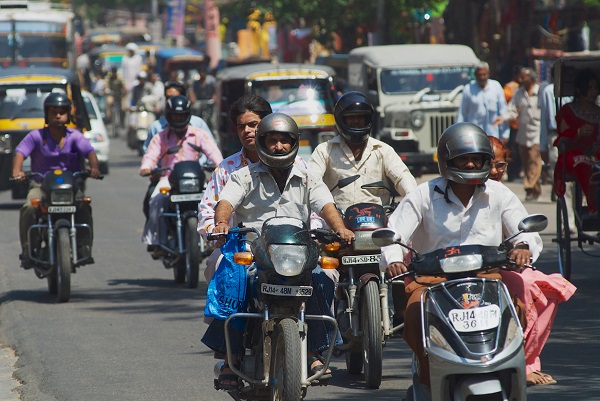
Two-wheelers are the single largest mode of transport used by workers across India, according to the National Household Travel Survey. About 42.6% of workers used two-wheelers to commute to work. The share was 37.1% among the rural population and 52.3% among the urban population.
More From BasisPoint