.png)

The RBI's June Dilemma: Credibility Without the Hike
The macro backdrop has deteriorated materially since April. But the case for a June rate hike is weaker than the market noise suggests.

Radhika Piplani is Group Chief Economist at Motilal Oswal Financial Services Ltd
May 29, 2026 at 12:08 PM IST
Since the Reserve Bank of India's last policy announcement on April 8, the macro backdrop has deteriorated across all three fronts that matter most to the central bank: growth is slowing, inflation risks are building, and the rupee has weakened sharply. The policy question that follows is, on its face, straightforward — how does a central bank respond to weakening growth, rising inflation, and a depreciating currency, all at once? The honest answer, for now, is to hold, but to hold loudly.
The next MPC meeting is scheduled for June 3–5. Markets are watching closely, and the noise around a rate hike is growing louder by the day. Overnight Indexed Swap curve is pricing nearly 82 basis points of tightening over the next twelve months, and 23 bps over the next three months.
An Instructive, If Imperfect, Parallel
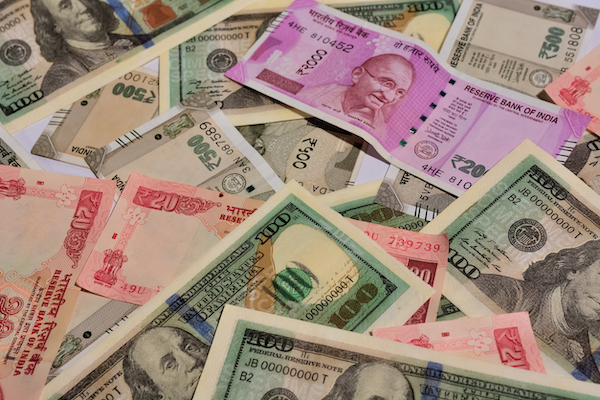
The parallel with India is not incidental. Over the same period, the Indian rupee has depreciated by approximately 4.2%, briefly approaching 97 to the dollar on May 20 — a historic low — even as the RBI intervened. For a twin-deficit economy, sustained currency weakness is not merely an inflation story; it is a balance-of-payments story.
Yet no two central banks operate under identical frameworks, and the comparison should not be taken too far. Bank Indonesia moved aggressively partly because its inflation mandate affords greater flexibility to prioritise external stability. The RBI operates under a flexible inflation-targeting framework, where the primary objective remains consumer price inflation within the 2–6% tolerance band. With CPI still inside that band, the calculus looks different.
Why the RBI Is Unlikely to Move in June
The current inflation pressure is predominantly imported in nature. WPI inflation climbed to a 42-month high of 8.3% in April, crude oil has sustained above $100 per barrel for three months, and retail fuel prices have already risen by around ₹8 per litre. These are not conditions the RBI can meaningfully resolve by raising the repo rate 25 or 50 basis points in June. Monetary policy operates with a lag; it cannot reprice crude oil.
More importantly, CPI inflation — the RBI's actual mandate — remains within the tolerance band, and well below levels that would typically warrant an emergency response. A sharp rate hike in this environment risks delivering a disproportionate negative shock to domestic growth, precisely when April-June activity could already soften under the weight of supply-chain disruptions, elevated commodity costs, and weakening global demand.
The RBI's own projection of 6.9% GDP growth for 2026-27 now looks optimistic. A more realistic outcome is closer to 6.3–6.5%. The combination of slowing growth and rising inflation expectations makes for a genuinely uncomfortable policy trade-off — one where the sequencing of tightening matters as much as its eventual quantum.
Stability First, But Not Through Rates
The recently announced $5 billion swap facility is one such instrument. Others — Foreign Currency Non-Resident deposit incentives, introduction of forbearance measures to ease FPI entry and exit from capital markets, calibrated management of outward Overseas Direct Investment flows — could re-enter the toolkit this policy. The objective is to improve the external balance, attract capital inflows, and reduce excessive FX volatility, without front-loading a rate shock onto an economy already absorbing external headwinds.
On liquidity, the RBI is unlikely to allow conditions to tighten excessively. System liquidity surplus has already fallen sharply — from approximately ₹3.6 trillion in early April to ₹ 494 billion currently (for the week ending May 29, 2026), with durable liquidity declining from ₹5 trillion to around ₹3 trillion. OMOs, swaps, and repo operations will likely be deployed to cushion the domestic economy even as external pressures mount. The signal is already visible: a 3-day Variable Rate Repo auction conducted on May 29 — with bids of ₹1 trillion and allotment of ₹946 billion at a 5.26% cut-off — suggests the RBI is not comfortable allowing systemic liquidity to fall further.
What June Will Actually Deliver
Bond markets have already begun repricing the new macro reality. The 10-year yield is at 7.0%, and a further move toward 7.5% over the next twelve months appears more likely than current consensus of 7.2–7.3% implies. Financial conditions are tightening through market channels — which reduces the urgency for the RBI to validate that repricing through a surprise hike of its own.
The more credible sequencing is a hawkish pivot in June, followed by rate action in October-December if inflation persistence broadens, and second-round effects begin feeding into core inflation expectations. That is not a policy of complacency. It is a policy of calibration — and in an environment where the shocks are external and supply-driven, calibration is the more defensible choice.
The RBI's credibility in June will not rest on whether it hikes. It will rest on whether its communication is clear enough to anchor expectations without the blunt instrument of a rate increase. Verbal intervention, done well, can be the first and most efficient line of defence.
* Views are personal.
More From BasisPoint