India’s biggest business story over the past week has been the Tata Group’s search for its next chairman. In reality, however, the group is trying to fill a role that does not exist on paper.
The Sir Dorabji Tata Trust passed a resolution on August 13 to begin constituting the Selection Committee required under Article 118. Many names are already circulating in the press. But while the search is ostensibly for a chairman, what the group really needs is a patriarch and final arbiter.
This tension between office and legitimacy helps explain why the group has struggled with leadership transitions over the past 15 years. Long periods of apparent stability have repeatedly descended into impasse, now with an almost predictable inevitability.
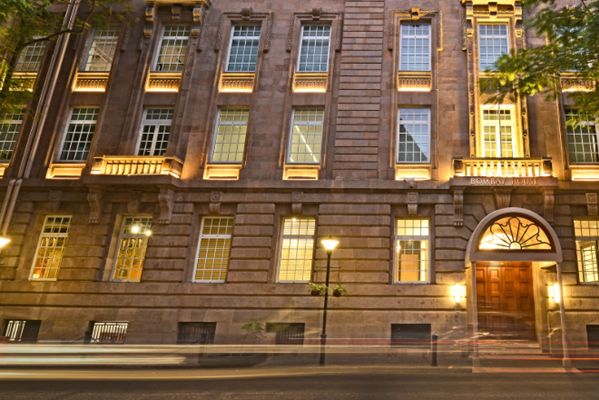
The complexities, nuances, and intrigues of Bombay House now resemble Game of Thrones. The comparison is made more intriguing by the fact that, apart from Chandra’s official statement on August 12, the principal dramatis personae have remained silent. Yet reams of speculation and social-media chatter have followed about what Chandra’s “stepping down” means. Technically, he has not stepped down; he has merely said he will not seek a third term after his second ends in February 2027.
What is more interesting is the irony of it all.
Ratan Tata held several jobs at once, some of them officially. He was the chairman of Tata Sons and also the chairman of the two main Trusts. But he was also the one who could hold the legitimate authoritative voice for what the name Tata stood for, who could bless a bet the size of an airline, and who could settle disagreements. Noel Tata succeeded him at the Trusts and Chandra continued to be the chairman of Tata Sons, but nobody succeeded Ratan Tata in his role as the patriarch and the final arbiter.
Changed Rules
This search for legitimacy and where power actually lies is the best lens to understand the happenings at Tata Group in the last 15 years. Cyrus Mistry wasn’t a stranger who failed to understand Tata. He had all the required institutional credentials but couldn’t acquire the legitimacy of his predecessor. On paper, he held the strong chairmanship that Ratan Tata had spent two decades constructing, dismantling the old satraps at Tata Steel and Tata Chemicals and Indian Hotels to pull authority back into Bombay House. In practice, Mistry’s tenure had borrowed legitimacy, and when the points of view diverged, it was clear where the authority lay.
Chandra was again a handpicked choice, a Tata Group lifer and credited with scaling TCS into India’s most valuable company. For seven years of his term, the patriarch was still there. Ratan Tata’s public support for the big bets like getting Air India into the Tata fold did more than any board resolution could do.
And when Tata Sons amended its Articles in August 2022 to explicitly ban the Chairman of the Sir Dorabji Tata Trust or Sir Ratan Tata Trust from simultaneously holding the Chairman position at Tata Sons, it was widely hailed as “good governance”, ensuring no single individual could ever wield the dual, absolute power that Ratan Tata once had.
But this situation is not unique to the Tatas. Wipro has a promoter group holding roughly 73%; Azim Premji Foundation says 66% of Wipro’s economic ownership sits with its endowment; the founder’s son is the executive chairman. And none of the professional chief executives has lasted five years since Azim Premji stepped back. The details differ from Bombay House, especially the absent litigation, but the issue is the same. That raises a more useful question than just who should rule next.
Designed Authority
This is the question that Bosch answered: what functions was the person actually performing, and how were these to be defined and fulfilled once that person was gone?
Robert Bosch died in 1942. The structure that now runs his company, which Germans call the Bosch Constitution, came about in 1964, 22 years later, by splitting his role into well-defined parts. The charitable Robert Bosch Stiftung holds about 94% of the share capital and has, by the company’s own description, no influence on the strategic or business orientation of the group. Roughly 93% of the votes sit with a separate entity, Robert Bosch Industrietreuhand KG, which holds almost no shares and exists to exercise the entrepreneurial ownership function. The family holds about 7% of the votes, and professional management runs the business.
The Carlsberg example, slightly different, is even closer to Tata’s situation. The Carlsberg Foundation still holds around 78% of the votes and is required by its own charter to hold a majority. From 1970, all five members of the Foundation’s board sat on the company’s supervisory board. But in February 2021 the Foundation announced it would cut that to two, effective from the 2023 AGM, and that its own chair would no longer chair the company board but serve as deputy. The stated reasons were unglamorous: governance, industry knowledge, global experience, and not dissimilar to what other Danish enterprise foundations had already done.
So it seems that a well-built system must not try to find a better arbiter, but must build the mechanism, through clear-cut boundaries, to reduce the need for an arbiter.
Warren Buffett did this his own way when Berkshire amended its bylaws in September 2025 to separate the chairman and chief executive roles. Greg Abel took over as CEO on January 1, and Buffett has long said his son Howard should hold the chair one day as a non-executive, describing that future job as supporting the CEO rather than running the company.
Unassigned Power
The problem, then, is not whether Tata can find the right chairman. But whether the office carries enough authority. Unless this is addressed, even if the group finds someone with credentials enough to fill the big shoes (whichever big shoes), the situation could easily recur, even with a formidable chairperson. The formal separation of powers had sound logic, namely that a controlling shareholder and the company it owns should not be embodied in the same individual, but it did not factor in the role of personal legitimacy.
Separating the offices promised cleaner governance and less concentration of power but without the structural mechanism to resolve conflict, it became an underlying source of strife for almost every dispute being reported around Tata: the possible listing of Tata Sons, the Shapoorji Pallonji stake, capital allocation, losses at Air India and Tata Digital, and the degree of freedom a Tata Sons chairman should have to commit capital to long-term bets. The difficult question does not therefore arise when one side behaves improperly, but when both act within legitimate roles and reach different judgments.
The Bosch or Carlsberg examples do not mean they can always abolish conflict. Novo Nordisk example shows the limitations of what institutionalising can or cannot do. Its foundation holds about 28% of the capital and 77% of the votes, and in October 2025, it fell out with the board, in a similar way to the Tatas. The details of the dispute went public on October 21. An extraordinary general meeting on November 14 replaced seven directors and installed the Foundation’s own chairman, Lars Rebien Sørensen, at the head of the company, expected to hold both roles for a “maximum of three years”, with a public mandate to find his successor.
Hard repercussions followed quickly from investors. Norway’s oil fund abstained, ISS (the powerful American proxy firm) advised shareholders to abstain, and CalSTRS in fact voted against. Denmark’s largest pension fund, ATP, on the other hand, backed the board overhaul, even while saying the process had “not been a pretty process” and had tarnished the company’s image.
Bosch, Carlsberg and Berkshire each found a way to stop depending on the accident of a remarkable person. While their resolutions belong to their own histories and legal systems, that cannot be directly transplanted whole into Bombay House, but this is the same question that Bombay House must find an answer to: what functions was Ratan Tata actually performing, and where should each of those roles now live?
The selection committee will find a chairman. The harder job is to decide what that chairman’s authority consists of. Ratan Tata’s real role had two parts: the powers the Articles gave him, and the arbitration authority he had earned but was never officially conferred. The 2022 amendment addressed the first, dividing it into two parts, but the second one continued to remain unsaid and therefore unassigned.
India has watched this group choose a person twice in fifteen years. It is now searching for a third. It would be more interesting, this time, to watch it design the answer, which combines office and legitimacy structurally rather than through an individual.
* This piece first appeared on Minari Shah’s Substack page, The Long View.
.png)