.png)


Pradip K. Saha is an independent journalist and the author of The Learning Trap: How Byju's took Indian edtech for a ride.
October 22, 2026 at 4:24 AM IST
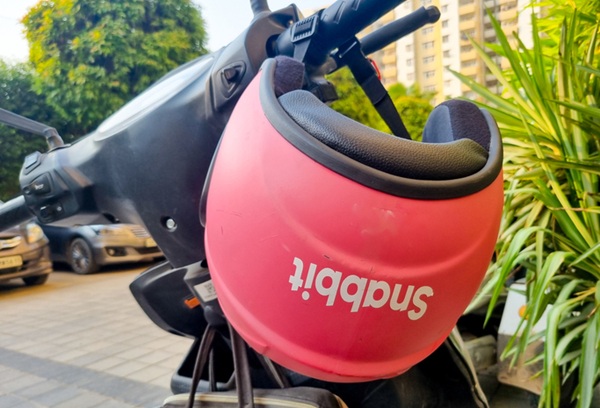
Last week, Snabbit released its 2025-26 financials, setting off the usual social media argument about cash burn, sustainability and what is wrong with India’s startup ecosystem. Honestly, what surprises me is how surprised everyone seems to be.
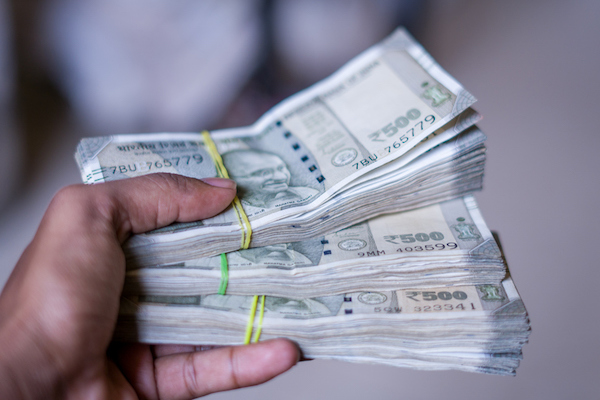
The instant home-services startup reported operating revenue of ₹122 million for the year ended March 2026, against expenses of ₹1.94 billion and a loss of ₹1.67 billion. In effect, it spent nearly ₹16 for every rupee earned from operations. Having raised around $110 million in barely three years, the Mumbai-based company has certainly given critics plenty to talk about.
Editors called the cash burn excessive. Investors rushed to defend the business. Founder Aayush Agarwal explained the numbers on LinkedIn, while the company issued statements about expansion and long-term investments. Strip away the chest-thumping on both sides, though, and a more interesting question emerges: why are we treating this as an unexpected outcome?
Agarwal said that at the beginning of 2025-26, Snabbit was losing around ₹1,500 per job. By the end of the year, the figure had fallen below ₹200 and was continuing to improve. The company attributed its losses to geographic expansion, customer and service-provider acquisition, and investments in operating capabilities. It also argued that its first full year of operations did not reflect the business’s current maturity.
There are two things worth considering here: the economics of instant domestic help and the economics of Indian consumer startups more broadly.
Labour Economics
Instant domestic help is a young, labour-intensive and hyperlocal business. Snabbit began operations in 2024, Urban Company launched InstaHelp in March 2025, and Pronto followed weeks later. Each needs enough trained workers in every neighbourhood to meet unpredictable demand. That is not easy when the workforce consists largely of women, many new to formal employment, who face safety risks that delivery riders and cab drivers do not encounter in quite the same way. A housekeeper may spend hours inside a stranger’s home, with limited public visibility and potentially few easy ways to leave if something goes wrong.
There are also questions about unpaid waiting time, commuting costs, cancellation penalties, ratings and how earnings policies are communicated. Agarwal has previously said that the model becomes profitable when a worker remains occupied for more than 65% of the day. Reaching that level of utilisation across thousands of workers and neighbourhoods is a formidable operational challenge, especially when three companies are competing for the same people.
Consumers present a different problem. Many use instant help as a temporary substitute when their regular domestic worker is absent, or as an occasional top-up when something needs doing urgently. That makes demand difficult to predict and potentially less frequent than the platforms would like. Indian consumers are also famously price-sensitive, whether buying a Rolex, a chicken roll or an hour of domestic help.
Platforms must therefore offer discounts to customers while providing incentives to workers. Urban Company co-founder and chief executive Abhiraj Singh Bhal has described these as a “two-sided subsidy”. The subsidies may be necessary to attract both sides of the marketplace, but they also make the economics harder to sustain.
Urban Company’s own numbers illustrate the point. In the September quarter, its consolidated net loss widened to ₹1.82 billion from ₹593.3 million a year earlier, even as operating revenue rose 41.4% to ₹5.37 billion. Its shareholder letter reported an adjusted EBITDA loss of ₹1.44 billion. Excluding InstaHelp, however, the company recorded adjusted EBITDA profit of ₹300 million, up 213% year on year.
The company said the adjusted EBITDA loss was almost entirely attributable to the ₹1.74 billion it invested in InstaHelp. It also described the service as a source of frequent customer interactions and new users for its core offerings. The strategy is explicit: prioritise market leadership now, tolerate elevated losses for a few more quarters and target consolidated adjusted EBITDA breakeven by Q3 2027-28.
Urban Company has even secured board approval to raise up to ₹25 billion, partly to strengthen InstaHelp’s market position. This is not a business quietly stumbling into losses. It is a company making a deliberate bet that scale and customer habits will eventually justify the spending.
Familiar Playbook
The pattern is familiar: spend to acquire customers, spend to build supply, and keep spending until competitors retreat or investors lose patience. Deep pockets do not guarantee success, but they give companies more time to establish a position. Reliance Jio demonstrated a similar dynamic when it offered free voice calls and data, forcing a brutal price war that helped reshape the telecom industry.
The underlying logic is straightforward. In a market where network effects and customer habits matter, early spending can help establish a position that later becomes difficult to challenge. The risk, of course, is that market leadership never arrives, or that customers who were attracted by discounts leave when prices rise. Cash burn is a strategy, not proof that the strategy will work.
Instant domestic help is betting on a particularly familiar Indian habit: outsourcing household work. The question is whether technology can make the service sufficiently reliable, affordable and convenient for occasional users to become regular customers. If it can, the platforms may build a durable business. If not, the money spent acquiring customers and workers may never earn an adequate return.
There is another way to look at this. Did we need these services before they existed? Perhaps not. Did we want them? Clearly, many of us did. Once a service becomes convenient and familiar, however, it can start to feel indispensable. Economist John Kenneth Galbraith called this the dependence effect: businesses help create the wants they subsequently satisfy. As Yuval Noah Harari writes in Sapiens, “luxuries tend to become necessities and to spawn new obligations”.
That transformation is what consumer startups are trying to buy. The hope is that a service initially used as a convenience becomes part of everyday life. But the transition from want to need does not happen automatically, and investor money cannot guarantee it.
As I write this, the doorbell has rung twice: first for a quick-commerce grocery delivery, then for an instant-help worker. Our regular domestic help is on leave. I need to cook, finish this piece and go pandal-hopping.
India’s startup history offers no shortage of companies that spent heavily and eventually built valuable businesses, alongside others that burnt through capital without finding a viable model. Snabbit could end up on either side of that divide.
What it cannot reasonably be accused of is inventing the playbook. In India’s consumer economy, spending heavily to build a market has long been part of the business. The surprise, if there is one, is that we keep acting surprised.
More From BasisPoint