.png)

Sarci Sense: The Many Meanings of Diwali, and the Lives Behind Them
Diwali brings families together, renews old traditions and celebrates prosperity. It also exposes our vanity, our anxieties about status and the very different lives behind the festive lights.

Dr. Srinath Sridharan is a Corporate Advisor & Independent Director on Corporate Boards. He is the author of ‘Family and Dhanda’.
November 7, 2026 at 4:12 AM IST
Diwali has a remarkable ability to bring India together, even when Indians cannot agree on much else. Its stories, rituals and customs vary across regions, communities and households. For some, it marks Lord Rama’s return to Ayodhya. For others, the worship of Lakshmi, the beginning of a new financial year, the victory of good over evil or the renewal of family and business traditions gives the festival its significance. For many, it is simply the annual journey home, a chance to meet friends &/ relatives, light lamps, eat festive food and spend time with people they rarely see through the rest of the year.
Every generation inherits these traditions and makes room for its own. Yet, around the prayers, lamps and family gatherings, another Diwali has taken shape. It is a festival of shopping, decorating, gifting, photographing and displaying. We have become rather accomplished at celebrating the occasion and demonstrating that we are celebrating it.
The modern affluent Indian home prepares for Diwali with the seriousness of a film production. Cleaning begins weeks in advance, furniture is moved, walls are touched up, lights are tested and decorations debated. Someone must decide whether the entrance looks sufficiently festive, whether the dining table is photograph-ready and whether the cushions complement the curtains. The guests may arrive at seven, but the house must be ready much earlier. Even the annual cleaning has its limits. Dust must disappear,although a ten-year-old family disagreement can remain perfectly undisturbed.
Prosperity has acquired its own festive display. The new car, jewellery, home renovation, expensive gifts and elaborate celebrations become evidence of how well a household is doing. Even people who are ordinarily careful with money can feel obliged to participate. Nobody wants to appear to have had a modest Diwali when relatives, neighbours and social media suggest that everybody else is flourishing. We have developed an impressive ability to spend beyond our comfort in order to demonstrate that we are comfortable.
Social media has given this exercise an enthusiastic distribution network. The diya is photographed before it is lit, the food before it is eaten, the outfit before the evening begins and the family before anyone has had an opportunity to disagree. Greetings are sent to hundreds, including people whose names we might struggle to recall in person. The message is warm, the photograph carefully composed, and the relationship may otherwise remain dormant until next Diwali. We have never been so efficient at wishing people well without having to meet them.
The family photograph is particularly revealing. Everyone is dressed well, standing close and smiling. It captures togetherness beautifully, even when the people in it have spent much of the year communicating through brief messages and carefully managed family WhatsApp groups. At the gathering, old disagreements are temporarily suspended, although certainly not forgotten. Questions about salary, marriage, children, property, career choices and why somebody has not visited more often are served alongside thefestive snacks.
Gifting has developed its own unwritten accounting system. Who sent what, who received something more expensive, whether the gift was reciprocated and whether a particular relationship deserved a better hamper can occupy considerable mental bandwidth. The packaging sometimes costs more than the contents, but the box must look substantial. A gift is meant to express affection. We have managed to introduce social-valuation into the exercise, leaving the recipient grateful and the sender quietly attentiveto whether the gesture has been noticed.
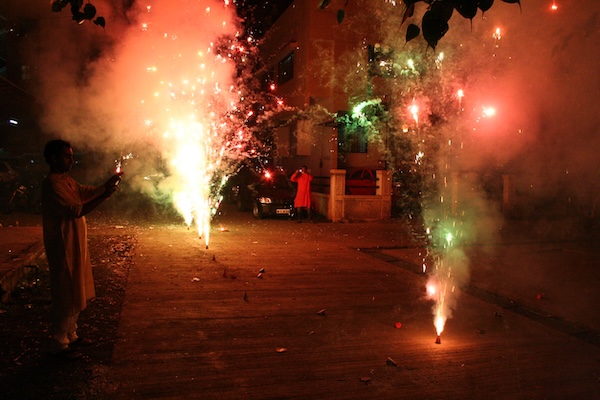
The same household may contain several different ideas of Diwali. For grandparents, it may be about prayer, familiar rituals, memories of earlier generations and the pleasure of having children and grandchildren return home. For the middle generation, it means coordinating visits, shopping, cleaning, cooking, hosting and managing expenses. Younger adults may look forward to friends, travel, fashion, experiences and the freedom to interpret traditions in their own way. Children see sweets, new clothes, fireworks, gifts and the possibility of receiving something they have wanted all year.
One generation remembers the excitement of buying new clothes once a year. Another can order several outfits on an app before breakfast. The younger ones may wonder why rituals are repeated without anyone explaining their meaning.
The commercial world, meanwhile, has understood the changing consumer rather well. Buying gold, a car, a television, a phone or a new home is presented as an expression of auspiciousness. Retailers have attached the language of good fortune to discounts, and consumers are assured that a purchase is an investment in happiness and family well-being. The divine blessing is conveniently available alongside an attractive financing scheme.
There is a less visible Diwali beyond these displays. Those who can afford elaborate celebrations may forget how differently the season is experienced by those who cannot. For a family with limited means, the Diwali wish list can be considerably longer than the shopping list. New clothes for the children, sweets, a small gift, a repaired appliance or a journey home may require choices and compromises that comfortable households rarely have to make. For millions, the festival brings hope and aspiration, alongsidepurchases postponed for another year. The ability to celebrate lavishly is a privilege, even if we rarely think of it that way.
There is also an invisible workforce behind the beautiful Diwali home. Someone has cleaned, cooked, organised the gifts and arranged the decorations. Domestic workers, delivery personnel, drivers, security guards and shop-floor employees often work harder during the festive season so that somebody else’s celebration can proceed without inconvenience. Some households enjoy a holiday. Others experience their busiest working days. A festival associated with generosity offers a timely reason to consider whether the people who make our celebrations possible share in any of that generosity.
The festival should leave room for the family that celebrates with a grand feast, the young couple lighting two diyas in a rented apartment, and the household that can manage little beyond a modest meal and a prayer.
For some, Diwali is an occasion to celebrate what they have. For others, it is a reminder of what they are still hoping to have. We should be able to enjoy our good fortune without forgetting the difference.
We speak of gratitude, generosity and togetherness, but the example set at home can be considerably more complicated. What children learn from our behaviour may stay with them longer than the rituals we teach them.
Let’s be kind.
Happy Diwali !
More From BasisPoint