.png)

September 6, 2026 at 2:33 PM IST
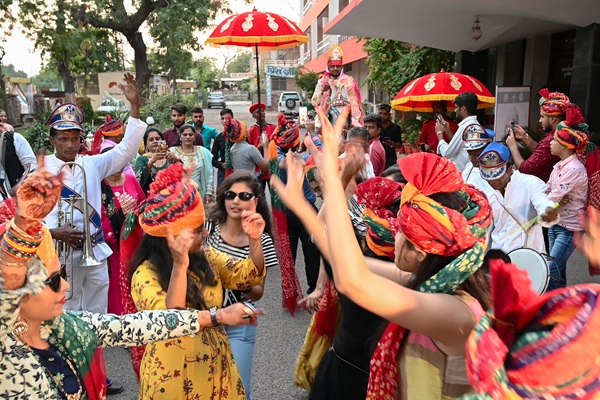
India’s political debate has taken on a wedding function seating plan. The government is at the head table. The Opposition is inspecting the cutlery. The taxpayer is outside, settling the caterer’s advance.
At Delhi’s Shri Ram College of Commerce, Prime Minister Narendra Modi recently supplied the missing relative: the “naraz fufa”, the perpetually displeased uncle who asks why anything needs doing.
It is an excellent character.
Give him a bullet train, and he will miss the romance of delay. Leave him waiting, and he will demand the railway minister’s resignation. His only consistently high-speed service is disapproval.
But even a sulking uncle can spot an inflated bill. “Why do we need this?” is not always a character defect. Sometimes it is the first chapter of economics.
Especially at a commerce college, where a vote of thanks is not a rate of return.
Hosts of every political persuasion keep similar accounts: every success is personal; every failure is inherited. Apparently, the previous wedding committee is still running the show, but only the parts that go wrong.
Then the family function acquired a medical desk.
Modi likened his earlier “dimagi Naxal” remark to a homoeopathic dose that had brought its targets into view.
Political medicine has enviable diagnostic certainty. Object to the label and you confirm the diagnosis. Ask for a second opinion, and apparently you need a stronger dose.
Political medicine is a flourishing practice: everyone prescribes, and nobody takes advice.
Still, there is a difference between teasing a difficult relative and suggesting ideological extremism. Not every argument needs a medical diagnosis.
A fufa is a domestic nuisance. A Naxal belongs to the country’s vocabulary of violence, insurgency and internal threat. Across the lawn, the critics have their own catering problem: making the host eat humble pie does not put dinner on the guests’ plates.
Last November, former RBI governor Raghuram Rajan described US tariffs as “a slap in the face for Modi”. His broader argument concerned harm to Indian businesses. The phrase, however, practically invited a new economic indicator: Gross Domestic Embarrassment.
From balance sheets to slapstick.
Lost orders cannot be offset against somebody else’s loss of face. The exporter would prefer an order book to a ringside seat.
Consider our professional pessimist. Good news is a clerical error; bad news is peer review. If a project succeeds, the government stole the idea. If it fails, he always said it would. Either way, he deserves the credit. The country can keep the debit.
An opposition party can enjoy a government’s discomfort. It should not mistake that for a recovery programme. A factory cannot pay wages in vindication.
The host, meanwhile, cannot settle the invoice with applause. Nor does calling the auditor an uncle invalidate his sums.
The two camps might consider a modest family settlement: credit where due, questions where needed, and no medical diagnosis for disagreement.
There is even room for a national consensus. Everyone supports accountability, provided it happens at the other table.
Meanwhile, the taxpayer has finally found his name on the seating chart.
Under “Accounts Payable”.
More From BasisPoint