.png)


Rakesh Khar is a seasoned editor. He writes at the intersection of politics, business, technology and society.
September 7, 2026 at 7:27 AM IST
Asking Indians to step away from the jewellery counter ahead of the festival season carries political risks.
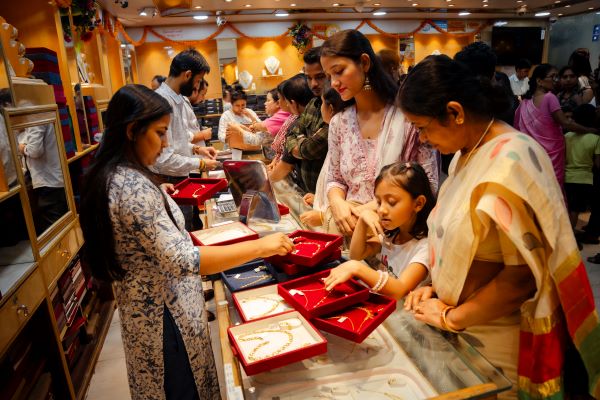
Gold in India is more than a commodity. It is a form of savings, an intergenerational asset and a deeply entrenched cultural tradition. Prime Minister Narendra Modi’s public plea to avoid unnecessary gold purchases puts concern about the import bill up against long-standing buying habits and the interests of the domestic jewellery trade.
The electoral calendar adds a political dimension. Next year, Uttar Pradesh, Uttarakhand, Himachal Pradesh and Punjab head to the polls. The domestic gold trade includes merchant communities that have traditionally formed part of the BJP’s support base.
A sustained decline in gold buying could depress jewellery sales and unsettle sections of that constituency ahead of these elections. The appeal suggests a willingness to deliver an uncomfortable economic message, although its political cost will depend on whether consumers respond and how the trade is affected.
Import Pressures
The economic concern is the rising bullion import bill amid wars and global uncertainty. Higher international gold prices have increased the cost of meeting Indian demand, even as import volumes have declined.
According to data reported by The Economic Times, India’s gold imports rose more than 24% to an all-time high of $71.98 billion in 2025–26. This occurred even as the volume imported fell nearly 4.8% to roughly 721 tonnes. India bought less physical gold but paid a substantially higher dollar bill.
Gold imports add to the demand for foreign exchange. A surge in festive buying can therefore widen the trade deficit and, depending on other external flows, add to pressure on the rupee.
However, framing Modi’s appeal purely as a response to global gold prices offers incomplete context. It also draws attention to the government’s limited progress in reducing dependence on imported crude oil. Earlier ambitions to bring down that dependence have proved difficult to realise.
With limited scope to curb essential oil imports without affecting economic activity, discretionary imports become a more accessible target. Gold is an obvious candidate, although restraining purchases would not resolve the underlying dependence on imported energy.
Nor is all gold buying simply consumption that households can readily postpone. For many buyers, it is also a means of saving and providing financial security. That complicates the attempt to influence demand through an appeal for restraint.
Mobilising Gold
Reducing gold imports requires more than a prime ministerial plea. It also requires more effective ways to bring existing domestic holdings into circulation and offer alternatives to those buying gold primarily as an investment.
Indian households and religious institutions are estimated to hold 20,000–25,000 tonnes of physical gold. This represents substantial wealth, but much of it remains outside formal financial channels. Efforts to mobilise it have met with limited success.
The Gold Monetisation Scheme struggled to attract household gold, partly because families are reluctant to melt down ancestral jewellery in return for interest. Sovereign Gold Bonds offered an alternative for investors seeking exposure to gold prices, but could not substitute for jewellery bought to wear, gift or pass on.
The distinction matters. A gold-linked financial investment and a family heirloom serve different purposes. The difficulty is not simply that policy has failed to turn physical gold into a financial asset. It is that financial products cannot fully replace the cultural and practical uses of jewellery.
Without addressing those differences, efforts to shift demand away from physical gold will have limits.
Reform Comparisons
There are precedents for Modi taking decisions that unsettled established interests, including sections of his own support base. But comparisons between the gold appeal and structural reforms need care.
As chief minister of Gujarat, Modi implemented the Jyotigram Yojana, which separated agricultural power feeders from those supplying other rural consumers. The programme faced resistance from sections of the farming community but changed how rural electricity was supplied.
As prime minister, his government introduced the Goods and Services Tax, seeking to create a unified national market. The transition brought significant adjustment and compliance costs, particularly for smaller businesses and traders, including communities traditionally associated with the BJP.
The Insolvency and Bankruptcy Code similarly challenged the position of established business promoters. It provided creditors with a framework to resolve defaulting companies, potentially displacing existing owners. Its implementation has also exposed shortcomings requiring further reform.
These measures changed institutions, rules and incentives. An appeal to avoid gold purchases relies instead on voluntary restraint. It may reflect a willingness to challenge established preferences, but it is not equivalent to a change in taxation, credit rules or the organisation of an essential service.
Its economic effect will depend on whether households alter their buying decisions. The intention to ease external pressures is clear; the scale and durability of the response are not.
Electoral Echoes
Demonetisation in 2016, ahead of the following year’s Uttar Pradesh election, provides another example of a disruptive intervention before a major political contest. It does not, however, establish that taking an electoral risk necessarily produces economic gains.
The gold appeal is also materially different. Rather than imposing a sudden policy change, Modi is asking consumers to give greater weight to the national economic cost of their purchases. Whether that argument outweighs considerations of tradition, savings and expected returns remains uncertain.
The immediate gamble is that some households will defer buying without a wider backlash from the jewellery trade. Even then, postponed purchases may return later, limiting the lasting effect on imports.
Modi’s intervention brings the foreign-exchange cost of gold into the public debate. But the test is not the boldness of the appeal. It is whether the appeal changes demand, and whether policy can provide credible savings alternatives and make better use of gold already held in India. Political gains, should they follow, would be a separate outcome.
More From BasisPoint