.png)


Groupthink is the House View of BasisPoint’s in-house columnists.
June 24, 2026 at 1:33 PM IST
The fall in Indian interest rates on Wednesday was not driven by easing crude prices alone. Markets were also responding to an unusually direct clarification from Reserve Bank of India Governor Sanjay Malhotra: the central bank is not preparing them for an increase in interest rates.
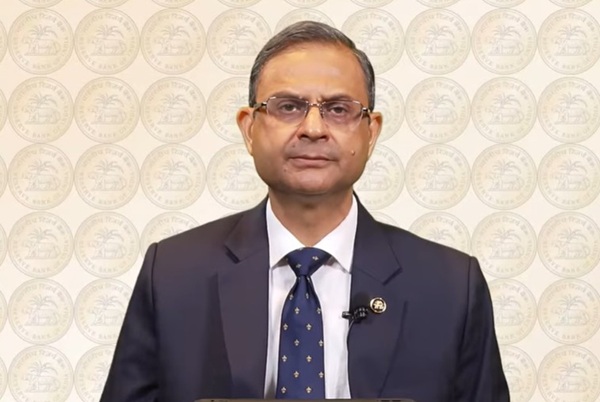
Malhotra spoke to the ET-Now Television channel, which aired this morning.
Malhotra rejected the suggestion that the RBI’s June policy commentary had been intended as advance guidance for a hike. Had the Monetary Policy Committee been sufficiently convinced that higher rates were coming, he argued, it would have shifted its stance from neutral to restrictive. Instead, discussion of a rate increase remains “premature”, with decisions to be taken policy by policy.
The RBI is signalling something more specific: it does not yet believe the evidence warrants building a case for tighter monetary policy.
The RBI’s emerging reaction function appears deliberately confirmation-heavy. Malhotra wants to determine whether the energy shock is a one-off change in the price level or whether it spreads beyond fuel, passes from wholesale into consumer prices, affects headline and core inflation, and persists. Until that generalisation becomes observable, the central bank would prefer to wait.
That judgement also rests on the present inflation mix. Malhotra pointed to headline inflation remaining below 4% and core inflation at about 2.4%, while attributing much of the rise in wholesale inflation to fuel. More importantly, he said the RBI does not yet see signs that the shock is becoming generalised.
The external backdrop has also improved since the June policy. Malhotra said the de-escalation in West Asia had reduced the upside risks from crude, energy and fertilisers, while the government and oil-marketing companies had cushioned much of the domestic impact. But the relief is conditional: the truce remains fragile, damaged supply infrastructure will take time to restore and depleted inventories and strategic reserves must eventually be rebuilt. The oil risk has diminished; it has not disappeared.
The trade-off is that this is not an especially forward-looking formulation. Monetary policy is normally expected to respond to the projected inflation path, given the lag with which interest rates affect demand and prices. Malhotra’s test appears to require substantial confirmation that the shock has already travelled through the economy.
His description of “second-round effects” also remains somewhat imprecise.
He refers to inflation expectations and persistence, but operationally places considerable emphasis on WPI passing into CPI and fuel inflation spreading into headline and core inflation. A fuller test would ordinarily examine whether the original shock is altering wages, expectations, service prices and recurring price-setting behaviour. The Governor did not identify particular indicators or thresholds that would establish when the process has begun.
For markets, however, the lack of a precise threshold is less important than its apparent height. The burden of proof lies with those expecting a hike. The RBI will not tighten merely because inflation could generalise; it wants evidence that it is generalising.
That helps explain why short-term rate expectations fell sharply after the interview, while the benchmark 10-year government bond yield eased towards 6.79%. Lower oil prices contributed to the move, but Malhotra’s comments removed an important element of the hawkish interpretation markets had attached to the June policy, which had put the CPI inflation at 5.9% in the December quarter and the year’s average at 5.1%, well above the 4% medium-term goal.
More From BasisPoint