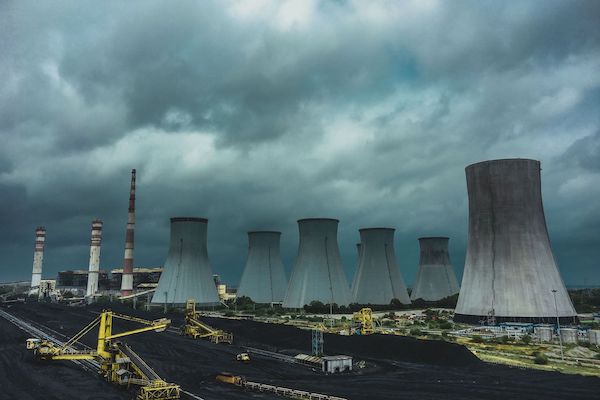
India's coal supply crunch has brought up questions not only about the growing strain on its electricity supply system and managing the current shortage, but also to prepare India's power sector to meet future demand.
Data from the Central Electricity Authority (CEA) show that as on October 19, a total of 96 of the 191 coal-fired power plants it monitors had critically low stocks of coal as compared with 60 in mid-September.
Separately, daily peak electricity demand was recorded 45–50 GW higher than a year earlier during the month, while the supply shortfall in September had touched 560 million units, the highest since August 2023.
Considered together, these developments point to a problem that cannot be explained by coal shortage alone.
Demand Outpaces Supply
Electricity demand has risen this year as warmer weather increased consumption for cooling. Irrigation and industrial activity further drove up demand. On the other hand, weaker monsoon rainfall meant a fall in hydropower generation, leaving coal-fired plants to make up for the shortfall. CEA data show that coal-based power generation rose 13.3% year-on-year in September, while hydropower generation fell 20%. This shift matters because thermal plants must burn more coal to compensate for lost hydropower output, increasing their fuel requirements when coal supplies are under pressure.
The weather also played a role, disrupting coal deliveries. Heavy rain in mining regions affected the production and shipment of coal to power plants. On October 22, a senior Power Ministry official told Reuters that daily deliveries had reached a record 2.6 million tonnes, and that supplies should normalise soon. Yet, power plants continued to report critically low inventories.
The distinction is important. Coal available in the country is not the same as coal stocks available at individual power stations. Production, rail transport and deliveries must keep pace with consumption. At the same time, a sudden increase in demand can expose weaknesses in inventory management and supply logistics. The current crunch reflects both pressures, compounded by reduced hydropower generation.
The Renewable Energy Paradox
Despite its rapid expansion, renewable energy has not eliminated India’s dependence on coal-based thermal power, especially during periods of high demand. The reason is partly the timing of power generation. Solar power is generated during daylight hours, whereas electricity demand often peaks in the evening, when households and commercial establishments consume power simultaneously. Without sufficient storage capacity, surplus daytime generation cannot readily be stored for use later.
Installed capacity, therefore, is not a reliable measure of how much electricity can be supplied at a particular hour. Battery storage, stronger transmission networks and flexible generation are needed to match electricity supply with changing demand.
This is not an argument against renewable energy. It is an argument to ensure that investment in generation is matched by investment in the infrastructure required to deliver power when and where it is needed.
Do AI Data Centres Add To The Problem?
India’s longer-term challenge includes emerging sources of demand, particularly artificial intelligence (AI) and data centres, which require substantial electricity for computing and cooling.
In a July 2026 reply to the Parliament, the Ministry of Power projected that AI data centres could add 26.3 GW to India's electricity load by 2031–32, almost twice its earlier estimate of 13.56 GW. The ministry expects this additional load to be met primarily through renewable energy.
Meeting this additional demand will depend on the availability of renewable energy, the timing of data-centre electricity use, and adequate storage and transmission infrastructure. Higher electricity use by data centres does not necessarily mean that coal-fired power plants will have to generate all the additional electricity. The extent of their contribution will depend on how much demand can be met through dedicated renewable capacity and storage when renewable output is low.
As of now, there is no evidence that AI data centres are a major cause of the current coal crunch. Weather-related demand, higher irrigation and industrial consumption, lower hydropower generation and disruptions to coal deliveries provide more immediate explanations.
However, future investment in data centres must be matched by credible plans for reliable supply of electricity. Otherwise, the costs of additional generation and grid infrastructure could fall on existing electricity consumers without adequate consideration of who is creating the additional demand.
The Way Forward
The current coal crunch should prompt a broader examination of India's energy planning. Electricity demand fluctuates with weather and economic activity, but the power system must manage these variations without repeatedly resorting to emergency measures, or asking industrial consumers to shift electricity use away from peak hours.
Coal production and transportation also needs to withstand weather disruptions. Power plants need adequate inventories, while the power ministry must improve demand forecasting and ensure sufficient generation during peak periods.
Expansion of renewable energy must be accompanied by investment in storage and transmission. Otherwise, India risks adding generating capacity without adequately addressing the timing and location of its electricity needs. Incentives to attract investment in emerging industries such as AI data centres should be accompanied by credible plans to provide reliable power, with the costs of additional infrastructure transparently allocated.
India's coal crunch is neither purely a supply shock nor simply a demand surge. It reflects a power system under pressure from both sides, compounded by lower hydropower generation and inadequate flexibility to meet peak demand. Restoring coal supplies may ease the immediate strain, but it will not resolve the underlying challenge.
Energy security depends not merely on how much coal is available, or how much generating capacity is installed, but on whether reliable electricity can be delivered when and where the economy needs it. Without better planning, power shortages could become a recurring constraint on industrial growth and India's digital ambitions.
.png)