.png)


Shilpashree Venkatesh is a research professional with expertise in macroeconomics, real estate, and infrastructure, focused on growth trends.
November 23, 2026 at 6:00 AM IST
Bengaluru’s metro network crossed the 100 km mark this month, reaching nearly 104 km and carrying close to a million passengers a day. It is now the second city after Delhi NCR to achieve this milestone. The achievement is worth celebrating, but it also highlights a persistent weakness in India’s growth centres: infrastructure arrives only after population and economic expansion have strained existing systems.
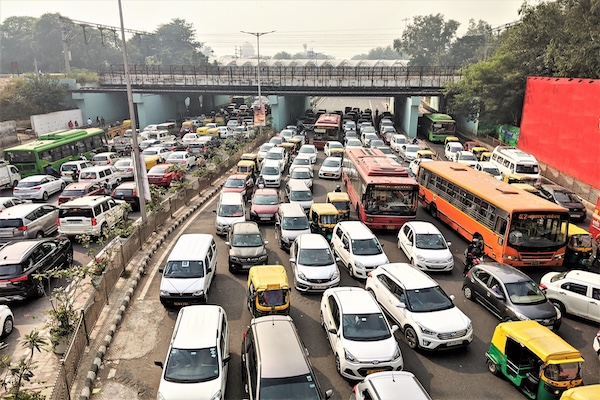
Consider Bengaluru’s Outer Ring Road (ORR), which runs through the city’s eastern and northern employment belt. One of India’s largest job centres, it accounts for more than 40% of the city’s Grade A office stock. Yet metro connectivity along much of this stretch remains under development, leaving a large workforce dependent on road transport and contributing to chronic congestion. The resulting delays erode productivity and quality of life. In 2023, ORRCA estimated that congestion and infrastructure failures along the corridor caused annual productivity losses of ₹1.25 trillion. This is the cost of allowing development to outpace infrastructure, a problem that extends well beyond Bengaluru.
International experience offers a contrast. Singapore integrates transport networks into long term land use plans, ensuring that residential towns, business districts and employment centres develop alongside public transport. Hong Kong’s rail plus property model links railway expansion with development around stations, using part of the resulting increase in land values to finance the network. Shenzhen demonstrates how metro access can shape land use and building density. These examples underline a crucial principle: public transport does not merely follow urban growth. It helps determine where people live, where businesses operate and how cities expand.
Indian cities have too often reversed this relationship, treating infrastructure as a response to rising demand rather than as the foundation for future development.
The economic consequences are substantial. According to the TomTom Traffic Index, commuters in Bengaluru lost 168 hours to rush hour traffic in 2025. Those hours translate into lost output, higher business costs and a poorer quality of life. The burden falls largely on households and businesses rather than the agencies responsible for delayed infrastructure.
The same pattern runs through essential services. Unreliable municipal water supplies force households to pay for tankers and private storage. Inadequate stormwater drainage causes flooding and economic damage, while poor roads and recurring disruption raise transport and logistics costs. In each case, infrastructure failure transfers the financial burden to citizens and businesses.
Delays also inflate government expenditure. A 2026 Comptroller and Auditor General audit of Bengaluru Metro Phases I and II identified serious shortcomings in project preparation, land assessment and execution. Inadequate land estimation and delayed acquisition increased land costs by ₹66.03 billion as of March 2023. Delayed notifications added another ₹1.86 billion in interest costs.
These overruns reflected weaknesses in planning, estimation and coordination, not simply unexpectedly rising demand. Infrastructure projects deliver benefits over decades. Every year of delay shortens the period over which those benefits can be realised, even as financing costs accumulate.
Planning Ahead
Building expensive infrastructure, particularly mass transit, ahead of demand carries financial risks. Such projects often struggle to cover their operating and capital costs. Bengaluru illustrates the challenge. In 2025-26, BMRCL reported operating revenue of ₹16.25 billion against a net loss of ₹17.10 billion, after accounting for interest and depreciation. The state continues to bear a substantial share of approved project costs, while metro authorities across India face similar pressures.
But this does not weaken the case for anticipating urban growth. Rail infrastructure is capital intensive, and fares were never expected to recover its full cost. Better planning can widen the scope for non fare revenue through station and property development. Hong Kong shows how part of the value created by improved connectivity can be captured through property development. Metro projects should therefore be assessed not only on operating profits or losses, but also on the time they save, congestion they prevent, economic activity they enable and land value they generate. Cities need mechanisms to recover a reasonable share of these wider benefits.
The problem extends beyond transport. India’s sanitation infrastructure reveals a similar mismatch between urban growth and public investment. Parliamentary data reported in August 2026 showed that only 34.4 million of the country’s 113.2 million urban households have sewer connections. Of the approved 59,262 km of sewer network, approximately 27,419 km has been laid. Meanwhile, cities generate an estimated 52,644 million litres of sewage daily, against an installed treatment capacity of just 31,885 million litres per day.
This shortfall threatens public health and environmental quality, while limiting cities’ ability to support higher population densities. Delayed investment also makes construction more expensive. Installing sewer lines, drainage systems and roads in undeveloped areas is far easier than doing so after buildings, businesses and utilities have occupied the space. What could have been provided relatively cheaply at the planning stage becomes a costly exercise in retrofitting.
The scale of future requirements makes early planning urgent. Industry estimates suggest that Indian cities will need ₹230 trillion by 2050 for resilient and low carbon infrastructure. An estimated 70% of the urban infrastructure India will require by 2047 is yet to be built. Urban areas already contribute more than 60% of national GDP while accounting for roughly one third of the population. Their ability to sustain growth will depend on whether investment keeps pace with urbanisation. The funding gap is significant, but so are the weaknesses in identifying, preparing and structuring viable projects.
Municipal institutions are poorly equipped to meet this challenge. Municipal corporations in India generate revenues equivalent to only around 0.6% of GDP. Between 2017 and March 2026, 22 municipal corporations collectively raised ₹45.40 billion through 31 debt issuances. According to World Bank analysis, the ten largest urban local governments spent only about two thirds of their capital budgets over a three year period. Poor coordination between agencies further limits the reach of existing schemes, particularly in peri urban areas where urbanisation is accelerating. Simply allocating larger capital budgets will not solve the problem. Cities must change how they plan, prepare and deliver infrastructure.
Building Capacity
Urban development plans must move beyond broad land use classifications to assess infrastructure capacity and future demand. Bengaluru, Mumbai and Hyderabad have experienced the consequences of infrastructure lagging behind urban growth. Emerging urban centres offer an opportunity to get it right from the outset, whether through greenfield development or satellite towns.
Such developments need a 25 to 30 year planning horizon integrating land use, economic activity and infrastructure. Commercial corridors such as Bengaluru’s ORR should be designed around integrated transport networks, with public transport planned alongside business development rather than introduced retrospectively. Residential projects must similarly have credible, funded plans for water, sanitation, electricity, roads and public transport before large scale occupation begins. Infrastructure must precede or grow alongside urban expansion, not scramble to catch up after congestion and service deficiencies take hold.
Cities must also identify and protect future transport corridors before development reaches them. Land value capture can recover part of the increase in land values generated by public infrastructure and channel it back into financing. This would diversify funding while linking the economic value created by public investment to the cost of future infrastructure.
Closing the gap between project planning and implementation is equally important. Detailed engineering designs, realistic cost estimates, land assessments and utility mapping are essential, yet often inadequately addressed before construction begins. Project preparation must account for changing demand, acquisition risks and potential delays. These practices need to be embedded through stronger appraisal, monitoring and accountability, rather than addressed after cost overruns have occurred.
Municipalities also need stronger property tax systems, more effective user charges and access to long term finance. Private investment can supplement public funding where projects have credible revenue streams and risks are appropriately allocated. At the metropolitan level, empowered planning and coordination authorities can integrate transport, land use and essential services, align investment priorities and reduce fragmented decision making.
India’s urban infrastructure challenge is about more than a shortage of funds. It reflects a failure to anticipate demand, prepare projects and build the institutional capacity needed for timely delivery. Delayed metro corridors, inadequate sewerage networks and weak municipal finances are different manifestations of the same structural problem.
Infrastructure must be treated as a productive investment that enables economic growth, not as an emergency response to shortages that have already become impossible to ignore.
*Views are personal*
More From BasisPoint