.png)

Ganga Narayan Rath is a former central banker and Chirayu Sharma, an independent researcher.
August 31, 2026 at 11:23 AM IST
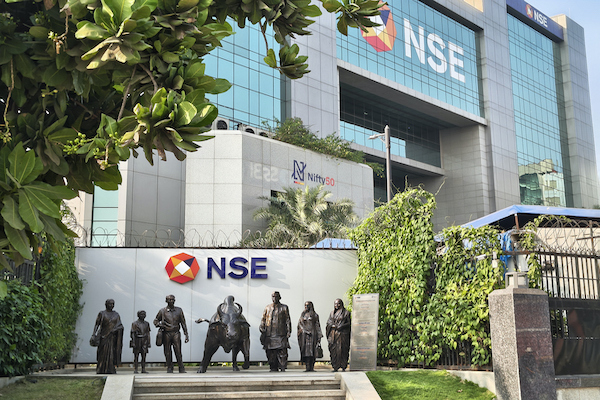
For a company whose net worth has been eroded by three decades of bad loans, IFCI Ltd has suddenly become one of Dalal Street’s most talked-about stocks. In June 2026, shares of the state-owned lender hit the 20% upper-circuit limit and touched a fresh 52-week high of ₹93.75, as reports swirled that the National Stock Exchange was finally moving to file its draft red herring prospectus for a long-awaited public listing.
The reason for the frenzy: IFCI holds a 52.86% stake in Stock Holding Corporation of India, which in turn owns a 4.4% stake in NSE. With unlisted-market trades valuing NSE at ₹4.5–5 trillion and expectations around the IPO pushing the valuation closer to ₹6 trillion, investors are betting that IFCI’s indirect NSE holding could finally deliver the windfall this ailing institution has needed for years.
But strip away the speculative rally, and the numbers tell a far grimmer story: a nearly eight-decade-old development finance institution kept alive almost entirely by government life support.
Lost Mandate
IFCI, the Industrial Finance Corporation of India, was set up in 1948 as independent India’s first development finance institution (DFI), created by a special Act of Parliament to provide long-term capital to industry when commercial banks were unwilling or unable to. In its early decades it enjoyed strong international backing, including credit lines from the World Bank and bilateral development agencies, which allowed it to fund large industrial projects at a time when India’s capital markets were shallow and risk-averse.
Its defined role was clear and, for a while, indispensable: term lending for large-scale manufacturing, promoting new financial institutions such as ICRAand the Tourism Finance Corporation of India, and acting as an instrument of state-led industrial policy.
That mandate began to unravel with the onset of financial liberalisation in the early 1990s. As banks were freed to enter term lending and capital markets opened up, DFIs like IFCI lost their monopoly over long-term project finance without ever developing the low-cost deposit base that commercial banks enjoyed. Competing against banks for the same borrowers while funding itself through costlier market borrowings, IFCI’s core business model became structurally unviable almost overnight.
Bad-Loan Spiral
The consequences show up starkly in IFCI’s books today. As of June 2026, gross non-performing assets stood at ₹35.22 billion, equivalent to a staggering 95.68% of its gross loan assets.
To put that in perspective, a well-run private bank such as ICICI Bank reported a gross NPA ratio of just 1.38%, compared with 1.17% at HDFC Bank and 1.47% at State Bank of India in the same quarter.
Virtually IFCI’s entire remaining loan book is non-performing.
This is not a recent slippage; it is the cumulative result of aggressive project lending in the 1990s and 2000s to sectors such as steel, textiles and infrastructure that went through prolonged downturns, compounded by weak underwriting and limited recovery mechanisms.
Decades of provisioning against these bad loans have eroded IFCI’s net worth to the point of insolvency by regulatory yardsticks. Its capital-to-risk-weighted assets ratio, the key solvency measure for lenders, stood at negative 17.58% in the quarter ended June 2026, far below the Reserve Bank of India’s mandated minimum of 15%. A negative CRAR means the lender’s eligible regulatory capital has fallen below zero, a position most lenders would not survive without intervention.
Broken Model
At the heart of IFCI’s troubles lies a classic structural mismatch: it relied on market borrowings to fund long-term loans, but as the bad loans mounted and market confidence evaporated, its ability to raise fresh long-term funds collapsed.
With capital adequacy deeply negative, IFCI has effectively stopped fresh lending altogether. Rating agency ICRA’s rationale notes that the company’s net sanctions and disbursements were nil in successive years because its weak funding and liquidity position made it impossible to write new business.
It was a rare case of a lender simply exiting its own core activity. Revenue from operations fell to ₹3.27 billion in the quarter ended June 2026 from ₹4.07 billion a year earlier, even as the company posted a modest consolidated net profit of ₹602.7 million, driven not by its core lending business but by treasury gains and one-off items.
Its price-to-book and price-to-earnings ratios stand at 2.5–2.7 times book value and 50–56 times earnings, respectively. This is an institution that has, in effect, ceased to function as a development finance institution and instead survives as a holding company managing a legacy loan book and a portfolio of strategic investments.
Debt Strain
The erosion did not stop with the loan book; it spread to IFCI’s own liabilities.
With its standard loan book shrinking and fresh funding channels closed off, IFCI has repeatedly struggled to meet its bond repayment schedule, at one point seeking board approval to roll over an upcoming bond redemption rather than repay it outright. Rating agencies responded by downgrading IFCI’s long-term instruments over successive review cycles, citing its weak liquidity cushion and a widening gap between the income its assets generate and the cost of servicing its own borrowings.
A downgraded, sub-investment-grade lender finds it progressively harder and costlier to raise fresh funds, creating a vicious cycle that, for IFCI, hardened into a full-blown liquidity crisis on top of its solvency problem. In effect, the company has spent recent years managing two parallel emergencies at once: a loan book that generates almost no income, and a liability side that periodically threatens default.
That survival has depended almost entirely on the government’s willingness to keep writing cheques. New Delhi infused ₹5 billion into IFCI in January 2024 and made a further infusion later, reflecting a pattern of periodic capital support rather than a durable turnaround. Without this government backstop, IFCI’s negative net worth would likely have triggered far more drastic regulatory action.
NSE Lifeline
This is precisely why the prospect of monetising the NSE stake has electrified the stock. Even a partial monetisation of IFCI’s indirect NSE holding, at IPO-implied valuations, could meaningfully bolster its balance sheet. The holding is a rare, genuinely valuable asset on an otherwise distressed book. IFCI has monetised NSE holdings before: it has periodically sold down NSE stakes since 2007, when it began divesting to Goldman Sachs and other investors, and sold smaller tranches in 2018.
But a one-time capital gain from an NSE listing, however welcome, cannot repair a structurally broken lending franchise. Analysts caution that IFCI’s core business has no growth engine, its CRAR breach persists, and its future increasingly depends on non-operating income and continued government support rather than any credible revival of its founding mandate. For an institution that once helped build India’s industrial base, the potential NSE windfall may buy time, but whether it can fund a transformation remains deeply uncertain.
IFCI's own peers show the road not taken — ICICI and IDBI escaped the DFI trap by converting into full-fledged banks with access to low-cost deposits, the one advantage IFCI never secured. A one-time NSE windfall may ease the immediate crunch, but it cannot substitute for real reform: stronger governance, professionalised credit appraisal, and a clear decision on whether to revive, merge, or wind down the institution. Until that choice is made, every fresh government cheque risks becoming just another patch on a model that broke down thirty years ago — a stopgap, not a solution.
Views are personal.
More From BasisPoint