.png)

How Many Papers Make an Indian?
India keeps redefining what proves identity. Every new document arrives as the final answer, only to leave citizens with a thicker file and a thinner sense of assurance.

July 19, 2026 at 11:40 AM IST
Every few decades, India discovers that the document supposed to settle the question of who we are no longer does. The last word on identity, it turns out, has a remarkably short shelf life.
Ration cards, domicile certificates, electoral photo identity cards, PAN cards, Aadhaar and passports have all, at different points, occupied a place of authority in the Indian state’s architecture of identity. Some were designed for welfare, others for taxation, voting or travel. Yet each, in its own way, has come to serve as proof of who we are—until it doesn’t, at which point the citizen is invited to produce the next exhibit.
Now even a passport, once regarded as the state’s most solemn declaration that this person belongs to India, appears to come with fine print. It proves nationality for international travel. It may not, officials have clarified in specific legal and administrative contexts, conclusively establish citizenship for every purpose. Even the gold standard, it seems, is subject to departmental terms and conditions.
The resulting picture is almost comic—though rarely to the person standing at the counter.
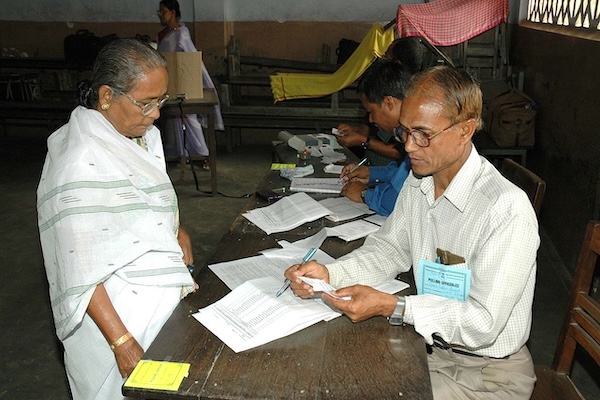
Depending on the purpose—and the department, and sometimes the counter—you may find yourself reaching for a different piece of paper from an ever-expanding archive. The Election Commission itself accepts a dozen documents, “indicative but not exhaustive”, to establish a voter’s eligibility. The phrase is a minor bureaucratic masterpiece: generous enough to sound flexible, vague enough to make everyone carry a folder.
In no particular order, the accepted documents include Aadhaar cards, MNREGA job cards, passbooks with photographs issued by banks or post offices, health insurance smart cards issued under the Ministry of Labour’s scheme, driving licences, PAN cards, NPR smart cards, Indian passports, pension documents with photographs, service identity cards issued by Central or State governments, public sector undertakings and public limited companies, official identity cards issued to MPs, MLAs and MLCs, and Unique Disability Identity cards.
It is an impressive coalition of credentials, assembled less to settle the question of identity than to ensure that no citizen leaves home lightly packed.
The list is revealing not because any one document is inadequate, but because none is quite definitive. Each is authoritative until another authority asks for something else. Identity, in this arrangement, is less a fact than a relay race, with the citizen carrying the baton between departments that do not appear to share a rulebook.
India has a remarkable ability to periodically declare one document supreme before quietly demoting it to supporting evidence. The goalposts do not merely move; they acquire a new form number.
The pattern says something deeper than bureaucratic confusion. It reveals a state forever trying to solve a problem it has never quite defined. Is identity about residence? Tax compliance? Voting rights? Biometrics? Lineage? Citizenship? The answer often depends on which window is open, which portal is working and which official is asking. Each new database promises finality, only to become another layer in an ever-growing archive of proofs—a digital solution that somehow leaves the paper pile intact.
The irony is exquisite. The world’s most digitised democracy has produced not certainty but documentation inflation. Every new credential is announced as the answer, yet rarely replaces the previous one. It merely joins the pile, becoming a fresh certificate of our inability to retire the previous certificate.
Citizens become archivists of themselves, preserving decades of government-issued evidence against the possibility that tomorrow’s rules will demand yesterday’s paper—preferably the original, accompanied by two self-attested copies.
Documentation inflation compounds economic inflation, imposing a quiet compliance tax on ordinary citizens. It is payable in photocopies, attestations, lost workdays, travel costs and the endless burden of proving what the state once accepted at face value. The official fee may be nominal; the day it consumes is not.
It has become a peculiarly Indian administrative ritual, with the state periodically announcing, “This is the document that matters,” and the citizen, older and wiser, filing the announcement under “For now.”
Perhaps this is less a technological story than an institutional one. Mature states accumulate trust, while fragile bureaucracies accumulate documents. One reduces the burden of proof; the other keeps raising it—preferably self-attested and in triplicate.
The consequence is not merely inconvenience. It changes the relationship between citizen and state. Citizenship begins to feel less like a constitutional status and more like a subscription service requiring periodic re-verification, updated KYC and acceptance of revised terms and conditions. Every new identity programme promises closure while quietly keeping the question open, often in a new portal with an old error message.
The Republic does not seem to distrust its citizens so much as its own previous paperwork. Yesterday’s proof survives only when accompanied by today’s proof that yesterday’s proof was genuine.
And that may be the most revealing document of all.
More From BasisPoint