.png)

Dollars Now, Rates Later
RBI's June policy separated tools and timing: BoP stress got an immediate response, while inflation must clear a higher threshold before rates move.
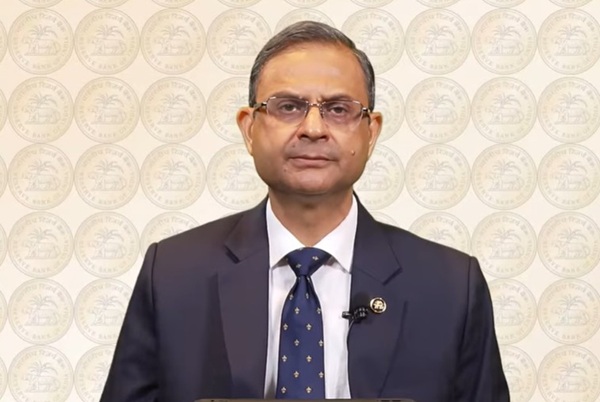

Kalyan Ram, a financial journalist, co-founded Cogencis and now leads BasisPoint Insight.
June 5, 2026 at 2:23 PM IST
The June policy is best understood as a problem of policy assignment rather than as a narrow question of whether the Reserve Bank of India should have raised rates. The MPC acknowledged a less favourable inflation outlook, recognised that growth risks had also become less benign, and yet left both the policy rate and the stance unchanged. At the same time, the RBI and the government placed substantial emphasis on measures to improve external financing conditions.
The central question, therefore, is not whether the RBI is worried about inflation. It clearly is. The more interesting question is why policymakers responded aggressively to balance-of-payments pressures while remaining patient on the rate instrument despite a deteriorating inflation outlook.
One explanation is that the two challenges have crossed different policy thresholds. External financing stress has become acute enough to warrant immediate action. Inflation, while more concerning than before, has not yet generated enough evidence of persistence to justify tighter monetary policy.
External Stress
For several quarters, the Indian rates market has been influenced by forces that sit outside the conventional domestic growth-inflation framework. Higher global real rates, competition for capital from themes such as technology and artificial intelligence, and the shock from West Asia have all contributed to a tighter external financing environment.
In such conditions, domestic market rates begin to reflect more than expectations about RBI policy. They also reflect the availability of foreign capital, pressure on the currency and the cost of external funding.
This is where the logic of the June package becomes clearer.
In an open economy, policymakers cannot indefinitely insulate domestic rates from global financial conditions. Pressure eventually emerges somewhere: in the exchange rate, forward premia, hedging costs, liquidity conditions or market interest rates.
The RBI’s response was to target the source of that pressure directly. Measures relating to foreign-currency deposits, external commercial borrowings, foreign portfolio investment and government securities were all designed to attract capital, reduce the stress premium embedded in the rupee and restore some balance to the external account.
Viewed through this lens, the package was not primarily about stimulating growth or influencing inflation. It was an attempt to ease balance-of-payments pressures without forcing the repo rate into an external-adjustment role.
A rate hike delivered alongside these measures would have muddied that message. Markets would likely have interpreted higher rates as a response to currency weakness or external financing concerns rather than as a pure inflation-control measure.
The informational value of the policy rate is strongest when markets understand precisely what it is responding to. If the repo is simultaneously used to stabilise the currency and manage inflation expectations, the signal becomes less clear.
The deeper message is that the repo rate is being preserved for domestic stabilisation, while the external pressures are being addressed through targeted financing and capital-flow measures. This does not mean the rupee is irrelevant to policy. In an open economy it never is. It means only that the RBI is resisting the temptation to use the policy rate as the first instrument for every external shock, especially when more direct tools are available.
Inflation Threshold
The inflation side of the story is more subtle. Nothing in the MPC’s communication suggests complacency. It acknowledges a less favourable inflation outlook and a risk that supply disturbances could become part of broader price-setting behaviour. Oil prices, monsoon outcomes, agricultural supply conditions, imported costs and expectations have all become important variables in the outlook.
Yet the RBI appears to believe that the nature of the shock remains uncertain.
Oil prices may stay elevated or they may normalise. Weather-related disruptions may prove temporary or more persistent. Cost pressures may stay confined to a few sectors or spread through wages, margins and inflation expectations. Monetary policy has to respond differently to each of these paths because not every increase in inflation warrants the same response. A temporary relative-price shock is fundamentally different from a sustained rise in underlying inflation. The former can be absorbed; the latter demands tighter monetary policy.
The RBI’s judgment appears to be that inflation has become more threatening, but not yet sufficiently persistent to justify immediate action.
This is why sequencing matters. The external problem was visible enough to require intervention today, while inflation has been placed under observation. If the shock fades, the RBI can avoid imposing unnecessary costs on growth. If inflation broadens and begins to alter household expectations, corporate pricing decisions and wage behaviour, the case for rate hikes becomes materially stronger.
The 2-6% tolerance band plays an important role here, not because it weakens the 4% anchor, but because it allows the central bank to distinguish between noise and persistence.
A central bank that reacts mechanically to every supply shock can damage growth without meaningfully improving inflation outcomes. A central bank that waits too long can allow expectations to drift and then has to tighten more aggressively later. The June policy reflects an attempt to navigate between these two risks.
There is one mitigating factor that strengthens the case for patience.
If the capital-inflow measures succeed in bringing in substantial foreign capital during 2026-27, the expected balance-of-payments deficit could narrow significantly. That would reduce pressure on the rupee, lower the external risk premium in domestic market rates and reduce the risk that the RBI is forced into large rate increases for reasons that are more external than domestic.
The policy space created by such an outcome would be valuable. It would allow the MPC to focus more narrowly on the domestic inflation-growth trade-off, rather than setting rates under the shadow of currency pressures.
In that world, even if some rate increases eventually become necessary, they would be easier to interpret as inflation-management decisions rather than as disguised balance-of-payments defence measures.
The June decision, therefore, is best read as a threshold policy. External financing stress crossed the threshold for action and was met with instruments designed specifically for that purpose. Inflation risk crossed the threshold for vigilance, but not yet the threshold for higher rates.
The RBI’s wager is that by separating these two problems now, it can make the next rate decision cleaner, more credible and more firmly grounded in the domestic inflation process.
More From BasisPoint