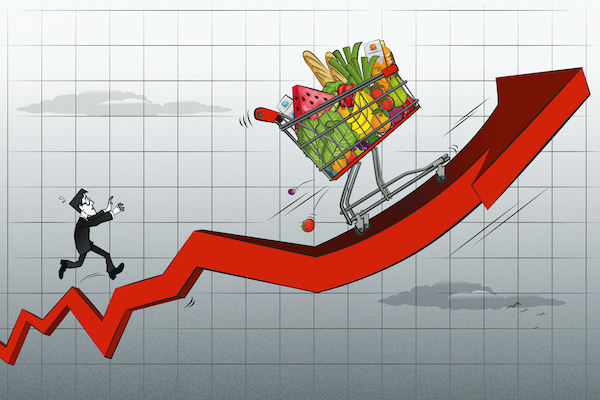
Inflation and asset prices are fundamentally shaped by signals. The price of a good indicates its scarcity, while the price of money, that is, interest rate, helps determine whether households and firms spend, save, or invest. When governments alter these signals to serve broader policy objectives, the effects can spread well beyond the original target.
Two contrasting developments illustrate this tension in 2026. In the US, tariffs have distorted the price of imported goods, particularly those from China. In India, interest rates held below levels implied by economic fundamentals may be distorting the price of capital. Neither story is solely about China or India. Both demonstrate what can happen when policymakers override market-based price discovery.
China and US Goods Inflation
China’s influence on US inflation has passed through three distinct phases since the late 1990s.
Before China joined the World Trade Organization in December 2001, its access to the US market was subject to annual congressional review. This uncertainty discouraged American firms from making deep, long-term investments in China-centered supply chains.
WTO accession changed that. Permanent trade status reduced tariff uncertainty, and encouraged US firms to establish durable, low-cost supply chains linked to China. The result was an unusual two-decade period during which US core goods prices were broadly flat or declining even as the economy expanded. The so-called “China price” helped restrain inflation during the Great Moderation, including periods of strong demand and low unemployment. This weakened the traditional relationship between tight labour markets and rising prices.
The COVID-19 pandemic disrupted this pattern. Factory closures, shipping bottlenecks, and supply shortages transformed China from a source of cheap goods into a source of scarcity and higher costs. Alongside fiscal stimulus and energy shocks, these disruptions contributed to the inflation surge of 2021–2022. For the first time in roughly two decades, China-related developments were pushing US prices upward rather than down.
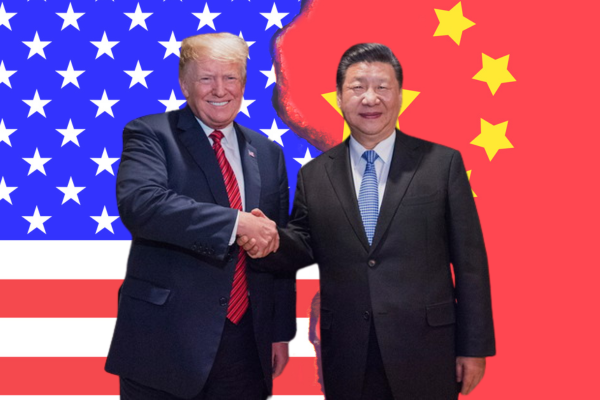
Since 2025, another avenue of price shock has been felt, and this is through US President Donald Trump’s tariffs. A broad tariff regime sharply raised the effective cost of imported goods. Tariffs imposed through late 2025 increased core goods Personal Consumption Expenditures Price (PCE) index by approximately 3.1% through February 2026.
The impact was visible in import prices. By mid-2026, prices of goods imported from China rose 0.9% in a single month—the sharpest monthly increase since early 2008—and were 1.3% higher than a year earlier. Analysts attributed much of the rise to tariff pass-through.
The picture changed again in February 2026, when the Supreme Court struck down tariffs imposed under emergency economic powers. Effective tariff rates subsequently declined from a peak of 11% in late 2025 to just below 7% by May. Since then, tariff pass-through into consumer prices appears to have stabilised. Federal Reserve researchers have increasingly attributed inflation above target since March to non-tariff factors, including conflicts and disruptions in West Asia.
China’s direct contribution to US inflation should nevertheless be kept in perspective. Chinese imports account for only about 2% of the goods measured in the CPI basket and 2.7% of the PCE index. Tariffs have also redirected trade. As Chinese exporters lost access to parts of the US market, some goods were diverted to Europe. The European Central Bank estimated that this redirection could reduce euro-area inflation by 0.15 percentage points in 2026. Thus, tariffs may relocate price pressures internationally rather than eliminate them.
India and the Price of Capital
The Indian case concerns not the price of goods but the price of capital. India’s benchmark 10-year government bond yield is close to 7%. Yet a conventional rule of thumb—linking long-term yields to nominal GDP growth—would suggest a yield nearer 11%, given real growth of around 7% and inflation of roughly 4%.
This gap matters because government bond yields provide the benchmark or “floor” for pricing other assets. If that floor is held artificially low, investors may accept lower returns across riskier assets, encouraging leverage, speculative investment, and asset-price inflation. Several developments in India are consistent with this pattern: margin funding has reportedly doubled over three years; valuations of non-large-cap stocks remain elevated; retail investors have pursued riskier assets after suffering losses elsewhere; portfolio outflows have increased; and the rupee has depreciated. Similar distortions have preceded financial excesses in countries such as Greece after eurozone entry, Japan following the Plaza Accord, and the United States before the 1929 crash.
Fiscal constraints help explain the preference for low rates. Interest payments reportedly absorb close to 80% of India’s new borrowing. A substantial rate increase would therefore worsen the government’s fiscal position. India’s decision to address pressure on foreign-exchange reserves through a special foreign-currency deposit (FCNR) scheme, rather than relying primarily on higher domestic interest rates, reflects the same reluctance to adjust the policy rate directly.
The Common Thread
The US and Indian cases share a broader lesson. In the US, tariffs were deployed for trade and geopolitical purposes, but their side effect was higher goods inflation. In India, low interest rates help manage fiscal pressures, but they may also encourage leverage, inflated valuations, capital outflows, and currency weakness.
In both cases, policymakers have overridden a market signal to pursue another objective. Markets have nevertheless continued to respond: through higher Chinese import prices and measurable tariff pass-through in the United States, and through margin debt, asset-price pressures, and rupee depreciation in India.
The eventual resolution of these tensions will reveal the limits of policy-driven price control. The key questions are whether US tariff policy continues to moderate and whether the Reserve Bank of India must eventually choose between higher interest rates and further currency and asset-price pressures.
.png)