.png)

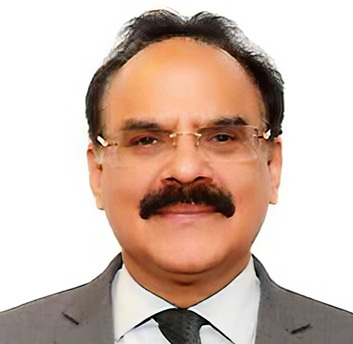
Dr Arvind Mayaram is a former Finance Secretary to the Government of India, a senior policy advisor, and teaches public policy. He is also Chairman of the Institute of Development Studies, Jaipur.
November 11, 2026 at 4:29 AM IST
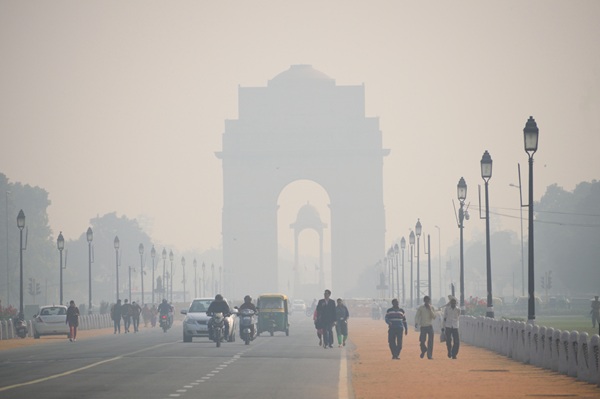
Every winter, Delhi returns to a familiar ritual. Schools close, construction halts, vehicles are restricted, and emergency measures are announced. These may provide temporary relief, but they do not address the structural reasons why the city remains so polluted.
The scale of the problem is stark. The Government of India's assessment puts Delhi's annual average PM2.5 concentration in 2025 at 97 micrograms per cubic metre. IQAir's 2025 city-level data reports 99.6 for Delhi, compared with 10.3 in Paris, 10.2 in Tokyo, 9.9 in London, 7.9 in New York and 3.9 in Sydney. These figures come from different monitoring networks, so the comparison is indicative, not exact. Nevertheless, Delhi's concentration is more than twice India's annual national standard of 40 micrograms per cubic metre and nearly twenty times the World Health Organization's guideline of 5.
The Commission for Air Quality Management's assessment of source-apportionment studies offers a useful, though indicative, picture. Its expert panel reviewed studies from 2015 to 2025 and estimated that, in winter, secondary particulates account for 27% of PM2.5, transport 23%, biomass burning 20%, dust 15%, industry including thermal power plants 9%, and other sources 6%. In summer, the corresponding estimates are 27% for dust, 19% for transport, 17% for secondary particulates, 14% for industry, 12% for biomass burning and 11% for other sources. These are indicative estimates, not fixed shares. Secondary particulates are especially important because they form in the atmosphere from gaseous emissions from several sectors, including transport, industry, power plants, and agriculture.
Transport, industrial and power-sector emissions, and agricultural residue burning also require sustained action across the NCR airshed. This article examines three areas where structural change is particularly feasible: waste management, construction and road cleaning.
First, waste management must move from disposal to resource recovery.
Delhi's three major landfill sites at Ghazipur, Bhalswa and Okhla represent a failure accumulated over decades. Their remediation through scientific biomining and bioremediation must go hand in hand with preventing fresh waste from becoming tomorrow's legacy waste.
This requires segregation at source and separate processing streams. Organic waste should go to composting and biomethanation; dry recyclables to material recovery and recycling; and suitable residual combustible waste to refuse-derived fuel, including co-processing in cement kilns under emissions controls. Inert and hazardous residues require safe disposal. Waste-to-energy must not become a justification for burning mixed waste.
Processing capacity alone will not suffice. Reliable markets are needed for compost, biogas, recyclables and recovered materials. Municipal contracts should reward verified processing and final use, not merely the volume collected and transported. The objective is an urban circular-resource economy.
Second, construction must become less dependent on dusty on-site activity.
Dust suppression, covering construction materials and enforcing site standards are essential, but insufficient. A more fundamental shift is needed: moving suitable construction activity from open sites into controlled manufacturing facilities.
Precast concrete, prefabricated walls and slabs, modular systems, fabricated components and dry construction can reduce on-site cutting, mixing, handling and debris. They can also create an industrial ecosystem of manufacturing units, testing facilities, skilled workers and specialised logistics across the NCR.
This transition will not happen simply because the technology exists. Investors need predictable demand. Multi-year public procurement programmes for housing, schools, hospitals and other government buildings can provide anchor markets for prefabricated components. Industrialised, low-dust methods can then be progressively mandated for suitable construction categories. The transition must be phased to ensure that manufacturing capacity develops before compliance becomes compulsory.
Third, road cleaning must be mechanised, but with a credible compact for workers.
Manual sweeping cannot adequately address the dust accumulated on Delhi's roads. Mechanised vacuum sweepers on arterial roads, compact machines in markets and appropriate equipment for narrower streets can improve cleaning. But machines alone are not enough. Maintenance, trained operators, spare parts, route planning and safe disposal of collected dust are equally important. Municipal contracts should procure a reliable cleaning service, not simply a fleet of machines.
Mechanisation, however, raises a difficult political-economy question: what happens to the thousands of sanitation workers whose livelihoods depend on manual sweeping? Their concerns are legitimate and must be addressed from the outset.
Every programme should begin with a workforce audit covering permanent, contractual and outsourced workers, their skills and employment conditions, and their potential for redeployment. Existing workers should receive practical training to operate and maintain machines, supervise waste collection, manage dust disposal and undertake other municipal services. Training must lead to actual jobs, with wage protection during the transition.
Every mechanised sweeping contract should include an enforceable Labour Transition and Redeployment Plan. A municipal workforce transition fund, supported by public budgets and contractor obligations, could finance training, certification and temporary wage support. Productivity gains should help fund better working conditions and new employment opportunities. The aim is to modernise the service without abandoning the people who have sustained it.
The larger lesson is that government must create the markets for these transformations.
In all three cases, private demand will not emerge spontaneously. Public procurement must create the initial market; regulation must make it durable; and public finance must absorb specific early risks that private capital is not yet willing to bear.
This calls for multi-year procurement commitments, standardised specifications, performance-linked payments and, where justified, guarantees or viability-gap support. Contracts should reward outcomes, not merely the purchase of equipment or construction of facilities. Public support must be conditional and time-bound and progressively withdrawn as markets mature and private investment takes over.
This is also an opportunity to rethink how public capital is deployed. Public money should not remain tied to assets after their initial risks have diminished. It should establish viable systems, crowd in private investment and then be released for other priorities. This is the shift from linear financing towards a more circular use of capital.
Delhi needs a sustained Clean Air Transition Programme linking waste management, construction, municipal services, industrial policy and workforce protection—not another winter-only action plan. The challenge is not simply to spend more on pollution control, but to use procurement, regulation and finance to create new markets, capabilities and more productive urban services.
Emergency restrictions may help a city get through a bad winter. Structural reform is what can make the next winter different.
More From BasisPoint