.png)

Rajesh Mahapatra, ex-Editor of PTI, has deep experience in political and economic journalism, shaping media coverage of key events.
August 4, 2026 at 2:59 PM IST
Assembly by-elections are rarely watched for their bearing on national politics. That might not hold, however, for Monday’s results from Bankipur in Bihar, Datia in Madhya Pradesh and Manjalpur in Gujarat, coming immediately after the tumultuous nationwide Gen Z protests.
The Bharatiya Janata Party, which secured a landslide victory in the Bihar election only months earlier, suffered a shock defeat in Bankipur, its long-held urban stronghold. The BJP had never lost an election there since 1995.
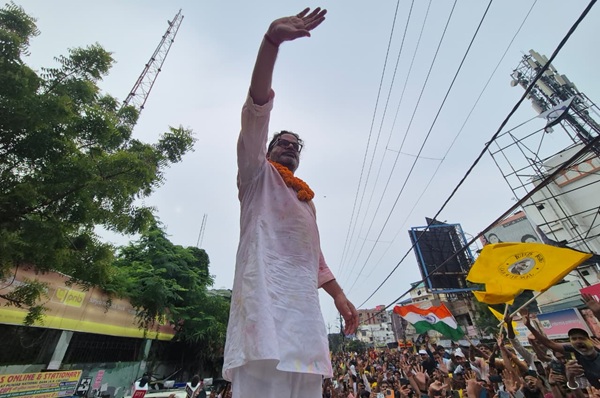
On Monday, however, Jan Suraaj Party leader Prashant Kishor broke that record, polling almost half the votes cast and defeating the BJP candidate by a sizeable margin of 19,324 votes. It bears remembering that the Bankipur seat fell vacant after Nitin Nabin, the newly-appointed BJP president, moved to the Rajya Sabha.
Datia in Madhya Pradesh also turned into a disappointment for the BJP, with the result running counter to most poll predictions. Manjalpur in Gujarat, where the BJP retained the seat, offered limited consolation as the winning margin shrank sharply amid a steep fall in voter turnout.
By-elections are poor forecasting instruments. Turnout is usually lower, local personalities matter more, and voters can punish a ruling party without necessarily wanting to remove it from power. But they are useful political diagnostics. These three contests test whether the BJP’s national leadership can still override weak candidate selection, local factionalism and voter fatigue as consistently as it once did.
Playbook Limits
The post-poll debate has now turned to whether the BJP’s losing candidate in Bankipur, Neeraj Kumar, was a match for Kishor. In Datia, there is talk that the unexpected defeat originated in the leadership’s decision not to field former Madhya Pradesh Home Minister Narottam Mishra. Datia is widely considered Mishra’s pocket borough. Although the Congress had won the seat last time, most pollsters expected the BJP to wrest it because of factionalism within the Congress and the conviction of its disqualified MLA in a criminal case.
Such local factors undoubtedly played a role. The larger question is whether they have begun to matter more because the Modi brand is no longer able to neutralise them automatically. The issue is not whether Modi’s appeal has disappeared; three by-elections cannot establish that. It is whether that appeal has become less transferable in contests where candidate quality, organisational cohesion and local anger become decisive.
There is also reason to ask whether the results carry aftershocks from the Cockroach Janata Party campaign. Gen Z protests do not automatically translate into votes, and no straight line can yet be drawn from Jantar Mantar to Bankipur. But protest movements can change the political mood. They can lower the inhibition against challenging authority and give otherwise scattered grievances a common language.
If the BJP believes its support among urban and younger voters has softened, its policy response will matter more to businesses and markets than the arithmetic of three seats. Policy could tilt towards recruitment, examination reform, targeted welfare and visible price relief. A more defensive electoral posture could also narrow the space for difficult economic reform.
At heart is the durability of the “Modi guarantee”, a political compact built around a strongman image, cultural nationalism and politics of welfarism. Bankipur, Datia and Manjalpur do not show that compact has collapsed. They suggest it may no longer be sufficient on its own.
Perhaps the by-elections are not yet the opening score of a new movie. They are, however, an early warning that the old script may no longer work as reliably.
More From BasisPoint