Economic history is often told through the lens of technological breakthroughs. The steam engine, electricity, the automobile and the internet transformed production, expanded markets and raised living standards. Yet, progress has accelerated not simply because of new inventions, but because societies overcame the factor that most constrained production.
Agrarian economies were limited by land. Industrialisation eased the constraints imposed by human and animal labour through mechanisation. The twentieth century expanded productive capacity through capital accumulation, electrification and modern transport. Economists have long viewed output as a function of labour, capital and technological progress. As economies matured, sustained improvements in living standards depended less on adding workers or machines and more on producing more with the same resources.
That is where the next shift is unfolding. Better production techniques, software and organisational innovation have long raised productivity without requiring proportionately more physical inputs. Today, however, technological progress is increasingly constrained by access to computation. For much of modern history, technology helped economies overcome input constraints. Now, technology itself is becoming constrained by a new input: compute.
Frontier AI models require vast computational resources to train and deploy. Advanced semiconductors, specialised graphics processors, hyperscale data centres, reliable electricity, cooling systems and high-speed digital networks are no longer supporting infrastructure. They have become prerequisites for technological progress itself. The International Energy Agency estimates that electricity consumption from data centres will almost double from 485 TWh in 2025 to 950 TWh by 2030, accounting for 3% of global electricity demand. morgan stanley Research estimates that global data centre construction alone could require around US$2.9 trillion in capital expenditure through 2028.
The macroeconomic significance of this investment cycle is now attracting the attention of central banks. The latest Financial Stability Reports from both the Bank of England and the Reserve Bank of India discuss AI as a source of macrofinancial opportunity and risk. The Bank of England highlights the financing needs of AI infrastructure and the growing concentration of equity markets around AI firms, while the RBI points to AI's productivity potential alongside new financial vulnerabilities. AI has rapidly evolved from a technology issue into a macroeconomic one.
Infrastructure First
The same logic underpins the geopolitical contest over semiconductors. Export controls on advanced chips, incentives for domestic semiconductor manufacturing, sovereign AI initiatives and efforts to secure resilient supply chains are no longer simply industrial or trade policy. They are attempts to influence the pace of technological progress by controlling access to compute.
Viewed through this lens, the global race to build hyperscale data centres is as much an infrastructure story as an AI story. Just as railways lowered transport costs and electricity transformed every industry, compute is becoming a foundational input across the economy. It reduces the cost of information processing, optimisation and decision making in manufacturing, pharmaceuticals, finance, logistics, scientific research, agriculture and public administration. Microsoft estimates that 16.7% of the world's population used generative AI during the second half of 2025.
Compute is emerging as a strategic factor of production, one whose availability increasingly determines how quickly technological progress can be translated into economic growth. OECD analysis estimates AI could add between 0.4 and 1.3 percentage points to annual labour productivity growth in high exposure G7 economies.
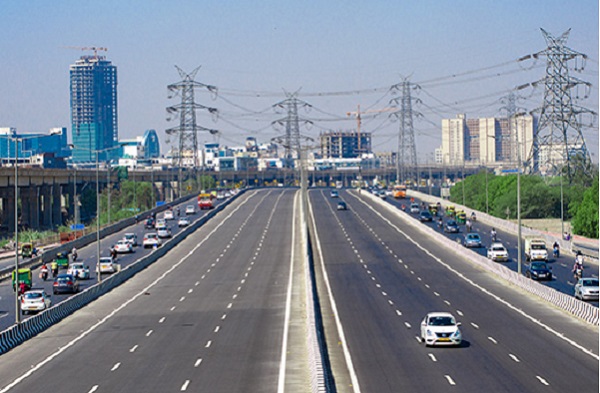
This has important implications for economic policy. Infrastructure planning has traditionally focused on highways, ports, airports and power generation. In the decades ahead, governments will also need to develop the ecosystem required to produce compute at scale: reliable electricity, robust transmission networks, advanced semiconductor capabilities, fibre connectivity, subsea cables, access to capital, skilled talent and predictable regulation.
India enters this transition with important strengths. It generates around one fifth of global data but accounts for only around 1.2% of global data centre capacity. A February 2026 PIB release noted that 87% of enterprises in India are actively using AI solutions. India also benefits from one of the world's largest digital markets, globally recognised digital public infrastructure, expanding renewable energy capacity and growing investor interest in hyperscale data centres. But these advantages will matter only if they are matched by sustained investment in power, transmission, semiconductor manufacturing, fibre networks, skills and research. The objective should not be merely to host data centres, but to become a globally competitive producer of compute. The Economic Survey 2025–26 reflects this approach by emphasising "frugal AI" as India's strategy for building efficient, low cost, application specific AI rather than competing solely in compute intensive frontier models.
According to the International Energy Agency, the combined capital expenditure of just five technology companies now exceeds global investment in oil and natural gas production. Markets are signalling a profound shift. In the AI era, competitive advantage will depend not only on who develops the best algorithms, but on who can build, finance and power the computational infrastructure that makes them possible.
.png)