.png)

Anil Katia is a former banker and policy analyst.
Ganga Narayan Rath is a former central banker and a contributor to leading financial publications.
September 16, 2026 at 11:42 AM IST
India’s Unified Payments Interface moved one step closer to a commercial pricing model on September 15, 2026, when NPCI released its circular on a newly-introduced Merchant Discount Rate for UPI person-to-merchant transactions. The headline rate is 0.40% on P2M transactions above ₹2,000, capped at ₹300 and a cheaper rate for certain sectors.
The Parliamentary Standing Committee on Finance, in its 44th Report tabled on August 12, 2026, confirmed UPI’s annual costs at approximately ₹207 billion against a government budget of ₹20 billion. A revenue model is necessary. The question is whether this is the right one.
Designed for Another Rail
The Merchant Discount Rate has a specific economic rationale in card networks. A credit card transaction involves the issuer extending credit to the cardholder, bearing settlement risk, funding chargeback infrastructure, and absorbing fraud losses through reversal. Interchange compensates the issuer for that bundle of services. The rate scales with value because the issuer’s risk scales with value.
None of this applies to UPI. A UPI P2M payment is an account-to-account push: the customer’s bank debits the customer and credits the merchant in real time. There is no credit extension, no interest-free period, no chargeback mechanism, and no float to the issuer. The RBI’s own Discussion Paper on Charges in Payment Systems, published in August 2022, noted in paragraph 9.2.4(ii) that for a debit-type instrument the issuer bears no cost on funds transferred and enjoys the float benefit, and that the cost structure more closely resembles a funds transfer than a merchant payment warranting value-based pricing. NPCI has introduced ad valorem MDR in 2026 for an instrument that the RBI’s own paper argued against value-based pricing for in 2022.
The practical consequence is visible. The per-transaction processing cost of UPI is approximately 70 paise—as computed from the Committee’s own ₹207 billion divided by 278 billion annual transactions, yielding 74 paise. On a ₹15,000 transaction, the MDR is ₹60—eighty-six times the processing cost. The average MDR across all chargeable transactions works out to approximately ₹33.45 per transaction, or 48 times the unit processing cost. This is not cost recovery. It is value extraction dressed as cost recovery.
India already has a working model for flat per-transaction charges on a real-time transfer instrument: IMPS, at ₹2.50 to ₹25 per transaction, accepted without controversy since 2010. A ₹15,000 payment through the new UPI MDR costs the merchant ₹60. The same transfer via IMPS costs the sender ₹5. The correct precedent existed within NPCI’s own product portfolio. It was not used.
A Wider Net Than Advertised
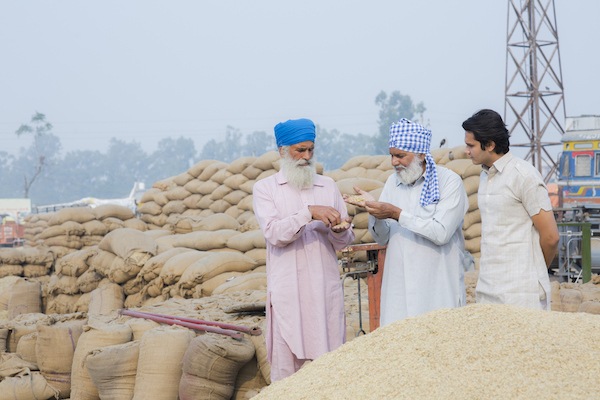
The pre-2020 MDR debate was consistently framed around large merchants. The Payments Council of India noted that of approximately 650 million merchants accepting digital payments in India, roughly 90% were small merchants under the RBI’s ₹2 million annual-turnover threshold. The remaining 5 million large enterprises were the intended MDR base.
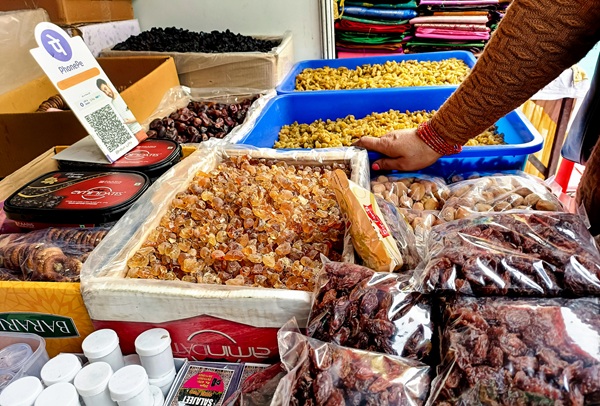
NPCI has adopted a different boundary. The P2PM exemption covers merchants receiving up to ₹100,000 per month in UPI QR receipts into personal accounts—₹1.2 million per year in UPI receipts, not annual business turnover. An urban kirana doing ₹1.8 million in annual turnover and receiving ₹150,000 per month through UPI is not P2PM. It is P2M. A mid-size restaurant, a clothing store, or a hardware shop with established digital acceptance—all are potentially P2M.
The MDR-liable universe is estimated at 15-20 million merchants—the balance of the 65 million total after excluding approximately 50 million who qualify under the P2PM exemption: three to four times the 5 million large-enterprise base on which the entire policy conversation had been built. R S Sharma warned in The Indian Express on August 22, 2026, against threshold creep from large to small merchants. The P2PM definition as notified validated that concern within three weeks.
The Burden, by Category
The effective MDR rate on total UPI receipts falls hardest on the middle of the merchant distribution—clothing stores at 0.34%, hotels at 0.34%, and electronics shops at 0.31%—rather than the largest merchants. These businesses’ transactions cluster in the ₹2,000–₹75,000 band, where the full 0.40% applies, giving them no benefit from the ₹300 cap.
That cap is structurally regressive: a ₹200,000 corporate invoice capped at ₹300 pays an effective rate of 0.15%, while the mid-range merchant pays the full rate on every transaction. The kirana that has just crossed the P2PM threshold pays approximately ₹2,400 per year on ₹1.5 million in annual UPI receipts—not a trivial amount for a business operating on 5%-8% net margins.
The Pass-Through Problem
An NPCI FAQ offers two distinct answers on whether merchants can recover MDR from consumers. Question 18 makes a market-dynamics prediction: merchants absorb nominal digital costs to drive higher volume. Question 34 frames it as a prohibition: merchants onboarded cannot pass on MDR charges. The actual circular—the primary regulatory document—uses softer language still: Point 8 states that acquiring banks are advised to ensure merchants do not pass on charges.
“Advised to ensure” is not “shall not”. The circular places a duty on the acquiring bank; it does not prohibit the merchant.
The competitive pressure is compounded by a structural fact: cash remains free at the point of transaction. Cash carries real costs—currency printing, ATM maintenance, and logistics—but these fall on the Reserve Bank and banks, not on the merchant at the point of sale. For every merchant above the ₹2,000 threshold, cash is a costless alternative.
A kirana operating at a 5% margin on a ₹3,000 bill earns ₹150; the ₹12 MDR is 8% of that margin. A fuel pump at a 2%-3% regulated margin on the same amount earns ₹60–₹90; the MDR is 13%-20%. The prohibition on surcharging UPI does not prevent a merchant from preferring cash. The market dynamics that Question 18 invokes as the absorption mechanism are the same dynamics that push thin-margin merchants towards cash when MDR exceeds their tolerance.
The ₹2,000 boundary is administratively fragile. A ₹3,000 transaction split into two sub-₹2,000 payments costs the merchant nothing. The FAQ assigns oversight of operational parameters to the UPI Steering Committee headed by NPCI, but no anti-structuring rule is disclosed. The incentive to split is strongest precisely in the small-ticket segment NPCI says it wishes to protect.
This is the first part of a two-part series examining NPCI’s Merchant Discount Rate for UPI P2M transactions. Part II examines the revenue distribution and what the circular leaves unaddressed.
More From BasisPoint