.png)

Tradition of Mutual Learning Between India & China, and Why It Still Matters
India and China’s long history of exchange offers a template for rebuilding trust today through deeper knowledge, predictable ties and practical economic cooperation.

Rakesh Kumar is Associate Professor and Chairperson of the Centre for Chinese Studies, Jawaharlal Nehru University.

Xie Zhibin is Associate Professor and Deputy Director of the South Asia Research Centre, Northwest University, China.
September 13, 2026 at 3:23 PM IST
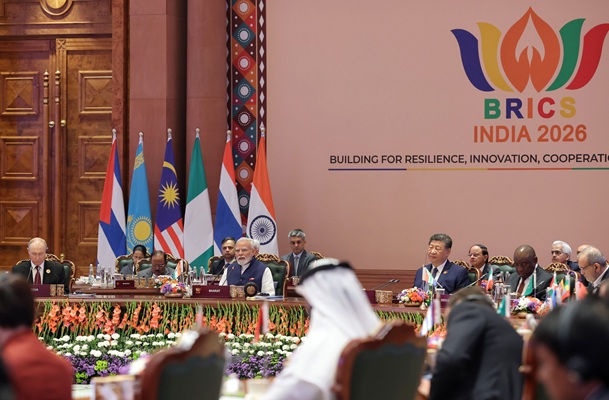
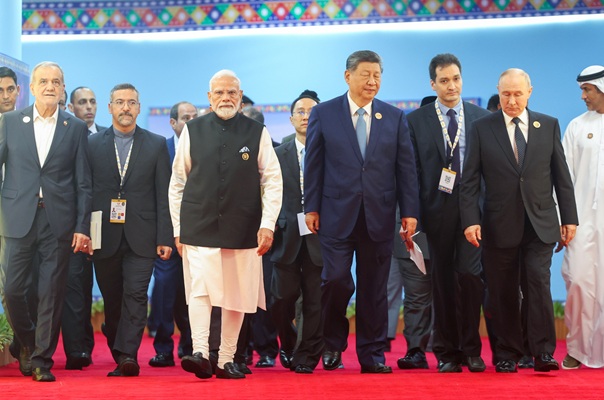
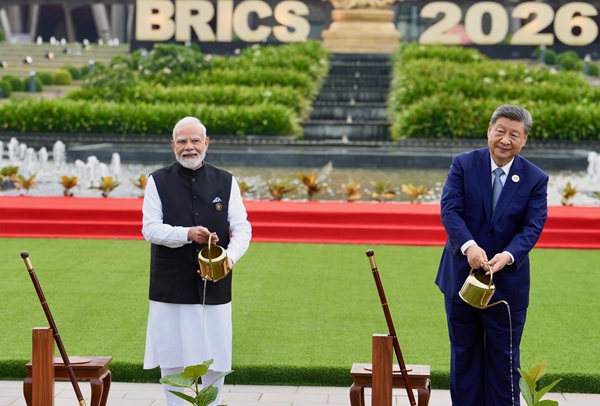
On September 12, 2026, Indian Prime Minister Narendra Modi met Chinese President Xi Jinping in New Delhi. The two leaders reached a consensus on the need for China and India to be partners.
Prime Minister Modi said steering India-China relations in a positive direction was in the common interest of the more than 2.8 billion people of both countries. For thousands of years, the two great civilisations of India and China have exchanged ideas, knowledge and culture.
India has viewed India-China relations from a strategic and long-term perspective. It seeks partnership with China rather than adversarial relations, and to regard each other’s development as an opportunity rather than a challenge.
China and India are neighbours connected by geography and history, and two ancient civilisations. The fundamental reason for the enduring exchange between them lies in the fact that both sides have approached each other with openness and confidence, enriching themselves while recognising their differences and transforming knowledge gained from each other into cultural creations of wider significance.
China-India relations are at a crucial stage of recovery, improvement and rebuilding mutual trust. The two countries have seen a gradual resumption of institutional exchanges, an expanding list of areas for cooperation and record bilateral trade.
This hard-won improvement deserves to be cherished. How to prevent short-term events from dictating the long-term direction of the relationship, and how to establish a stable and sustainable approach to coexistence, are questions that both countries must address together.
History cannot replace real-world decision-making, but it can help calibrate how the present is understood. The most important legacy of Sino-Indian interaction is not a set of static cultural symbols, but a civilisational approach characterised by mutual respect, mutual learning and mutual support.
Transforming this tradition into a practical capacity to resolve differences and expand cooperation will be crucial to the resilience of bilateral relations and the peaceful development of Asia.
A History of Mutual Enrichment
The influence of Indian civilisation on China has been profound, far-reaching and enduring.
Following the eastward spread of Buddhism, Indian philosophical thought, Nyaya logic, Sanskrit scholarship, literary imagination and artistic forms entered Chinese intellectual and cultural life. Knowledge of astronomy, calendrical calculations, medicine, sugar production and cotton spinning was also disseminated through monks, merchant travellers and classical texts.
Chinese society did not simply transplant these achievements. It continuously selected, interpreted and reconstructed them through translation and social practice.
Buddhism thus became integrated into Chinese civilisation, giving rise to schools such as Tiantai, Huayan, Chan and Pure Land, each imbued with a distinctively Chinese cultural character. These traditions were subsequently transmitted from China to the Korean Peninsula, Japan, Vietnam and other regions.
China’s assimilation and creative adaptation gave Indian thought new linguistic forms and a wider social foundation, while expanding its influence throughout East Asia.
Preserving India’s Historical Memory
This process also highlights China’s distinctive role in preserving and reconstructing parts of India’s civilisational memory.
Chinese translators of Buddhist scriptures preserved a significant number of texts that were later lost in South Asia. The Chinese Tripitaka has consequently served as an important resource for modern Indian scholars seeking to collate, retranslate and study classical Indian thought.
The accounts of Faxian, Xuanzang, Yijing and others, covering mountains, rivers, cities, institutions, local products, religion and social life, have also provided valuable clues for modern Indian historical and geographical research and the identification of Buddhist sites.
The Records of the Western Regions of the Great Tang is held in high regard in India precisely because it helped scholars reidentify parts of India’s historical memory that had been obscured over time.
Xuanzang studied at Nalanda, brought the texts he had collected in India back to Chang’an and presided over a large-scale translation project. Indian knowledge, preserved and reinterpreted in Chinese, later contributed to India’s reconstruction of its own past.
It formed a remarkable cycle of knowledge: acquisition, translation, preservation and rediscovery.
The flow of artefacts and technologies was likewise not unidirectional. Chinese silk, porcelain, tea and other goods entered India through land and sea routes, while Indian spices, gemstones, cotton-weaving expertise and sugar-refining techniques enriched life in China.
Foreign knowledge becomes part of another civilisation only after being tested, adapted and reimagined through local experience. Seen this way, Sino-Indian exchange was a process of co-creation.
Indian civilisation nourished China, while China’s preservation, transformation and dissemination of these elements expanded the historical influence of Indian civilisation. Recognising this mutual enrichment respects the agency of both.
Understanding Each Other Directly
The most vibrant periods in Sino-Indian relations have often been those in which the two sides gained direct insight into each other.
In ancient times, monks had to master foreign languages and live in unfamiliar societies for years before transforming their observations and experiences into reliable knowledge.
In modern times, figures such as Rabindranath Tagore, Tan Yunshan, Xu Beihong, Ji Xianlin and the Indian scholar Shi Jueyue carried forward this tradition of immersing themselves in the other’s language and society.
Institutions such as the Chinese Academy at Visva-Bharati and the China Research Centre at Jawaharlal Nehru University hold significance beyond ordinary cultural organisations because they transformed personal friendships into institutional arrangements for teaching, research, the collection of classical texts and the cultivation of scholarship.
During the War of Resistance Against Japan, the Indian Medical Mission to China worked alongside the Chinese people, and Dr Ke Dihua gave his life while serving there. The Chinese people have long honoured his memory, both in gratitude for the sacrifice of an international friend and in appreciation of the moral support India provided during a difficult period.
The Knowledge Gap Today
Compared with this rich historical legacy, mutual understanding between the two societies today remains insufficient.
Many Chinese people are familiar with Indian films, yoga and Tagore, but may not fully grasp the complexity of India’s multilingual, multireligious and multi-regional society. Many Indians are familiar with “Made in China”, the Great Wall and kung fu, but may not fully understand the changes taking place in contemporary Chinese society.
More importantly, a significant portion of what each side knows about the other is still mediated through third-party languages, theories and media agendas.
As the volume of information expands, complex societies can easily be reduced to a few fixed labels. Individual disagreements can then be magnified into sweeping generalisations.
Both countries have long-standing academic traditions and a strong sense of identity. They should not continue to view close neighbours primarily through the lens of others.
Chinese scholars need to study Hindi, Sanskrit and other major Indian languages more deeply to understand the diversity within Indian society. The Indian academic community also needs to expand research on the Chinese language and contemporary China, allowing more judgments to be based on primary sources.
Universities and think tanks on both sides should establish stronger mechanisms for long-term residencies, joint research and the mutual translation of classical texts. Young scholars should be encouraged to conduct rigorous fieldwork in each other’s societies.
Media reporting, in particular, must distinguish between facts, positions and emotions, and exercise professional restraint when dealing with sensitive issues.
Understanding the other through their own language is one of the most fundamental—and most challenging—forms of mutual respect between civilisations.
If mutual understanding relies for too long on third-party interpretations, the strategic autonomy cherished by both nations will lack a sufficiently strong knowledge base. Without genuine understanding, narratives of friendship may struggle to withstand changes in political reality.
Civilisational Ties Cannot Replace Hard Diplomacy
Emphasising civilisational bonds does not mean avoiding real differences.
Similarities between civilisations do not automatically generate political trust. Nor can historical friendship replace border negotiations, economic and trade coordination or security dialogue.
The practical value of a civilisational perspective lies in placing specific disputes within the context of the two countries’ long-term interests. That can help prevent judgments about individual incidents from escalating into judgments about the intentions of an entire nation and its people.
China and India have different social systems, development paths and diplomatic traditions. Both cherish national independence, sovereign dignity and strategic autonomy.
Precisely because these differences exist, equality and mutual respect are not merely diplomatic rhetoric. They are institutional prerequisites for maintaining the relationship.
Trade, Investment and Strategic Autonomy
On issues of concern to Indian society, including trade structure, market access and industrial security, both sides can seek progress by expanding access for high-quality Indian products and services to the Chinese market, improving the composition of trade and strengthening complementarity along industrial supply chains.
At the same time, Chinese enterprises should be guaranteed a fair, transparent and non-discriminatory business environment in India.
Healthy interdependence should rest on stable rules, predictable policies and tangible benefits.
Both sides should also respect each other’s independent foreign-policy choices, refrain from demanding that the other take sides in competition among major powers, and avoid turning cooperation with third countries into arrangements directed against their neighbours.
In 1954, China and India jointly proposed the Five Principles of Peaceful Coexistence, representing a shared contribution to international norms drawn from their experiences of anti-colonial struggle.
At their core are sovereign equality, non-interference and peaceful coexistence—principles broadly consistent with the strategic autonomy cherished by India and the independent foreign policy upheld by China.
As power politics, bloc confrontation and protectionism resurface, this shared legacy retains practical significance.
China and India should view each other with the historical composure befitting major civilised nations, sustain the understanding that each can be a source of development opportunity for the other, avoid exaggerated threat narratives and keep competition governed by rules and differences within the framework of dialogue.
Turning Shared Heritage Into Shared Development
Whether civilisational traditions can have a tangible impact on contemporary relations depends on whether they can support stable frameworks for cooperation.
A useful starting point would be a joint knowledge-sharing initiative.
Academic institutions on both sides could collaborate on cataloguing Sanskrit, Pali, Tibetan and Chinese texts and build an open digital database on Sino-Indian cultural exchange. They could also undertake joint textual criticism, translation and publication of works such as the Records of the Western Regions of the Great Tang, Chinese translations of Buddhist scriptures and Chinese classical texts and research archives held in India.
Cultural landmarks such as Nalanda and Bodh Gaya, along with Xi’an’s Dazhen Temple and Luoyang’s White Horse Temple, could serve as platforms for joint research, heritage preservation and youth education.
Digital technology and artificial intelligence can improve the efficiency of text recognition and cross-linguistic research. But interpretation, historical analysis and cultural exegesis must still be carried out by scholars with genuine command of the relevant languages and traditions.
People-to-People Ties Need Depth
People-to-people exchanges should also become part of ordinary life.
The two countries should maintain stable direct flights and facilitate visits by scholars, students, tourists, religious figures and business leaders. Cooperation in film, publishing, museums, sport and local exchanges can help each society see a more concrete and multifaceted picture of the other.
Long-term youth exchanges are particularly important. Short visits cannot substitute for sustained learning.
The experience of the Santiniketan China Institute demonstrates that people-to-people bonds are not the immediate result of large-scale events. They emerge through language learning, shared experiences and the accumulation of institutional relationships.
Together, China and India account for more than one-third of the world’s population, yet the scale of people-to-people exchanges remains disproportionately small.
Cooperation Beyond Culture
Mutual learning among civilisations should also extend to the practice of modernisation.
China has developed considerable experience in manufacturing, infrastructure, green energy and poverty alleviation. India has significant strengths in information technology, pharmaceuticals, digital public services, innovation and entrepreneurship.
The two sides can strengthen cooperation on common challenges such as public health, climate adaptation, clean energy, artificial-intelligence governance, and food and energy security. Better bilateral relations should ultimately produce tangible benefits for ordinary people.
India emphasises the inclusiveness and autonomy of modernisation, while China argues that the development rights of all countries should be equally protected. The two therefore share substantial common ground in defending the interests of the Global South.
As major emerging economies, China and India should also strengthen coordination through multilateral platforms such as the United Nations, G20, BRICS and the Shanghai Cooperation Organisation to make global governance more representative.
The two sides need not adopt identical positions on every issue. But they can seek greater consensus on matters such as preserving the multilateral trading system, expanding the representation of developing countries in international institutions, and supporting green and digital development.
Stability in a multipolar world depends on major powers learning to cooperate while maintaining their autonomy. Asia’s revival cannot be built on prolonged mutual suspicion and attrition between China and India.
History Offers a Method, Not a Substitute
The tradition of cultural exchange between China and India is, at its core, about acknowledging differences without resorting to exclusion and maintaining one’s own identity while remaining willing to learn from others.
From Xuanzang’s quest for Buddhist teachings and translation of sutras to Tagore and Tan Yunshan’s establishment of the China Academy, this tradition has never been merely abstract. It has been sustained across generations through knowledge, action and responsibility.
Today, neither side should use ancient friendship to obscure contemporary problems. Nor should present-day differences erase thousands of years of interaction.
The challenge is to transform accumulated civilisational heritage into genuine understanding, political consensus into institutional arrangements, and shared interests into tangible outcomes.
On the basis of mutual respect for sovereignty and territorial integrity, and by managing differences with a long-term perspective while deepening cooperation on an equal footing, China and India can seek a path of peaceful coexistence and common development as neighbouring major powers.
Doing so would allow them to make a contribution worthy of their shared history to the Global South and to a more stable international order.
More From BasisPoint