Across borders, the strain on energy-importing economies is becoming increasingly visible. Pakistan’s latest emergency directives in September, including orders for commercial markets to close by 9 PM, restrictions on foreign travel and tighter fuel rationing for government vehicles, underscore the severity of the country’s economic pressures. Islamabad’s difficulties are solely the result of domestic policy; they are also being amplified by an unforgiving global energy market.
While the immediate shockwaves are most visible in India’s neighbourhood, the energy squeeze is not confined to developing economies. Families in the US are facing higher utility bills, while there is apprehension among European consumers over the upcoming winter.
The Neighbourhood in Freefall
The sheer scale of imported inflation is hitting everyday life across the subcontinent. In Pakistan, successive hikes have pushed petrol prices to a staggering PKR 384 per litre, and high-speed diesel past PKR 415, making a simple commute a financial burden.
Meanwhile, the country's power tariffs have surged nearly 50% over the last few years. In Bangladesh, the fallout is equally severe. Dhaka was forced to implement brutal natural gas price hikes of up to 179% for large industries to secure IMF lifelines, triggering widespread anxiety and gutting the competitiveness of its factories that employ millions. When global energy prices rise, the first to buckle are nations that do not have deep financial buffers. They, in turn, end up passing the entire pain directly onto the consumer.
The energy shocks of the last couple of years have spared no one, and the only difference is how governments have chosen to shield their citizens from the fallout.
The Western Buffer: Debt and Dread
In the US, the average residential electricity prices have risen at more than twice the rate of broader inflation so far in 2026. Driven by higher wholesale natural gas costs, grid-hardening investments, and massive power demands of AI data centres, Americans are actually subsidising the exponential growth of AI infrastructure. The political consequence is unmissable: the US House is examining ratepayer protection, showcasing the fundamental anxiety of the American middle class, perhaps for the first time in many decades.
There is also higher unease in Europe given the sudden rewiring of the continent's energy supply chains away from Russian gas. Dependence on expensive, imported liquefied natural gas (LNG) has fundamentally reduced the cost of living. In the UK, the energy regulator has repeatedly adjusted the domestic citizen energy price cap, keeping the average annual bill stubbornly elevated. European governments had temporarily shielded their citizens from the energy shock but ended up with massive public debt to fund these subsidies. This has led to political battles over who ultimately pays the price. The West bought its way out of the immediate crisis with borrowed money, but many South Asian economies simply could not stay above board.
Even China, which tightly controls its domestic grid, has had to implement aggressive tariff reforms to manage localised power rationing. Moving away from rigid central pricing, Beijing accelerated a tiered system to allow generation costs to pass more directly to factories and commercial users, a necessary move to protect its citizens from the wild swings of the open spot market.
India’s Calibrated Shock Absorber
India has taken on strategic contrast, balancing economic pressures with human security. This is not to say that people have not been feeling the squeeze. The West Asia conflict has forced New Delhi to adjust domestic pricing, but politics also played a part as state-run oil companies absorbed massive losses to keep prices steady in the run-up to local elections.
While South Asian nations faced sudden, brutal price shocks, India opted for a calibrated price rise, making gradual adjustments.
Following years of securing Indians from imported energy price shocks through measured excise duty cuts and leveraging the balance sheets of state-run oil marketing companies, India executed a fuel price revision in mid-May 2026. This was a controlled price escalation which came across as a moderate hit. By playing the major shock absorber, India retained the broader cost of living at a slightly higher level, warding off double-digit inflation.
The second layer was pragmatic diplomacy, where India scaled up procurement of discounted Russian crude much to the discomfort of the US. This independent stance was critical as it stabilised domestic fuel prices and prevented a spike in global oil prices by keeping a major supplier in the market.
The Renewable Pivot
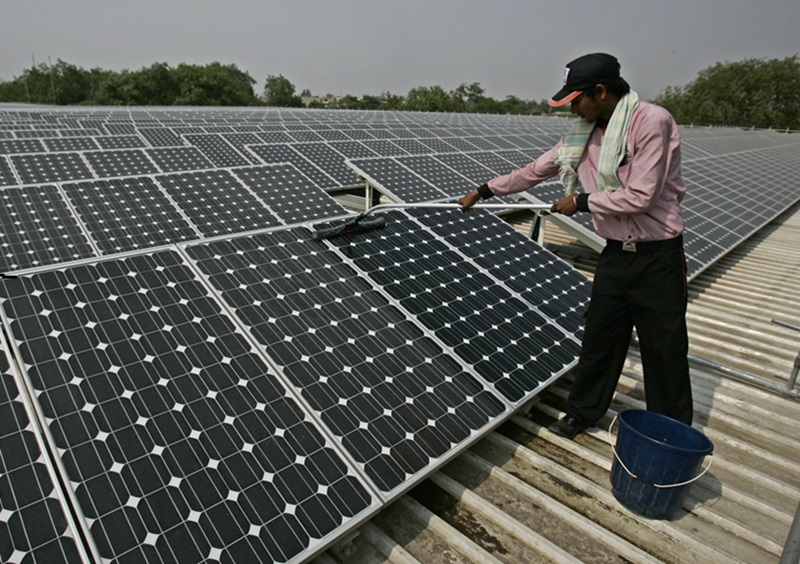
True economic resilience isn't forged in the middle of a panic; it is built by looking ahead. The International Energy Agency (IEA) has consistently praised India’s massive push toward renewable energy infrastructure. By expanding solar and wind capacity, India is not only fighting climate change, but is also reducing its reliance on fossil fuels. However, behind the impressive renewable headlines lies a stark structural vulnerability as India’s grid still leans heavily on a carbon-intensive coal fleet for base-load stability.
While the US grapples with AI-driven grid strain, Europe heavily subsidises its LNG dependency, and South Asia buckles under imported inflation, India has demonstrated how an emerging market can navigate a volatile global grid. New Delhi’s multi-fold strategy features measured financial intervention, uninhibited diplomatic independence, and a long-term pivot to renewables, ensuring a sustainable framework for energy security.
The threat of 100% US tariffs and unending spectre of war, however, suggest India will have to do more than stay on its guard as the energy price boil can surface anytime without provocation.
.png)