.png)

RBI Unambiguously Signals Rate Tightening Cycle
While the 25bps rate hike was widely expected, the change in stance to ‘calibrated tightening’ has taken everyone by surprise

Dr. Sachchidanand Shukla is Group Chief Economist at Larsen and Toubro.
October 7, 2026 at 9:00 AM IST
The RBI raised the Repo Rate by 25 bps in a move that was largely unsurprising and widely anticipated, and yet, it also managed to spring a surprise by changing its stance to ‘calibrated tightening’.
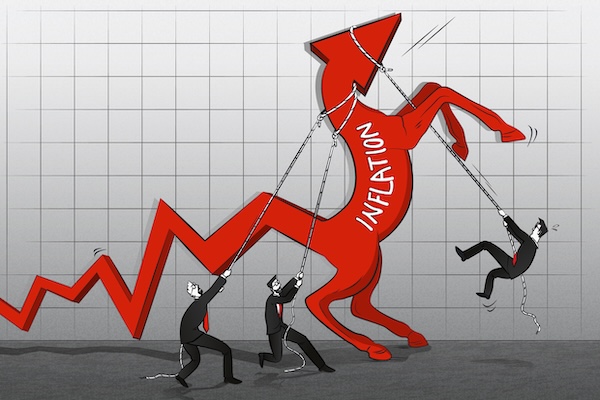
On the domestic side, inflation is firmly in the 5-6% corridor with the FY27 CPI projected at 5.2%. That means disinflationary cushions have thinned and second-round effects are more visible. GST cuts and public-sector balance sheets have so far delayed, rather than removed, price pressures. The Governor’s test has been ‘signs of generalisation’ and that runs the risk of de-anchoring inflation expectations if not acted upon. Food inflation is getting broader, and wholesale fuel and power are soaring. Even core inflation is no longer soft enough for comfort directionally. In fact, the RBI revised core inflation forecast a tad upwards to 4.4%.
Changing Stance
Now to the change in stance - four of the six MPC members voted for a stance change unlike the unanimous decision on the 25 bps rate hike. “Calibrated Tightening” is more directional and should be interpreted as a de facto commitment to hike even if food or crude prices reverse. This stance reflects a materially higher-confidence regime in which broad core and services inflation are showing persistence and expectations of wage-price behaviour require an asymmetric sequence of hikes. Since the concern is real, the RBI has used the Repo Rate hike coupled with a change in stance which should also provide some temporary respite to the Indian rupee at a time when the US dollar is looking to march higher unidirectionally.
The effective stance was less restrictive than the headline repo suggests if one looks at the inflation trajectory going forward. Even the revised RBI inflation projections of 6% in Q3FY27, 5.7% in Q4FY27 and 5.6% in Q1FY28, respectively, imply negative forward real rate --below India’s estimated natural real rate of 1.4%–1.9%. Moreover, surplus system liquidity, which is greater than ₹5 trillion, after the FX inflow gush has been putting upward pressure on the WACR, forcing the RBI to suck out liquidity countermeasures. The risk was thus, transmission into wider price-setting and expectations, against hawkish developed-market central banks, elevated crude and a less supportive dollar environment.
Most importantly, in a world changing by the day, staying true to price stability and watching out for financial stability risks should help. Note, well-anchored inflation expectations and sustained fiscal discipline have been strong factors underpinning domestic momentum. Even as imported prices and global interest rates have risen, Indians don't expect runaway inflation or a liquidity squeeze. The RBI move should sustain this faith.
The RBI has unambiguously signalled the start of a tightening cycle, but the Governor made it conditional by saying that ‘the duration and extent of the rate hike cycle would be contingent on the actual growth-inflation developments and outlook, especially that of underlying inflation, the extent of broadening of price pressures and second round effects of the supply shock, as also the impact of demand impulses." Thus, while the RBI has embarked on a tightening cycle, its path will ultimately be shaped not only by domestic growth and inflation dynamics, but also by how the current messy global operating environment evolves over time.
*Views are personal
More From BasisPoint