.png)

RBI Holds Repo Rate at 5.25%, Retains Neutral Stance, Seeks More Time
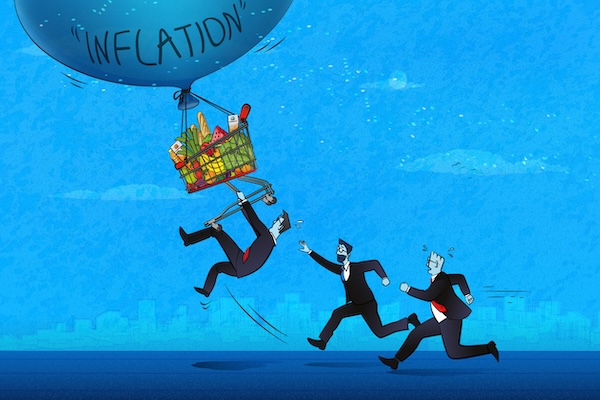
The Reserve Bank of India’s Monetary Policy Committee says headline inflation had moved above the 4% target, though the increase was marginally lower than projected.

August 5, 2026 at 4:49 AM IST
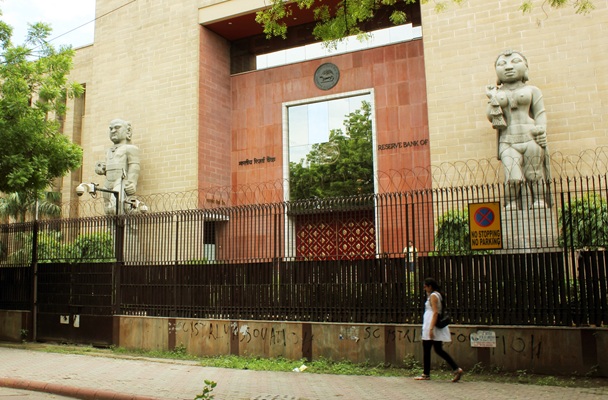
The Reserve Bank of India’s Monetary Policy Committee on Wednesday unanimously kept the policy repo rate unchanged at 5.25% and retained its neutral stance, saying the recent increase in inflation was largely driven by food and fuel rather than a broadening of price pressures.
Consequently, the standing deposit facility rate remains at 5.00%, while the marginal standing facility rate and the Bank Rate stay at 5.50%.
The six-member committee said headline inflation had moved above the 4% target, broadly as anticipated, although the increase was marginally lower than projected because the pass-through of higher costs remained limited.
Inflation was expected to rise further in the near term and peak later this year, mainly due to food and fuel prices, the central bank said.
However, there were few signs so far that these pressures were becoming generalised.
Underlying, or core, inflation remained relatively benign when the impact of precious metals was excluded, it said. The divergence between headline and underlying inflation was expected to narrow towards the end of the financial year as the effect of supply-side shocks subsided.
The MPC’s decision to wait reflected uncertainty over the duration and transmission of these price pressures, rather than an immediate concern over demand-driven inflation.
The committee said greater clarity was needed before any policy action could be considered, particularly on the normalisation of inflation after the impact of food, fuel and other external shocks faded.
Economic growth, meanwhile, continued to receive support from resilient domestic demand, sustained expansion in manufacturing and services, and robust exports, reaffirming India’s position as the fastest-growing major economy, the RBI said.
The relatively firm growth backdrop gave the committee room to maintain rates while monitoring inflation risks.
The external environment remained unsettled, with the continuing conflict in West Asia disrupting important trade routes and supply chains, increasing market volatility and weakening economic sentiment. Fresh tariffs imposed by the United States had added to uncertainty over global trade.
Global growth was expected to soften, while inflation in 2026 was projected to be higher than in 2025. Crude oil prices, currencies and financial markets remained volatile as developments in West Asia continued to shift rapidly.
Against this backdrop, the MPC said it would maintain a close vigil over incoming data and remain resolute in its commitment to align inflation durably with the target.
The RBI raised its 2026–27 growth forecast by 10 basis points to 6.7%, citing stronger-than-expected activity in April–June, resilient domestic demand and firm manufacturing, services and exports. It projected quarterly growth at 7.0%, 6.4%, 6.5% and 6.8%. The inflation forecast was lowered by 10 basis points to 5.0%, with CPI seen at 4.7%, 5.9% and 5.5% over the remaining three quarters.
Food, fuel, an uneven monsoon and volatile crude prices remained key risks, though underlying inflation pressures were still contained.
Economic growth, meanwhile, continued to receive support from resilient domestic demand, sustained expansion in manufacturing and services, and robust exports, reaffirming India’s position as the fastest-growing major economy, the RBI said.
The relatively firm growth backdrop gave the committee room to maintain rates while monitoring inflation risks.
The external environment remained unsettled, with the continuing conflict in West Asia disrupting important trade routes and supply chains, increasing market volatility and weakening economic sentiment. Fresh tariffs imposed by the United States had added to uncertainty over global trade.
Global growth was expected to soften, while inflation in 2026 was projected to be higher than in 2025. Crude oil prices, currencies and financial markets remained volatile as developments in West Asia continued to shift rapidly.
More From BasisPoint