“Dear participants, I would like to apologize for the uncertainty I have created.”
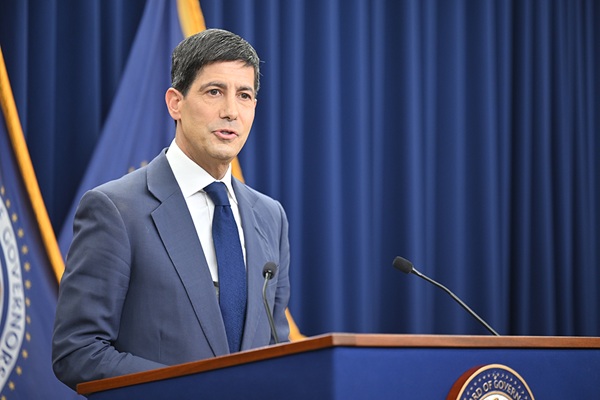
That is how Kevin Warsh, the recently installed chair of the US Federal Reserve, should begin his remarks at this year’s central-banking symposium in Jackson Hole, Wyoming.
Hosted by the Federal Reserve Bank of Kansas City in Grand Teton National Park since 1982—a location chosen to lure then-Fed Chair Paul Volcker, a fly-fishing fanatic—Jackson Hole has become the premier annual gathering for monetary policymakers, policy-oriented academics, and market analysts. The Fed chair’s speech is always a pivotal moment, with Warsh’s predecessors often using the occasion to signal important policy decisions.
Notable precedents include Ben Bernanke’s 2010 foreshadowing of further large-scale US Treasury asset purchases in the aftermath of the financial crisis, Janet Yellen’s 2017 defense of the regulatory framework introduced following earlier financial-market distortions, and Jerome Powell’s 2020 embrace of average inflation targeting as a monetary-policy objective. Against this historical backdrop, Warsh’s address is highly anticipated, especially given his recent public statements and remaining questions about his approach to monetary policy.
Obviously, the Fed chair will not offer an outright apology for the confusion he has caused. But the Jackson Hole stage does give him an opportunity to substantiate the reassuring comments he made about monetary-policy independence at the European Central Bank’s annual Sintra Forum, in early July. Specifically, the three big questions concern Warsh’s position on the link between digital innovation, inflation, and interest rates; the Fed’s reaction function (how it changes policies to account for changing economic conditions); and the international implications of US intervention to prop up the Japanese yen.
Warsh has used the first issue to align himself with US President Donald Trump’s belief that lowering policy interest rates would be compatible with controlling inflation over the medium term. He has argued that AI will yield productivity gains (and thus positive supply shocks) large enough to slow the rate of price increases (disinflation) and create room for monetary-policy easing.
Yet this scenario is unconvincing. First, the vast capital expenditures on AI are likely generating a speculative bubble rather than tangible gains in productivity and overall growth. Second, even if Warsh’s premise were to hold, AI-driven productivity gains would push the natural rate of interest upward. Long-term interest rates would tend to rise even with well-anchored inflation expectations, undermining Trump’s wishful thinking and his administration’s unsuccessful attempts to pump up long-term government bond prices.
Finally, Warsh appears to be overlooking the twin deficits problem. The ballooning fiscal and current account deficits, intertwined with an inflation rate well above the Fed’s 2% target, are major reasons for the higher interest rates on long-term Treasury bonds. To fulfill its price-stability mandate under these conditions, the Fed would need to implement a restrictive monetary stance, not a looser one.
That brings us to the Fed’s reaction function, an issue that took center stage at Warsh’s second press conference on July 29. The Federal Open Market Committee (FOMC) had just decided to keep policy rates unchanged, but with three dissenting votes (unprecedented for a meeting this early in a new chair’s tenure). Warsh’s task therefore was to articulate a strategic foundation for the decision and any subsequent monetary-policy moves. But instead of providing clarity, he confused market participants with excessive remarks on process and boilerplate statements (“We will deliver the 2% inflation target. That is the Committee’s definition of price stability.”).
The upshot, Warsh wanted to suggest, was that future moves would depend wholly on markets, which can and must provide the “true” picture of growth and inflation expectations. According to this reasoning, any non-discretionary central-bank intervention risks distorting “perfect” market signals. Echoing his predecessor Alan Greenspan (“If I seem unduly clear to you, you must have misunderstood what I said”), Warsh discarded 30 years of consensus regarding the benefits of central-bank transparency.
To be sure, in a global macroeconomic environment as uncertain as the current one, forward guidance may not be sorely missed. But as ECB President Christine Lagarde pointed out earlier this year, market participants still need baseline “framework guidance” to understand the central bank’s reaction function.
Finally, there is the matter of international coordination. In Sintra, Warsh implied that US attacks on global governance will not hinder cooperation between major central banks, which remain committed to shared responsibility and effective dialogue. Central bankers, he assured us, are still the adults in the room. But then came the Treasury’s request for the Fed’s intervention in foreign-exchange markets to support the yen. To avoid a negative effect on US public-debt yields, Treasury Secretary Scott Bessent instructed the Fed to sell euros rather than dollars, and without giving any prior notice to EU authorities.
This unprecedented move undermined the traditional approach to exchange-rate cooperation, which usually takes place through the G7. This time, acting as an agent, the New York Fed used the Treasury’s Exchange Stabilization Fund. But in the future, larger interventions drawing from the Fed’s own foreign-currency reserves would require authorisation from the FOMC.
If he is seriously committed to cooperating with other central banks, Warsh should clarify what the Fed’s attitude would be under such circumstances. If he is seen to be genuflecting to Trump, he will lose credibility, and international monetary relations built up over many decades will unravel.
One way or another, the structural contradictions are coming to a head. Fed members continue to face unprecedented and inappropriate political pressure, as demonstrated by renewed attacks from Trump acolytes on Lisa Cook, even after the Supreme Court ruled that she can remain in her position as a governor on the Fed Board. These frictions will only intensify ahead of the midterm elections.
Warsh’s Jackson Hole address will clarify whether the Fed’s independence is definitively compromised, or whether its new chair is prepared to risk a political conflict with the White House to re-establish institutional credibility. The stakes could not be higher.
Project Syndicate
.png)