.png)


November 27, 2026 at 8:42 AM IST
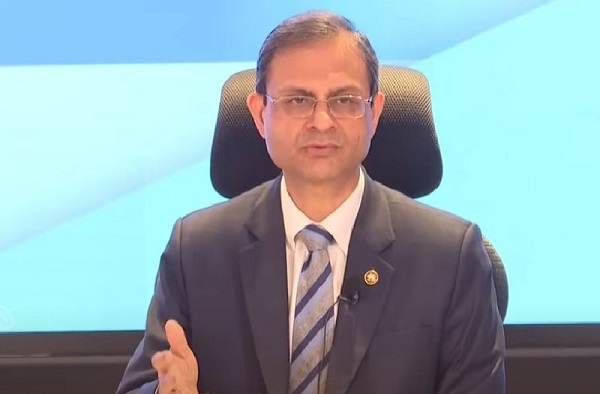
Reserve Bank of India Governor Sanjay Malhotra on Friday said the credit gap for micro, small and medium enterprises remained despite strong growth in bank lending to the sector, calling for continued efforts to improve access to finance, particularly for first-time borrowers, micro enterprises and women-led businesses.
Bank credit to MSMEs grew 27% last year, compared with overall credit growth of about 19%, Malhotra said at the SME Finance & Investment Summit in Mumbai. Over the past five years, credit to the sector had grown at a compounded annual rate of almost 19%, he said.
“While the credit gap may have narrowed, it has not disappeared,” Malhotra said, adding that greater attention was needed for enterprises in smaller towns and rural areas.
Building Trust in Lending
In the question-and-answer session, Malhotra said lending to MSMEs required banks to build trust through closer engagement with borrowers. While digital infrastructure and credit guarantee schemes could facilitate lending, due diligence depended on lenders understanding the business and the people behind it.
He urged banks to spend more time assessing the needs and repayment capacity of enterprises, while asking MSME borrowers to be persistent in seeking attention for their applications.
Malhotra also cautioned lenders against treating MSME lending merely as a regulatory requirement or a way to meet targets. Banks should develop sectoral and cluster-level expertise, engage with viable businesses and provide timely support to enterprises facing difficulties, he said.
Five Priorities for MSMEs
The Governor outlined five priorities for MSMEs: scaling up, improving productivity through technology and innovation, expanding exports, formalising operations and making better use of available financial instruments.
Micro enterprises account for 99% of all MSMEs, but too few businesses scale up, he said. Revised classification limits should reduce concerns about losing benefits when enterprises grow, while clusters, common facility centres, and partnerships with larger companies could help businesses achieve scale.
He also called for greater adoption of technology, including artificial intelligence. AI adoption among Indian MSMEs stood at about 15%, while a recent survey found that 76% of MSME leaders used AI in some form, but only 5% had made it central to their operations, Malhotra said.
Improving productivity could deliver significant economic gains. Value added per employee at Indian MSMEs was estimated at 26% of the level at large domestic industries. Raising productivity to the top quartile of advanced-economy subsectors could add 11% to India's GDP, he said.
Formalisation and Access to Finance
Malhotra said formalisation through proper accounts, timely filing of returns, digital transactions and disciplined financial management would help businesses build lender confidence. Increasingly, the data trail left by businesses would count alongside assets pledged as security, he added.
He also urged MSMEs to use platforms such as the Trade Receivables Discounting System (TReDS), the Account Aggregator framework and the Unified Lending Interface to improve access to finance. Businesses should look beyond bank loans to equity, venture capital, leasing and factoring, choosing instruments suited to their stage of development.
For lenders, he said public digital infrastructure should strengthen rather than replace the personal knowledge and human touch involved in relationship banking. Credit guarantee schemes should be used to share risk, not as a substitute for due diligence.
The RBI would continue to strengthen MSME credit infrastructure, remove frictions and listen to the sector, Malhotra said.
More From BasisPoint